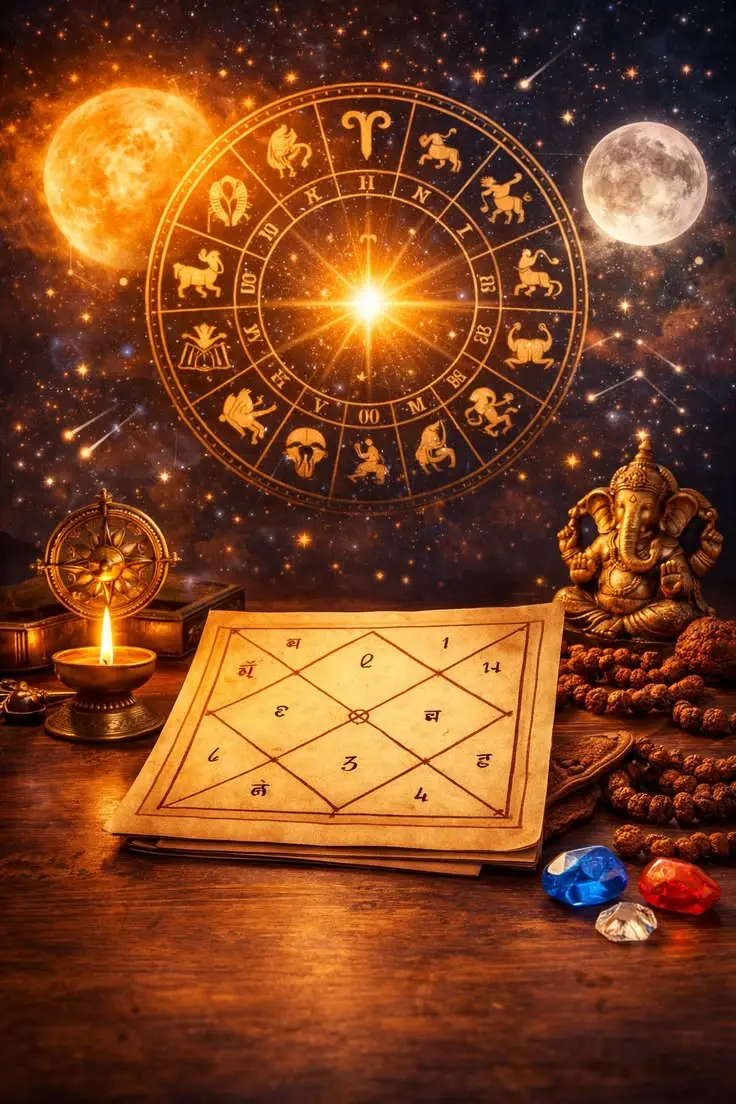
In Indian Vedic astrology, the celestial calendar is more than just a way to track time. It acts as a guide that helps you align your daily life with cosmic rhythms. Whether you are planning an auspicious wedding, performing rituals or trying to understand your horoscope better, elements like the full moon, tithi and vara play a central role.
This guide will help you understand these concepts clearly and show you how to identify them using practical tools like Panchang and your birth star.
Understanding the Full Moon in Vedic Astrology
In Sanskrit, the full moon is called Purnima. It marks the point when the Moon is fully illuminated and stands opposite the Sun. This phase is often linked with clarity, heightened awareness and emotional intensity.
In Indian tradition, each full moon carries its own meaning. For example, Guru Purnima is dedicated to honouring teachers and mentors, while Sharad Purnima is associated with abundance and seasonal change.
From an astrological point of view, the full moon tends to amplify emotions and intuition. Since the Moon represents the mind, its complete phase often brings a sense of completion. This could mean finishing something important, gaining clarity or letting go of built-up emotions.
Its impact becomes more personal when it aligns closely with your natal Moon or birth star. At such times, you may notice stronger emotional responses or important realisations.
What is a Tithi?
A tithi refers to a lunar day and is one of the five key elements of the Panchang. It is calculated based on the angular distance between the Sun and the Moon, with each tithi representing a 12-degree separation.
There are 30 tithis in a lunar month:
- Shukla Paksha (waxing phase)
- Krishna Paksha (waning phase)
Each tithi carries a certain energy, making it suitable for different types of activities. For example:
- Dwitiya is considered favourable for starting something new
- Ashtami and Navami are often linked with spiritual practices
- Ekadashi is widely observed as a fasting day for inner cleansing
If you want to know today’s tithi, checking Panchang on imeuswe.in or the iMeUsWe App it is the simplest way. It gives you a complete snapshot of the day, including tithi, vara, nakshatra and more.
Decoding Vara, The Vedic Weekdays
Vara refers to the days of the week, each governed by a specific planet. While the seven-day week is familiar, Vedic astrology adds deeper meaning to each day:
- Ravivara (Sunday) is ruled by the Sun and is linked to authority and leadership
- Somavara (Monday) is governed by the Moon and relates to emotions and care
- Mangalavara (Tuesday) is ruled by Mars and supports action and determination
- Budhavara (Wednesday) belongs to Mercury and is ideal for communication and learning
- Guruvara (Thursday) is ruled by Jupiter and is suited for wisdom and spirituality
- Shukravara (Friday) comes under Venus and connects with relationships and creativity
- Shanivara (Saturday) is ruled by Saturn and encourages discipline and patience
Understanding vara helps you plan your activities better. For instance, scheduling important discussions on Wednesday or spiritual practices on Thursday can feel more aligned.
Aaj Ka Panchang, Your Daily Cosmic Guide
To identify the full moon, tithi and vara accurately, Panchang is your most reliable resource. It is a traditional Vedic almanac that outlines five essential elements:
- Tithi or lunar day
- Vara or weekday
- Nakshatra or lunar constellation
- Yoga or planetary combination
- Karana or half of a tithi
Instead of calculating these manually, you can simply check a Panchang to understand the day’s overall energy. Today, digital platforms make this even easier by offering location-based updates.
How to Know Your Birth Star (Nakshatra)
Your Janma Nakshatra or birth star, is the lunar constellation where the Moon was placed at the time of your birth.
Some examples include:
- Ashwini, known for energy and initiative
- Bharani, associated with strength and care
- Rohini, linked with creativity and comfort
- Magha, connected with tradition and leadership
Knowing your nakshatra helps you understand how lunar phases may influence you. If a full moon occurs in your birth star, you may feel more emotionally aware or experience noticeable changes.
You can find your birth star through your Vedic birth chart or by using astrology apps that generate charts based on your birth details.
Why Full Moon and Tithi Matter in Daily Life
In Indian traditions, timing plays an important role in decision-making. Events like weddings, travel or business deals are often planned after considering the tithi and vara.
Full moon days are especially valued for rituals related to prosperity, gratitude and spiritual growth. Examples include Lakshmi Pooja, Guru Purnima and Buddha Purnima.
Being aware of these elements helps you:
- Plan activities with better timing
- Avoid unfavourable periods
- Stay more in sync with natural cycles
- Build a stronger spiritual routine
Tools to Identify Full Moon, Tithi and Vara
If you do not want to calculate these manually, there are simple ways to stay updated:
Astrology Apps Apps like iMeUsWe provide real-time Panchang details, including tithi, nakshatra and moon phases.
Online Panchang Platforms Many reliable websites publish daily Panchang updates with all key details.
Traditional Panchang Books Still widely used, these offer a yearly view of planetary positions and auspicious timings.
Conclusion
Understanding the full moon, tithi and vara is not just about tradition. It is about becoming more aware of natural cycles and using that awareness in your daily life.
Once you start paying attention to these elements, you may notice how they influence your mood, decisions and overall flow of life. Over time, this awareness can help you act with more clarity and intention.
So the next time you wonder, “Is it a full moon today?” you will know exactly where to look and how to understand what it means for you.