

Acharya Ramamurti Family Tree
Acharya Ramamurti - A Lifestory
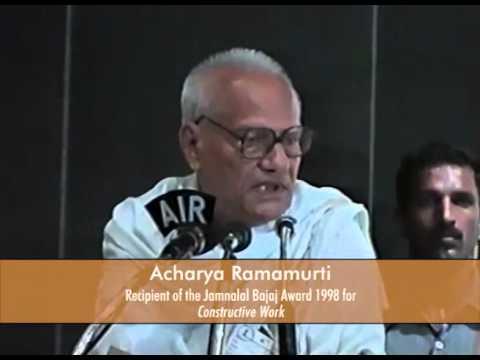
Acharya Ramamurti was a dedicated Gandhian and a prominent figure in Indian social reform, particularly in the field of education. He devoted his life to promoting the ideals of basic education, selfsufficiency, and rural development, all rooted in Gandhian principles. His commitment to these values stemmed from a deep understanding of the socioeconomic realities of India and a desire to uplift the marginalized sections of society. He believed that education should be a tool for empowerment, enabling individuals to become selfreliant and contribute to the betterment of their communities.
Ramamurti's work extended beyond theoretical concepts; he actively engaged in practical initiatives aimed at transforming rural education. He tirelessly worked to implement educational programs that emphasized vocational training, practical skills, and character building, believing these to be essential components of a holistic education. He advocated for a curriculum that was relevant to the local context and needs of the students, enabling them to acquire skills that would be directly applicable to their lives and livelihoods.
Furthermore, Ramamurti played a significant role in shaping national education policies. His insights and recommendations were highly valued, and he served on various committees and commissions related to education. He consistently championed the cause of universal access to quality education, particularly for children from disadvantaged backgrounds. His contributions to educational reform were driven by a profound sense of social justice and a belief in the transformative power of education. He left behind a legacy of dedicated service and a vision for an equitable and empowered India.
Family and Early Years
Personal Details
- 🎂 Date of Birth
- 22 January 1913
- 🏠 Place of Birth
- Uttar Pradesh India
- 🎓 Educational Background
- Acharya Ramamurti was educated and served as a professor of Physics at Allahabad University.
Early Career
- Acharya Ramamurti began his professional journey in the field of education and social reform quickly gaining recognition for his dedication to rural development and alternative education models.
- 👨🏫 Early Foray into Education
- After completing his formal education Acharya Ramamurti dedicated himself to rural upliftment through education. He began working in the Indian Administrative Service (IAS) but resigned to pursue social work. This was a pivotal moment, signifying his commitment to grassroots development over a bureaucratic career. He became deeply involved with organizations focused on rural reconstruction and education reform, laying the foundation for his future work.
- 🌱 Pioneering Nai Talim
- Acharya Ramamurti's first major contribution was his advocacy and implementation of Nai Talim a system of education emphasizing learning through practical work and community involvement. He played a crucial role in adapting and promoting this educational philosophy, aiming to make education more relevant to the needs of rural communities. The significance of this work lies in its attempt to address the shortcomings of the traditional education system, which often failed to cater to the specific challenges and opportunities of rural India.
- 🚧 Overcoming Resistance to Change
- One of the main challenges Acharya Ramamurti faced was resistance to change from established educational institutions and government bodies. His ideas about alternative education often clashed with traditional pedagogical approaches and convincing stakeholders to embrace new methods proved difficult. Furthermore, securing adequate resources and support for implementing Nai Talim in rural schools was a constant struggle, requiring him to navigate complex bureaucratic processes and advocate tirelessly for his vision.
A Journey of Recognition
Career Journey
- A Gandhian social reformer Acharya Ramamurti dedicated his life to rural development and education reform, leaving a lasting impact on underprivileged communities in India.
- 🌱 Early Recognition & Rural Upliftment
- After gaining recognition for his commitment to Gandhian principles Acharya Ramamurti focused on rural upliftment. He established numerous Khadi and village industries, empowering local communities economically and promoting self-sufficiency. His hands-on approach and dedication to serving the marginalized earned him widespread respect and solidified his reputation as a champion of the poor.
- 📚 Education Reform & Social Justice
- Acharya Ramamurti played a pivotal role in advocating for education reform emphasizing value-based learning and practical skills development. He served on several government committees, including the Education Commission, where he championed the cause of social justice and equitable access to education for all, regardless of caste or socioeconomic background. This involvement led to significant policy changes aimed at democratizing education and making it more relevant to the needs of rural India.
- 🤝 Leadership & Movement Building
- Taking on leadership roles in various social organizations Acharya Ramamurti spearheaded movements for land redistribution, eradication of untouchability, and promotion of communal harmony. His unwavering commitment to these causes, coupled with his persuasive oratory skills, mobilized thousands of people and brought about meaningful social change. He fearlessly challenged societal norms and fought for the rights of the oppressed, solidifying his legacy as a transformative leader.
- 🕊️ Peacemaking & Conflict Resolution
- In the later stages of his life Acharya Ramamurti dedicated himself to peacemaking and conflict resolution, particularly in areas affected by social unrest and communal tensions. His deep understanding of Gandhian philosophy and his ability to connect with people from diverse backgrounds enabled him to mediate disputes, build bridges between communities, and promote lasting peace. This work further cemented his reputation as a compassionate humanitarian and a beacon of hope in a troubled world.
Achievements and Milestones
- Here's a list of awards received by Acharya Ramamurti:
- 🏆 Awards and Honors 🏆
- ● Jamnalal Bajaj Award (1996).
Additional Highlights
Contributions
- A champion of rural upliftment and education reform Acharya Ramamurti dedicated his life to empowering marginalized communities through innovative social initiatives.
- 🌱 Nai Talim and Rural Development
- ● Acharya Ramamurti was a staunch advocate of Nai Talim (Basic Education) a philosophy emphasizing learning through practical work and community engagement. He worked to implement this system in rural areas, aiming to make education relevant to the lives of villagers.
- ● He actively promoted rural development programs focusing on self-sufficiency and sustainable living. This involved initiatives related to agriculture, cottage industries, and local resource management.
- 📚 Education Reform
- ● As Chairman of the Education Commission in 1990 Acharya Ramamurti played a pivotal role in shaping education policy. The commission's report, often referred to as the "Ramamurti Committee Report," advocated for a more equitable, decentralized, and culturally relevant education system.
- ● He emphasized the importance of value-based education and the integration of traditional knowledge with modern learning.
- 🕊️ Social Justice and Advocacy
- ● Acharya Ramamurti was deeply involved in social justice movements particularly those aimed at eradicating caste discrimination and promoting equality. He worked to empower marginalized communities and ensure their access to education and opportunities.
- ● He actively campaigned for the rights of the underprivileged and spoke out against social injustices.
- 🌍 Sarvodaya Movement
- ● He was closely associated with the Sarvodaya movement inspired by Mahatma Gandhi's philosophy of self-rule and social upliftment.
- ● He worked to promote the principles of Sarvodaya including non-violence, truth, and the welfare of all, through various community-based initiatives.
Death
- Acharya Ramamurti passed away on 20 May 2010.