
Akhtar Iman Family Tree
Akhtar Iman - A Lifestory
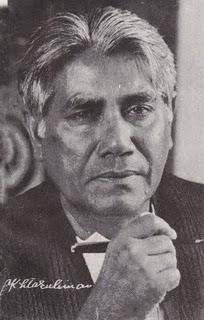
Akhtar ul Iman was a prominent Indian Urdu poet and screenwriter renowned for his modernist style and significant contributions to Urdu literature and Indian cinema. Born in 1915 in Qila Kothi, Punjab, British India, his early life was marked by familial discord and a quest for intellectual fulfillment. He initially pursued religious studies but later gravitated towards literature and philosophy. This shift led him to Aligarh Muslim University, where he was exposed to a vibrant intellectual environment that shaped his literary sensibilities. Iman's poetry often explored themes of alienation, existential angst, and the complexities of modern life, reflecting the sociopolitical landscape of postindependence India. His verses were characterized by a unique blend of traditional Urdu poetic forms and contemporary idioms, making his work both accessible and intellectually stimulating.
Beyond poetry, Akhtar ul Iman made a substantial impact on Indian cinema as a screenwriter. He penned scripts for numerous critically acclaimed and commercially successful films, collaborating with leading directors of the time. His screenplays were known for their nuanced character development, realistic dialogues, and insightful portrayal of human relationships. Some of his notable film credits include "Waqt," "Aadmi Aur Insaan," and "Dharamputra," which earned him several Filmfare Awards. His work in cinema allowed him to reach a wider audience and further explore the themes that resonated with him as a poet. Akhtar ul Iman's legacy lies in his ability to bridge the gap between Urdu literature and popular culture, enriching both with his unique artistic vision. He passed away in 1996, leaving behind a rich body of work that continues to inspire and influence writers and filmmakers today.
Family and Early Years
Personal Details
- 🎂 Date of Birth
- 12 November 1915.
Early Career
- Akhtar ul Iman embarked on his creative journey with a passion for poetry initially expressing his thoughts and emotions through traditional forms of Urdu verse. His early work laid the foundation for his later, more experimental and influential style.
- 📜 Early Literary Pursuits
- In his early years Akhtar ul Iman immersed himself in the world of literature, writing prolifically and experimenting with various poetic forms. He gained experience by participating in mushairas (poetic symposiums) and literary gatherings, honing his craft and developing his unique voice.
- 🎬 First Major Opportunity
- His first major opportunity came with his entry into the world of film. He secured a role as a dialogue writer for Bollywood films.
- 🖋️ Early Film Work
- One of his early notable works was contributing to the dialogues and lyrics of films. His film work brought him into the limelight and provided a platform to showcase his linguistic skills and storytelling abilities.
- 📢 Reception and Impact
- His debut in the film industry was met with considerable acclaim. His ability to craft impactful dialogues resonated with audiences contributing to the success of the films he worked on. He was recognized for his fresh perspective and his ability to capture the nuances of human emotions through his writing.
- 🚧 Challenges Faced
- Despite his early success Akhtar ul Iman faced significant challenges in establishing himself. Competition in the film industry was fierce, and he had to constantly prove his worth. Financial constraints and the need to navigate the complex dynamics of the film world added to the difficulties he encountered in the early stages of his career.
A Journey of Recognition
Career Journey
- Akhtar ul Iman was a revolutionary Urdu poet and screenwriter known for his modernist sensibility and poignant exploration of the human condition.
- Poetic Ascent ✍️
- After gaining recognition for his early poems Akhtar ul Iman solidified his place in Urdu literature with the publication of collections like "Girdab" and "Taarik Sayyara." These works showcased his unique blend of traditional forms and modern themes, resonating with a wide audience.
- Cinematic Ventures 🎬
- Iman transitioned into screenwriting becoming a sought-after name in the Indian film industry. He penned scripts for iconic films like "Waqt," "Aadmi Aur Insaan," and "Dharamputra," earning Filmfare Awards for Best Dialogue for "Waqt" and "Aadmi Aur Insaan."
- Evolution and Experimentation 🔄
- While continuing to write poetry Iman increasingly focused on film. His work explored complex social and psychological themes, often pushing boundaries within the commercial film landscape. He experimented with narrative structures and character development, leaving a lasting impact on Indian cinema.
- Legacy and Recognition 🏆
- Akhtar ul Iman's work garnered both critical acclaim and popular appreciation. His poetry was lauded for its intellectual depth and emotional resonance while his screenplays were celebrated for their engaging stories and memorable dialogues. He remains a significant figure in both Urdu literature and Indian cinema, inspiring generations of writers and filmmakers.
Achievements and Milestones
- Here's a list of awards received by Akhtar ul Iman:
- 🏆 Awards
- ● Sahitya Akademi Award (1962) for Yadein
- ● Soviet Land Nehru Award (1975) for Aab Joo
- ● Maharashtra State Urdu Academy Award
- ● Mirza Ghalib Award.
Additional Highlights
Contributions
- Akhtar ul Iman a poet of profound introspection and evocative imagery, etched his name in the annals of Urdu literature with his groundbreaking narrative poems and modernist sensibility.
- 🖋️ Literary Contributions:
- ● Akhtar ul Iman is celebrated for pioneering the use of free verse (blank verse) in Urdu poetry breaking away from traditional metrical constraints and enabling a more natural and conversational tone.
- ● His narrative poems such as "Ek Ladka" (A Boy), "Bint-e-Lamha" (Daughter of the Moment), and "Sabrang," are considered masterpieces of Urdu literature, exploring themes of alienation, urban life, and the human condition with remarkable depth and complexity.
- ● He authored several collections of poetry including "Girdab" (Whirlpool), "Tarik Sayyara" (Dark Planet), "Naya Ahang" (New Melody), and "Yaden" (Memories), each showcasing his evolving poetic vision and mastery of language.
- ● He also wrote dialogues and screenplays for several Bollywood films including Waqt, Aadmi Aur Insaan, Daag, and Nikaah, contributing significantly to the cinematic landscape with his insightful storytelling and powerful dialogues.
- 🌍 Social and Cultural Influence:
- ● Through his poetry Akhtar ul Iman provided a powerful voice to the marginalized and disaffected, capturing the anxieties and aspirations of a rapidly changing society.
- ● His work challenged conventional notions of love morality, and identity, prompting readers to confront uncomfortable truths and question established norms.
- ● He served as an inspiration to generations of poets and writers influencing the development of modern Urdu literature and paving the way for new forms of creative expression.
- ● Akhtar ul Iman’s work continues to be studied and celebrated in academic circles and literary gatherings ensuring his enduring legacy as one of the most important voices in Urdu literature.
Death
- Akhtar ul Iman passed away on 09 March 1996.
Did you find this lifestory interesting?


