
Amrita Pritam Family Tree
Amrita Pritam - A Lifestory
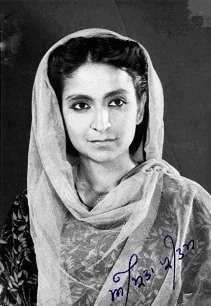
Amrita Pritam was a celebrated Indian writer and poet, widely regarded as one of the most important voices in Punjabi literature of the 20th century. Born in Gujranwala, British India (now in Pakistan) in 1919, she experienced a childhood marked by early loss, losing her mother at a young age. This profound experience deeply influenced her writing, imbuing it with themes of loss, longing, and the complexities of human relationships. Pritam began writing at a young age and published her first collection of poems at sixteen. Her early work reflected a romantic sensibility, but the Partition of India in 1947 served as a watershed moment, profoundly shaping her perspective and artistic direction.
The horrors and trauma of Partition, witnessing the displacement, violence, and suffering of millions, became central to her work. Her most famous poem, "Ajj Akhaan Waris Shah Nu" (Today I Invoke Waris Shah), a poignant lament addressed to the 18thcentury Sufi poet Waris Shah, became an anthem of grief and a powerful expression of the collective pain of the Partition. Beyond Partition, Pritam's writing fearlessly addressed social issues, particularly the experiences of women in a patriarchal society. She wrote extensively about love, sexuality, and the challenges women faced in pursuing their dreams and desires.
Throughout her career, Amrita Pritam published over 100 books, including novels, short stories, essays, and poems. Her notable novels include "Pinjar" (The Skeleton), which vividly portrays the plight of women during Partition, and "Raseedi Ticket" (The Revenue Stamp), an autobiographical work that candidly explores her personal life and relationships. Her work has been translated into numerous languages and has garnered widespread critical acclaim and numerous awards, including the Sahitya Akademi Award, the Bharatiya Jnanpith Award, and the Padma Vibhushan. Amrita Pritam's legacy extends beyond her literary achievements; she was a powerful voice for social justice and a champion of women's rights, leaving an indelible mark on Indian literature and society. She passed away in 2005, leaving behind a rich body of work that continues to inspire and resonate with readers today.
Family and Early Years
Personal Details
- 🎂 Date of Birth
- 31 August 1919
- 👨👩👧👦 Family Details
- Parents: Raj Bibi Kartar Singh Hitkari
- Spouse: Pritam Singh
- Children: Navraj Rashim.
Early Career
- Amrita Pritam embarked on her creative journey at a young age demonstrating a precocious talent for writing that quickly set the stage for her future literary contributions. Her early years were marked by a deep engagement with poetry, exploring themes of love, loss, and social injustice that would become hallmarks of her work.
- ✍️ Early Poetic Explorations
- Amrita Pritam's initial forays into the literary world were characterized by her dedication to poetry. Even as a teenager she was writing and publishing her poems in various literary magazines and journals. These early works reflected her evolving understanding of the world around her and her burgeoning skills as a poet.
- 📖 First Major Opportunity: Amrit Lehran
- Her first major opportunity came with the publication of her anthology of poems Amrit Lehran (Immortal Waves), in 1936. This collection marked her official entry into the world of published authors.
- 🌟 Significance and Reception
- Amrit Lehran was received with moderate success. While it didn't catapult her to instant fame it established her as a promising young voice in Punjabi literature. The collection showcased her lyrical style and her ability to express complex emotions with simplicity and grace.
- 🚧 Early Challenges
- One of the major challenges she faced was navigating the male-dominated literary landscape of the time. As a young woman writing on unconventional themes she had to overcome societal expectations and prejudices to be taken seriously as a writer. Additionally, gaining widespread recognition in a field saturated with established voices proved difficult, requiring persistence and resilience.
A Journey of Recognition
Career Journey
- Amrita Pritam was a trailblazing Indian writer and poet celebrated for her poignant exploration of love, loss, and the socio-political landscape of her time.
- 📖 Early Literary Acclaim
- After establishing herself as a prominent voice in Punjabi literature with collections like "Amrit Lehran" (1936) and "Trel Dhote Phul" (1942) Pritam's career soared. These early works showcased her lyrical prowess and progressive views, setting the stage for her later, more profound explorations of human experience.
- 💔 Landmark Novel: Pinjar
- Pritam cemented her position as a literary icon with the publication of "Pinjar" (1950). This novel depicting the plight of women during the Partition of India, became a seminal work, lauded for its powerful narrative and empathetic portrayal of suffering. It was later adapted into a critically acclaimed film, further amplifying its impact.
- ✍️ Fearless Voice: Later Poetry and Prose
- Following the success of "Pinjar" Pritam continued to publish prolifically, experimenting with different forms and themes. Her poetry collections, such as "Sunehe" (1955), which won the Sahitya Akademi Award, and her novel "Rangeela" (1957) demonstrated a growing maturity and a willingness to confront societal norms. She fearlessly addressed issues of gender inequality, social injustice, and the complexities of human relationships.
- 🤝 Collaborative Ventures and Journalistic Pursuits
- Pritam's career also saw her venture into journalism and collaborative projects. She edited the literary journal "Nagmani" for several years providing a platform for emerging writers. This period also saw her collaborate with artists and intellectuals, further enriching her creative output.
- 🌟 Critical Acclaim and Enduring Legacy
- Throughout her career Amrita Pritam received numerous accolades, including the Bharatiya Jnanpith Award in 1981 for "Kagaz Te Canvas" (Paper and Canvas). Her work resonated deeply with readers, both in India and abroad, cementing her status as one of the most important voices in 20th-century Indian literature. Her unflinching honesty, profound empathy, and lyrical artistry continue to inspire generations.
Achievements and Milestones
- Here is a list of the awards received by Amrita Pritam:
- 🏆 Awards and Honors
- ● Sahitya Akademi Award (1956)
- ● Padma Shri (1969)
- ● Jnanpith Award (1981)
- ● Bulgarie Vaptsarov Award (1979)
- ● Officier de l'Ordre des Arts et des Lettres (France 1987)
- ● Padma Vibhushan (2004)
- ● Sahitya Akademi Fellowship (1988)
- ● D.Litt. degrees from various universities.
Additional Highlights
Contributions
- Amrita Pritam a luminary of Punjabi literature, etched her name in history with her poignant verses and fearless prose, challenging societal norms and giving voice to the voiceless.
- 💔 Partition's Pain & Poetic Advocacy
- ● Amrita Pritam's most celebrated work "Ajj Akhaan Waris Shah Nu" (Today I call Waris Shah), is a powerful lament on the horrors of the Partition of India in 1947. It transcends mere poetry, becoming a searing social commentary on the human cost of political division and religious violence. The poem is not just a reflection of her personal pain, but a collective cry for peace and reconciliation.
- ● She fearlessly depicted the plight of women during and after the Partition showcasing their suffering, resilience, and struggle for survival.
- ✍️ Literary Trailblazer & Feminist Voice
- ● Amrita Pritam was a prolific writer penning over 100 books of poetry, fiction, essays, and biographies. Her works often explored themes of love, loss, societal injustice, and the female experience.
- ● She challenged patriarchal norms through her writings advocating for women's rights, equality, and independence. Her autobiographical novel, "Pinjar" (The Skeleton), vividly portrays the abduction and trauma faced by women during the Partition and critiques the societal structures that perpetuate such violence.
- ● She was the first woman to win the Sahitya Akademi Award in 1956 for her long poem "Sunehade" (Messages), a testament to her literary prowess and groundbreaking contributions.
- 🌍 Cultural Influence & Public Intellectual
- ● Amrita Pritam's writings resonated deeply with readers across India and beyond sparking conversations about social issues and inspiring a generation of writers and artists.
- ● She served as a Member of Parliament in the Rajya Sabha allowing her to voice her concerns and advocate for social justice on a national platform.
- ● Her works have been translated into numerous languages bringing her message of love, peace, and equality to a global audience.
- ● She edited the literary journal "Nagmani" for many years providing a platform for emerging writers and fostering a vibrant literary community.
- While specific campaigns or organizations she might have directly participated in are not widely documented her literary work and public service positions served as powerful platforms for social advocacy and cultural influence. Her life and writings continue to inspire movements for social justice and equality.
Death
- Amrita Pritam passed away on 31 October 2005.
Disclaimer
The information provided has been gathered from various sources and may have errors or discrepancies.
If you notice any inaccuracies, please let us know at admin-support@imeuswe.in


