

Anita Dube Family Tree
Anita Dube - A Lifestory
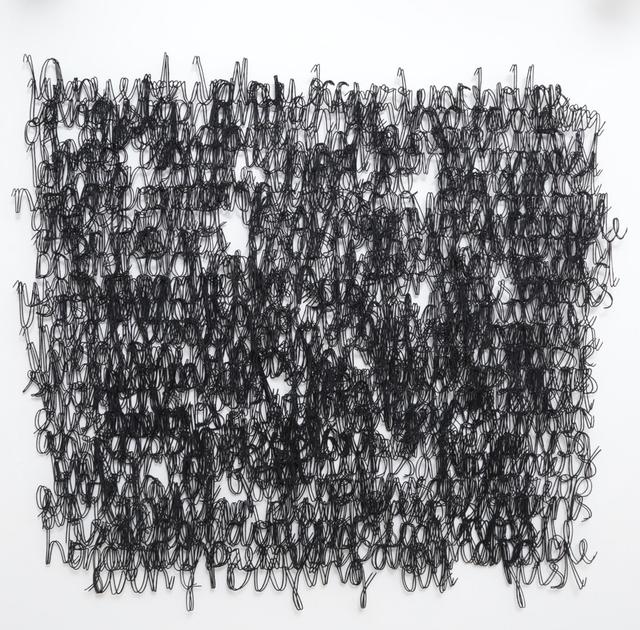
Anita Dube is a prominent contemporary Indian artist known for her evocative and often politically charged installations, sculptures, and photomontages. Born in Lucknow, India, she received her Bachelor's degree in Political Science from Delhi University and later pursued a Master's in Art Criticism from the Faculty of Fine Arts, M.S. University, Baroda. This interdisciplinary background significantly informs her artistic practice, allowing her to engage with complex social and political issues through a visually compelling and conceptually rich language.
Dube's work frequently incorporates found objects, unconventional materials like velvet, beads, and industrial waste, and photographic images to create layered narratives that explore themes of violence, memory, gender, and the body. She is deeply interested in the ways in which power structures shape individual experiences and collective histories. Her installations are often immersive and demand active engagement from the viewer, prompting reflection on the ethical and political dimensions of contemporary society.
Throughout her career, Dube has exhibited extensively both in India and internationally, solidifying her position as a leading figure in the Indian art scene. She was a founding member of the radical artist collective Khoj, which played a crucial role in fostering experimental and collaborative art practices in India. Her contributions extend beyond her individual artistic practice; she has also been actively involved in curatorial projects and writing, further shaping the discourse around contemporary art in India. Dube's artistic journey is characterized by a commitment to challenging conventional artistic boundaries and using art as a tool for social commentary and critical inquiry, making her a significant voice in contemporary art.
Family and Early Years
Personal Details
- 🎂 Date of Birth
- Anita Dube was born on 28 November 1958.
Early Career
- Anita Dube's artistic journey began in the vibrant politically charged atmosphere of the 1980s, fueled by a desire to challenge conventional artistic norms and engage with pressing social issues. Her early work was characterized by experimentation with unconventional materials and a strong commitment to activism.
- ✊ Early Artistic Activism
- Dube's initial forays into the art world involved co-founding the Khoj International Artists' Association an organization that played a vital role in fostering collaborative and experimental art practices in India. This collective provided a platform for Dube and other artists to explore new mediums, challenge traditional art forms, and engage in critical dialogues about art and society.
- 🖼️ First Major Opportunity
- Dube's participation in significant group exhibitions provided a key opportunity to showcase her unique artistic vision to a wider audience. These early exhibitions allowed her to present her thought-provoking installations and sculptures which often incorporated found objects and challenged established aesthetic conventions.
- 📢 Significance of Debut
- Dube's debut was met with a mix of curiosity and critical acclaim. Her unconventional use of materials and her willingness to tackle complex social and political issues resonated with some viewers and critics while others found her work challenging and unsettling. Nevertheless, her early exhibitions established her as a significant voice in the emerging generation of Indian artists.
- 🚧 Challenges in Establishing Recognition
- One of the major challenges Dube faced in her early career was navigating the established art world which often favored more traditional forms of art. Her experimental approach and her commitment to addressing social issues sometimes made it difficult to gain recognition and acceptance within the mainstream art market. Additionally, the limited infrastructure for contemporary art in India at the time posed a significant obstacle for Dube and other artists seeking to establish themselves.
A Journey of Recognition
Career Journey
- Anita Dube is a visual artist known for her evocative sculptures and installations that explore themes of memory trauma, and social identity through the lens of found objects and unconventional materials.
- 🧑🎨 Early Recognition and Artistic Foundations: After graduating Dube became a prominent figure in the Indian art scene, co-founding the Khoj International Artists' Workshop. This period solidified her commitment to challenging conventional artistic boundaries and engaging with socio-political issues.
- 🧶 Landmark Works and Material Exploration: A pivotal moment was her work with materials like velvet bone, and thread. Pieces like her "Silence Blood Seed" series garnered attention for their visceral impact and exploration of violence and healing.
- 🤝 Collaborations and Curatorial Ventures: Dube expanded her influence by curating significant exhibitions including "Karkhana" at the Devi Art Foundation, showcasing contemporary Indian art and further shaping the discourse around artistic practices.
- 🗣️ Critical Acclaim and Continued Evolution: Dube's work has been widely exhibited internationally earning her critical acclaim and establishing her as a leading voice in contemporary art. She continues to evolve her practice, exploring new materials and pushing the boundaries of sculpture and installation.
Achievements and Milestones
- Here's a list of awards received by Anita Dube:
- Awards 🏆
- ● 2022 - The Sher-Gil Sundaram Arts Foundation (SSAF) Arpita Singh Award for feminist art
- ● 2024 - Awarded the Chevalier de l’Ordre des Arts et des Lettres (Knight of the Order of Arts and Letters) by the French government.
Additional Highlights
Contributions
- Anita Dube's provocative and often unsettling assemblages challenge viewers to confront complex social and political realities through the lens of personal and collective memory.
- 🎨 Artistic Contributions
- ● Dube is known for her diverse artistic practice encompassing sculpture, photography, video, and installation art.
- ● Her works frequently incorporate found objects industrial materials, and unconventional elements like velvet, bone, and thread, creating visually arresting and conceptually rich pieces.
- ● She explores themes of gender sexuality, violence, memory, and identity in her art, often referencing socio-political issues and historical events.
- ● Dube's art has been exhibited extensively both in India and internationally contributing significantly to the discourse on contemporary art and its role in addressing social issues.
- 📚 Curatorial Work
- ● Anita Dube has served as a curator notably for the Kochi-Muziris Biennale in 2018-2019.
- ● As a curator she aims to showcase diverse artistic voices and perspectives, often prioritizing works that engage with social and political themes.
- 🗣️ Social Advocacy
- ● Dube's work often engages with themes of social justice and political activism.
- ● Her art serves as a platform for raising awareness about issues such as violence inequality, and marginalization.
- ● She has been involved in various activist movements and collectives using her art as a form of protest and resistance.
Recent Work
- Anita Dube is a contemporary Indian artist known for her sculptural installations and lens-based art. She significantly influences the art world through her unique use of materials and socio-political commentary.
- ● Recent Career Update: Dube continues to exhibit her work internationally engaging with themes of memory, identity, and social justice. Her recent works often involve found objects and unconventional materials to create thought-provoking installations.
- ● Recent Projects:
- ● Exhibition at the Kiran Nadar Museum of Art New Delhi, featuring a retrospective of her work.
- ● Installation at the Sharjah Biennial exploring themes of displacement and belonging.
- ● Collaborations:
- ● Worked with the Khoj International Artists' Association on a community art project in Delhi.
- ● Participated in a group exhibition curated by Bose Pacia New York.
Did you find this lifestory interesting?