

D. Devaraj Urs Family Tree
D. Devaraj Urs - A Lifestory
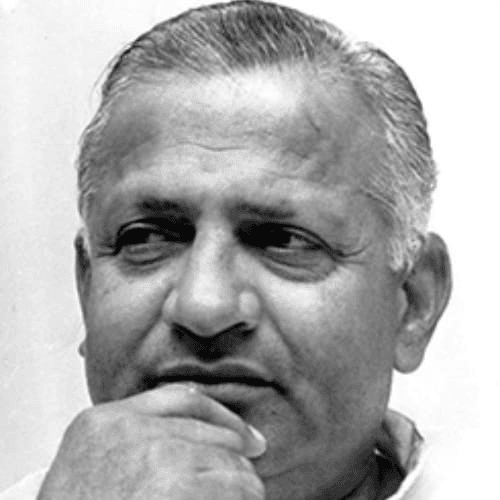
D. Devaraj Arasu (20 August 1915 – 6 June 1982) was an Indian politician, social reformer, and the longest-serving Chief Minister of Karnataka. Born in Kallahalli, Mysore district, into the Arasu community, he pursued his education at the Arasu Boarding School in Mysore and later obtained a B.Sc. degree from Central College, Bengaluru. After returning to his village to manage agricultural lands, he entered politics in 1952 and served as an MLA for nearly three decades.
Arasu rose to prominence by siding with Indira Gandhi during the Congress split in 1969, leading to his appointment as Chief Minister in 1972. He became the first leader from the backward classes to hold the post, serving two terms between 1972–1977 and 1978–1980. His tenure was marked by land reforms, abolition of bonded labour, educational initiatives for backward classes, and the establishment of Electronics City, which later made Bengaluru a global IT hub. He also oversaw the historic renaming of Mysore State to Karnataka in 1973.
Despite later political setbacks, including differences with Indira Gandhi and the eventual loss of power in 1980, Arasu remained a strong advocate for social justice. His final political initiative was the founding of the Karnataka Kranti Ranga in 1982, shortly before his death. Remembered as the “Reformer of Backward Classes,” Arasu ushered in a silent social revolution, empowering the poor and marginalized, and left a legacy that continues to shape Karnataka’s political and social fabric.
Family and Early Years
Personal Details
- 🎂 Date of Birth
- 20 August 1915
- 🏡 Place of Birth
- Kallahalli, Hunsur Taluk, Mysore District, Kingdom of Mysore (now Karnataka, India)
- 👨👩👧👧 Family
- Father: Devaraj Arasu
- Mother: Devira Ammanni
- Siblings: Kemparaj
- Spouse: Chikkammanni
- Children: Chandra Prabha, Nagrathna, Bharathi
- 🎓 Education
- He completed his primary and high school education at the Arasu Boarding School in Mysore. He later pursued higher studies at the Central College, Bengaluru, where he obtained a Bachelor of Science (B.Sc) degree.
Early Career
- D. Devaraj Urs embarked on his political journey with a deep commitment to social justice and upliftment of the marginalized.
- 🌱 Early Life
- D. Devaraj Arasu was born on 20 August 1915 in Kallahalli, Hunsur Taluk, Mysore district, in the then Kingdom of Mysore. He belonged to the Arasu community, which shared distant ties with the Wodeyar royal family. His father, also named Devaraj Arasu, was a landowner, while his mother Devira Ammanni was a deeply pious and traditional woman. His younger brother Kemparaj went on to become an actor.
- At the age of nearly fifteen, Arasu married Chikkammanni, an eleven-year-old girl from his community, in a match arranged by their families. The marriage was harmonious, and together they had three daughters – Chandra Prabha, Nagrathna, and Bharathi.
- 🌿 Early Career
- Before stepping into politics, Arasu was engaged in agriculture, managing his family’s extensive landholdings in Kallahalli. His involvement with village communities, his leadership qualities, and his concern for social justice gradually pushed him towards public life. By the early 1950s, with India’s democratic institutions taking shape, he decided to join active politics.
A Journey of Recognition
Career Journey
- D. Devaraj Urs, a champion of social justice, revolutionized Karnataka's socio-political landscape by empowering marginalized communities.
- 🚩 Entry into Politics
- In 1952, Arasu contested the first general elections after independence and was elected as an MLA from Hunasuru constituency in Mysore State. He went on to serve continuously as an MLA for 28 years (1952–1980).
- During the 1960s, he became part of the powerful Congress Syndicate of regional leaders. Unlike many others in the group, however, he was not hostile to Indira Gandhi. When the Congress party split in 1969, he chose to side with Indira Gandhi’s Congress (R) instead of the Congress (O) faction.
- 🏛️ Rise to Chief Minister
- Arasu’s decision to back Indira Gandhi proved successful. In the 1971 Lok Sabha elections, Congress (R) under his leadership won all 27 seats from Karnataka. The following year, in the 1972 Assembly elections, the party secured a landslide victory, winning 165 out of 216 seats.
- On 20 March 1972, D. Devaraj Arasu was sworn in as the Chief Minister of Karnataka. He became the first leader from a backward-class community to hold this post, breaking the decades-long dominance of Lingayat and Vokkaliga leaders. Importantly, he also became the first Chief Minister of Karnataka/Mysore to complete a full five-year term.
- ⚖️ Major Reforms and Contributions
- As Chief Minister, Arasu was remembered for his progressive reforms, especially for the welfare of the poor, scheduled castes, and backward classes.
- Land Reforms: He championed the slogan “Land to the tiller”, redistributing agricultural land and reducing the hold of dominant castes in politics.
- Abolition of Bonded Labour: His government took firm steps to abolish bonded labour, particularly prevalent in the Mysore district.
- Education for Backward Classes: He laid stress on providing education to socially and economically disadvantaged groups, establishing backward classes and minority hostels.
- Backward Classes & Minority Department: In 1977, he created a separate department and also established the Karnataka Backward Classes Development Corporation.
- Welfare Measures: His government introduced schemes for rural debt relief, housing for migrant workers, and the popular initiative to provide an electric bulb in every household.
- Employment Opportunities: Around 16,000 unemployed graduates were absorbed under a stipendiary scheme, later made permanent.
- Industrial Growth: He supported R.K. Baliga’s vision by setting up the Karnataka State Electronics Development Corporation (Keonics) in 1976, which laid the foundation for Electronics City in Bengaluru.
- Renaming of Mysore State: In 1973, he officially renamed Mysore State as Karnataka, a historic cultural and political milestone.
- 🔄 Later Political Journey
- In 1978, following another split in the Congress, Arasu joined Congress (I) under Indira Gandhi and once again became Chief Minister on 17 March 1978. However, after falling out with her in 1979, he moved to Congress (S) and continued briefly as CM. By January 1980, with most of his MLAs deserting him, he lost power to R. Gundu Rao.
- In 1982, only a few months before his death, Arasu founded the Karnataka Kranti Ranga as an independent political force, but he passed away on 6 June 1982 before it could gain momentum.
- 🌟 Legacy
- D. Devaraj Arasu is remembered as the “Reformer of Backward Classes” in Karnataka.
- He was the longest-serving Chief Minister of Karnataka, with a tenure of 7 years and 238 days.
- He broke the caste dominance of Karnataka politics and paved the way for future backward class leaders like S. Bangarappa, Veerappa Moily, and Siddaramaiah.
- His land reforms, social justice measures, and welfare initiatives marked a silent social revolution in Karnataka, leaving a lasting imprint on the state’s political and social fabric.
Achievements and Milestones
- 🎖️ Achievements as Chief Minister
- First leader from backward classes to become the Chief Minister of Karnataka (1972–1977), breaking the dominance of Lingayat and Vokkaliga leaders.
- First Chief Minister of Karnataka/Mysore to complete a full five-year term (1972–1977).
- Longest-serving Chief Minister of Karnataka with a total tenure of 7 years and 238 days.
- Played a key role in renaming Mysore State to Karnataka in 1973, a historic cultural decision.
Additional Highlights
Contributions
- A champion of social justice, D. Devaraj Urs reshaped Karnataka's socio-political landscape through groundbreaking land reforms and policies aimed at uplifting marginalized communities.
- 🚜 Land Reforms Model
- His “Land to the tiller” policy in Karnataka became a benchmark for agrarian justice and inspired discussions on poverty eradication worldwide.
- ⚖️ Social Justice
- By empowering backward classes, scheduled castes, and minorities, he projected India as a democracy committed to equality on the global stage.
- 💻 Industrial Vision
- He supported the establishment of Electronics City (1976), which transformed Bengaluru into the IT hub of the world, influencing global economies and innovation.
- 📚 Educational Empowerment
- His initiatives for backward and minority students helped create generations of educated citizens who contributed not only in India but also abroad.
Death
- D. Devaraj Urs passed away on 06 June 1982.