
D. Kaprekar Family Tree
D. Kaprekar - A Lifestory
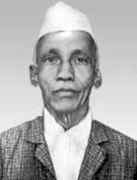
Dattaraya Ramchandra Kaprekar was an Indian mathematician who is best known for his work in number theory. Born in 1905 in Dahanu, India, Kaprekar received his formal education in Mumbai, graduating from the University of Mumbai. Although he worked as a schoolteacher for most of his life, his passion lay in exploring the fascinating world of numbers. He pursued his mathematical interests independently, often at his own expense, and without the backing of a large institution. This independent research led him to discover several remarkable properties and concepts related to numbers, many of which are named after him.
Kaprekar's most famous discovery is undoubtedly the Kaprekar constant, 6174. He demonstrated that if you take any fourdigit number (with at least two different digits), arrange its digits in descending and ascending order, subtract the smaller number from the larger, and repeat this process, you will eventually arrive at 6174. Once you reach 6174, the process will always result in 6174 (7641 1467 = 6174). He also identified Kaprekar numbers, which are numbers that can be split into two parts that add up to the original number when squared. For example, 9 is a Kaprekar number because 9 squared is 81, and 8 + 1 = 9. Similarly, 297 is a Kaprekar number because 297 squared is 88209, and 88 + 209 = 297.
Despite not being a professional mathematician in the traditional sense, Kaprekar's work gained recognition within mathematical circles, particularly in India. He presented his findings at various conferences and meetings, sharing his enthusiasm for number theory with other mathematicians. While his contributions were initially met with skepticism, his discoveries eventually garnered significant attention and are now wellestablished concepts in recreational mathematics and number theory. Kaprekar continued his mathematical explorations throughout his life, leaving behind a legacy of intriguing discoveries that continue to fascinate mathematicians and number enthusiasts alike. He passed away in 1986, leaving behind a rich collection of mathematical ideas that continue to be studied and appreciated.
Family and Early Years
Personal Details
- 🎂 Date of Birth
- D.R. Kaprekar was born on 17 January 1905.
- 📍 Place of Birth
- D.R. Kaprekar was born in Dahanu India.
Early Career
- D.R. Kaprekar embarked on his professional journey as a school teacher a role that laid the foundation for his later mathematical explorations and discoveries.
- 👨🏫 Beginning as a Teacher
- Kaprekar began his career as a school teacher in Nashik India. This role provided him with a platform to nurture young minds and simultaneously pursue his passion for mathematics. He was associated with the education sector, specifically teaching at the school level.
- 🔢 First Major Contribution: Discovering Self-Numbers
- His first major contribution was the discovery of self-numbers also initially called Devlali numbers. A self-number is a positive integer that cannot be generated by adding any other positive integer to the sum of its digits. For example, 21 is not a self-number because it can be generated by 15 + 1 + 5 = 21. The significance of this discovery lies in its contribution to number theory, revealing a new class of numbers with unique properties.
- 🚧 Challenges in Establishing Recognition
- One of the main challenges Kaprekar faced was gaining acceptance and recognition for his work within the established mathematical community. His independent research and unconventional methods often met with skepticism. Without institutional support or widespread acknowledgment popularizing his discoveries proved difficult, requiring persistence and self-reliance.
A Journey of Recognition
Career Journey
- A recreational mathematician who found fascination in numbers revealing hidden patterns and properties within them.
- 🔢 Early Recognition and Kaprekar Constants
- After gaining recognition for discovering the Kaprekar constant (6174) and Kaprekar numbers Kaprekar continued his exploration of number theory. He wasn't formally employed in a research institution, so his progression was largely self-directed. He delivered lectures at schools and colleges, sharing his discoveries and passion for mathematics with students and teachers. This period was defined by his dedication to popularizing recreational mathematics.
- 🧩 Further Discoveries and Number Theory Exploration
- Kaprekar's major contributions extend beyond Kaprekar constants and numbers. He discovered self-numbers Demlo numbers, and explored various other number properties. He wasn't in a traditional leadership position but acted as an informal mentor and guide to budding mathematicians. His intellectual breakthrough was in demonstrating that seemingly simple mathematical operations could reveal profound and unexpected patterns. He was involved in mathematical circles and conferences, presenting his findings and interacting with other mathematicians.
- 📚 Dissemination of Ideas and Lasting Legacy
- Kaprekar faced the challenge of limited resources and lack of institutional support. He adapted by self-publishing his work and relying on his network of contacts to disseminate his ideas. He continued to refine his understanding of number theory discovering new types of numbers and relationships. His work during this period solidified his legacy as a champion of recreational mathematics and an inspiration to mathematicians of all levels. His work continues to inspire recreational mathematicians today.
Achievements and Milestones
- Awards & Recognition 🏆
- While D.R. Kaprekar did not receive formal awards from government or academic institutions his work gained recognition and appreciation through:
- ● Recognition by Mathematicians: His discoveries like Kaprekar's constant and Kaprekar numbers were named after him a significant form of recognition within the mathematical community.
- ● Public Lectures & Popularization: He travelled extensively delivering lectures and popularizing mathematics in schools and colleges, which contributed to his recognition.
- ● Widespread Adoption of his Concepts: His concepts are now part of recreational mathematics and are widely studied and appreciated.
Additional Highlights
Contributions
- D. Kaprekar a recreational mathematician, captivated the world with his intriguing discoveries in number theory and recreational mathematics, revealing hidden patterns and relationships within numbers.
- 🔢 Kaprekar's Constant (6174)
- ● Discovered the constant 6174 now known as Kaprekar's constant.
- ● Demonstrated that any four-digit number with at least two distinct digits when subjected to a specific iterative process (arranging the digits in descending and ascending order and subtracting the smaller number from the larger), will eventually converge to 6174 or enter a loop.
- ● This iterative process and the resulting constant have become a popular topic in recreational mathematics and number theory.
- ✨ Kaprekar Numbers
- ● Defined Kaprekar numbers as numbers whose square can be split into two parts that add up to the original number (e.g. 9, 45, 55, 99).
- ● Formally a Kaprekar number is an integer n such that n2 can be written as a + b, where a + b = n, and b is formed by the rightmost k digits of n2.
- ● His work brought attention to these self-generating numbers and contributed to the exploration of their properties.
- ♾️ Self Numbers (Devlali Numbers)
- ● Discovered self numbers also known as Devlali numbers (named after the town where he lived).
- ● A self number is an integer that cannot be generated as the sum of any other integer and its digits.
- ● For example 21 is not a self number because it can be generated by 15 + 1 + 5 = 21.
- Other Contributions
- ● Demlo Numbers: Studied and named Demlo numbers which are squares of repunits (numbers consisting of only the digit 1). He named them after the railway station near Deolali.
- ● Number Theory Research: Continued to explore and publish on various other aspects of number theory and recreational mathematics throughout his career.
- While Kaprekar primarily focused on mathematical research and discovery there is no readily available information to suggest direct involvement in philanthropic activities, social advocacy, cultural influence, or public service. His contributions were primarily within the realm of mathematics, enriching the field with his unique insights and discoveries.
Death
- D. Kaprekar passed away on 01 January 1970.
Disclaimer
The information provided has been gathered from various sources and may have errors or discrepancies.
If you notice any inaccuracies, please let us know at admin-support@imeuswe.in


