
Dayanand Saraswati Family Tree
Dayanand Saraswati - A Lifestory
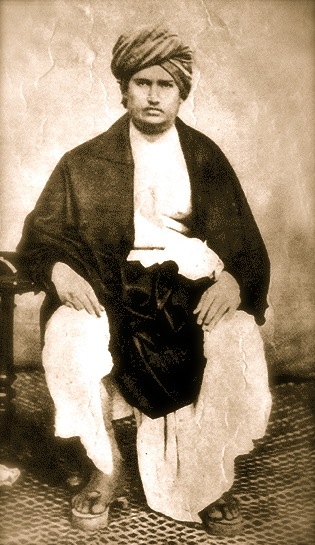
Dayanand Saraswati was a prominent Indian philosopher, social reformer, and religious leader who lived during the 19th century. Born in Tankara, Gujarat, India, into a Brahmin family, his early life was steeped in traditional Hindu practices and Vedic learning. However, a pivotal experience during his youth, witnessing the perceived inadequacy of idol worship, sparked a lifelong quest for truth and a critical examination of prevailing religious beliefs. He embarked on a journey, traveling extensively throughout India as a wandering ascetic, engaging in debates and discussions with scholars from various religious traditions. This period of intense study and reflection led him to a profound understanding of the Vedas, which he believed to be the ultimate source of knowledge and the foundation of true Hinduism.
Dayanand Saraswati founded the Arya Samaj in 1875, an organization dedicated to reforming Hinduism and promoting Vedic principles. His teachings emphasized monotheism, rejecting idol worship, polytheism, and ritualistic practices that he considered to be later corruptions of the original Vedic faith. He advocated for a return to the pure, unadulterated teachings of the Vedas, emphasizing reason, logic, and individual interpretation of scripture. He championed social reform, advocating for the eradication of caste discrimination, the promotion of women's education, and the rejection of child marriage. His influential work, Satyarth Prakash (The Light of Truth), articulated his philosophical and religious views, serving as a guiding text for the Arya Samaj movement. Dayanand Saraswati's legacy lies in his efforts to revitalize Hinduism, promote social justice, and inspire a renewed interest in Vedic learning, leaving an indelible mark on the religious and social landscape of India.
Family and Early Years
Personal Details
- 🎂 Date of Birth
- Dayanand Saraswati was born on 12 February 1824.
- 🏠 Place of Birth
- He was born in Tankara Gujarat, India.
- 👨👩👧👦 Family Details
- His father's name was Karshanji Lalji Tiwari and his mother's name was Yashodabai. He had two sisters and a brother.
Early Career
- Dayanand Saraswati's professional journey began with a profound rejection of traditional Hindu practices and a burning desire to reform religious and social norms. This set the stage for his emergence as a prominent figure in the socio-religious landscape of 19th-century India.
- 🙏 Rejection of Traditional Practices
- His early life was marked by a strong rejection of idolatry and ritualistic Hinduism. This rejection was triggered by a personal experience where he witnessed mice desecrating an idol offered food. He began to question the validity of these practices eventually leaving home to pursue a life of asceticism and spiritual seeking.
- 🌱 Early Ascetic Life
- He spent many years wandering throughout India as an ascetic (Sannyasi) seeking knowledge and engaging in philosophical debates with various religious scholars and practitioners. During this period, he studied the Vedas and other scriptures, developing his own understanding of Hindu philosophy.
- 📜 First Major Contribution: Vedic Interpretation
- Dayanand Saraswati's first major contribution was his unique interpretation of the Vedas. He argued that the Vedas were the ultimate source of truth and that later Hindu scriptures and practices had deviated from the original Vedic teachings. This interpretation formed the basis of his reformist agenda and his critique of contemporary Hindu society. He emphasized monotheism and rejected practices such as idol worship caste discrimination, and child marriage, which he believed were not sanctioned by the Vedas.
- 🚧 Challenges to Establishment
- Establishing himself as a religious reformer was fraught with challenges. He faced opposition from orthodox Hindu priests and scholars who defended traditional practices. His views were often met with resistance and he encountered numerous attempts to discredit his teachings. Additionally, he faced difficulties in convincing people to abandon long-held beliefs and customs. The entrenched nature of the caste system and the deeply ingrained acceptance of idolatry made it difficult for his message of Vedic reform to gain widespread acceptance initially.
A Journey of Recognition
Career Journey
- A staunch advocate for Vedic principles and social reform Dayanand Saraswati ignited a transformative movement for spiritual and cultural renewal in India.
- 🔥 Early Reformative Spark: After renouncing traditional religious practices and dedicating himself to seeking true knowledge Dayanand Saraswati embarked on a mission to revive Vedic Dharma. He challenged prevailing religious dogmas and superstitions, advocating for a return to the original teachings of the Vedas.
- ✍️ Authoring the Satyarth Prakash: Dayanand Saraswati solidified his reformist ideas by writing the Satyarth Prakash (The Light of Truth) a seminal work that critiqued contemporary religious practices and presented his interpretation of Vedic teachings. This book became a cornerstone of the Arya Samaj movement.
- 💪 Founding the Arya Samaj: He established the Arya Samaj in 1875 a socio-religious organization aimed at promoting Vedic education, challenging caste discrimination, and advocating for women's rights. This marked a significant step in institutionalizing his reformist vision.
- 🗣️ Engaging in Scholarly Debates: Dayanand Saraswati actively engaged in public debates with religious scholars and leaders of various faiths. He skillfully defended his Vedic interpretations and challenged opposing viewpoints gaining recognition and influence across India. These debates helped spread his message and attract followers.
- 🏫 Championing Education and Social Justice: The Arya Samaj under his guidance, established schools and colleges to provide modern education rooted in Vedic principles. It also championed causes such as widow remarriage, and the eradication of untouchability, contributing significantly to social reform movements in India.
- 🌍 Enduring Legacy: Dayanand Saraswati's unwavering commitment to Vedic principles and social reform left an indelible mark on India's religious and social landscape. The Arya Samaj continues to promote his teachings and work for social betterment ensuring his legacy endures. He faced opposition from orthodox elements, but his intellectual prowess and commitment to truth allowed him to overcome these hurdles, shaping a lasting movement for change.
Achievements and Milestones
- Dayanand Saraswati did not receive formal awards in the way we understand them today. His influence and recognition came through:
- 🏆 Titles and Recognition:
- ● He was widely revered as a Maharishi (great sage).
- ● He was known as a reformer and a scholar of the Vedas.
- 📜 Legacy and Impact:
- ● His greatest impact was the establishment of the Arya Samaj which furthered his teachings and principles.
- ● His influence inspired many leaders of the Indian independence movement.
Additional Highlights
Contributions
- A towering figure of 19th-century India Dayanand Saraswati distinguished himself through his fervent advocacy for Vedic principles and a reformed Hindu society.
- 🔥 Revival of Vedic Teachings
- ● Dayanand Saraswati championed a return to the Vedas as the ultimate source of religious truth.
- ● He argued against practices like idol worship polytheism, and ritualistic excesses, advocating for a monotheistic understanding of God.
- ● His seminal work the Satyarth Prakash (The Light of Truth), served as a cornerstone for understanding his interpretations of Vedic philosophy.
- 🛡️ Social Reform & Upliftment
- ● Dayanand Saraswati vocally opposed caste discrimination advocating for equality and social justice for all individuals, regardless of their birth.
- ● He championed the cause of women's education and empowerment advocating for their right to study the Vedas and participate in religious and social life.
- ● He condemned child marriage and promoted widow remarriage challenging prevailing social norms that restricted women's rights.
- 🏫 Establishment of the Arya Samaj
- ● In 1875 Dayanand Saraswati founded the Arya Samaj, a socio-religious organization dedicated to promoting Vedic teachings and social reform.
- ● The Arya Samaj established schools colleges, and orphanages across India, contributing to the spread of education and social welfare.
- ● The organization played a significant role in promoting Hindi as a national language and fostering a sense of Indian nationalism.
- 🗣️ Religious Debate & Dialogue
- ● Dayanand Saraswati engaged in public debates and discussions with religious leaders from various faiths defending Vedic principles and challenging superstitious beliefs.
- ● He used logic and reason to critique religious dogma and promote a rational understanding of spirituality.
- ● His efforts helped to stimulate intellectual discourse and reform within Hinduism and other religious communities.
Death
- Dayanand Saraswati passed away on 30 October 1883.
Disclaimer
The information provided has been gathered from various sources and may have errors or discrepancies.
If you notice any inaccuracies, please let us know at admin-support@imeuswe.in


