
Francis Souza Family Tree
Francis Souza - A Lifestory
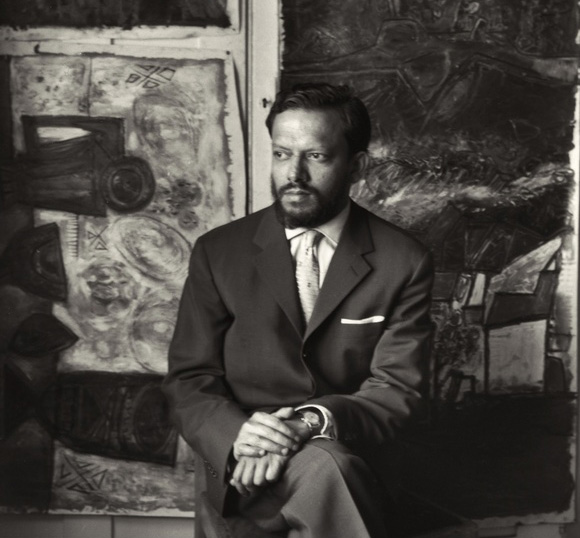
Francis Newton Souza, a prominent figure in Indian modern art, was born in Goa, then a Portuguese colony, in 1924. His early life was marked by expulsion from a Jesuit school for rebellious behavior, an event that arguably foreshadowed his later iconoclastic artistic style. Souza's artistic journey began at the Sir J. J. School of Art in Bombay, but his dissatisfaction with the institution's traditional approach led to his expulsion once again, this time for his involvement in a proindependence movement.
Undeterred, Souza became a founding member of the Progressive Artists' Group in 1947, a collective that sought to break free from the prevailing nationalist art and embrace modernism. His work during this period often depicted the human form in a distorted, expressive manner, reflecting his deep engagement with existential themes and a rejection of idealized beauty. Souza's art fearlessly explored themes of religion, sexuality, and social injustice, often provoking controversy and challenging societal norms.
In 1949, Souza moved to London, where he continued to develop his distinctive style. His work gained recognition in the European art scene, and he exhibited extensively. Souza's paintings and drawings are characterized by bold lines, vibrant colors, and a raw, visceral energy. He drew inspiration from various sources, including Western modernism, Indian mythology, and Christian iconography. Souza's work often features distorted figures, grotesque faces, and a sense of underlying tension.
Throughout his career, Souza remained a fiercely independent and uncompromising artist. He challenged conventional artistic norms and pushed the boundaries of expression. His work continues to be celebrated for its originality, its emotional intensity, and its unflinching exploration of the human condition. Souza passed away in Mumbai in 2002, leaving behind a rich legacy that continues to inspire artists and collectors alike.
Family and Early Years
Personal Details
- 🎂 Date of Birth
- 12 April 1924
- 🌍 Place of Birth
- Saligao Goa, Portuguese India
- 👨👩👧👦 Family Details
- Spouse: He was married multiple times. His wives included Maria Figuereido Liselotte Kristian, and Barbara Zinkant.
- Children: He had children with some of his wives including a daughter named Belinda Souza.
Early Career
- Francis Newton Souza embarked on his artistic journey with a rebellious spirit and a burning desire to express the human condition through bold often provocative, imagery. His early work was characterized by distorted figures, raw emotion, and a rejection of traditional artistic norms, setting the stage for his influential role in the development of modern Indian art.
- 🎨 Early Artistic Explorations
- Souza's initial years were marked by experimentation and a conscious effort to break away from the prevailing academic styles. He co-founded the Progressive Artists' Group in 1947 a collective that sought to forge a new Indian artistic identity, free from colonial influences and embracing international modernism. During this time, his paintings and drawings explored themes of religion, sexuality, and social inequality with a distinctly expressionistic style.
- 🌟 First Major Opportunity: Progressive Artists' Group Exhibition
- The Progressive Artists' Group's first exhibition in 1948 provided Souza with a significant platform to showcase his work. This exhibition though met with mixed reactions, was a pivotal moment in launching the careers of Souza and other group members. It challenged the established art scene and brought their radical new vision to public attention.
- 📰 Reception and Impact
- The Progressive Artists' Group's exhibition and Souza's work within it, generated considerable controversy. While some critics dismissed it as crude and shocking, others recognized its raw power and originality. The exhibition sparked debate about the direction of Indian art and helped to establish Souza as a leading figure in the emerging modern art movement. It was a bold statement that resonated with a generation eager to break free from tradition.
- 🚧 Challenges and Obstacles
- Souza faced numerous challenges in his early career. His provocative subject matter and unconventional style often met with resistance from conservative art circles and the general public. Financial difficulties were a constant struggle and he faced censorship and social stigma due to the explicit nature of some of his work. Despite these obstacles, Souza remained committed to his artistic vision, fueled by a belief in the power of art to challenge and transform society.
A Journey of Recognition
Career Journey
- Francis Newton Souza a fiercely individualistic painter, shocked and captivated the art world by blending Indian roots with Western modernism, leaving an indelible mark on the Progressive Artists' Group and beyond.
- 🎨 Early Recognition and Provocative Works: After establishing himself in London Souza's raw and expressive style, characterized by distorted figures and bold colors, gained attention. His early works, often exploring themes of religion, sexuality, and social injustice, generated both controversy and acclaim. His 1955 essay, "Nirvana of a Maggot," published in Encounter magazine, further cemented his reputation as a provocative and intellectual artist.
- 🖼️ The Mature Style and International Acclaim: Souza continued to develop his unique style marked by a transition toward more structured compositions and a focus on line and form. His "Head" series became particularly iconic, showcasing his mastery of portraiture and his ability to convey deep emotion. He exhibited extensively in Europe and the United States, achieving international recognition and commercial success.
- 🤝 Collaborative Ventures and Shifting Horizons: While primarily a solo artist Souza engaged in collaborations with other artists and writers throughout his career. He explored different mediums, including printmaking and sculpture, expanding his artistic repertoire. He also spent time in New York, where his work was influenced by the city's vibrant art scene.
- 🌟 Legacy and Enduring Influence: Despite fluctuations in critical and commercial reception Souza's legacy as a pioneering figure in Indian modern art remains secure. His fearless experimentation and uncompromising vision continue to inspire artists today. His work is held in major museum collections worldwide, a testament to his enduring contribution to the art world.
Achievements and Milestones
- Here's a list of awards received by Francis Newton Souza:
- 🏆 Awards
- ● Government of Bombay Award 1955
- ● John Hay Whitney Fellowship 1959.
Additional Highlights
Contributions
- Francis Newton Souza a name synonymous with bold strokes, raw emotion, and a rebellious spirit that reshaped the landscape of Indian modern art.
- 🎨 Artistic Contributions
- ● Souza was a founding member of the Progressive Artists' Group of Bombay which challenged the prevailing nationalist art styles and embraced modernism.
- ● His paintings often depicted religious imagery nudes, and landscapes in a distorted and expressionistic style, reflecting his complex relationship with religion, sexuality, and society.
- ● Souza's writings including his autobiographical essay "Nirvana of a Maggot," provided insights into his artistic philosophy and personal struggles.
- ✍️ Literary Contributions
- ● He wrote extensively contributing essays and articles on art, culture, and society.
- ● His autobiographical writings provided a unique perspective on his life and artistic journey.
- 🕊️ Cultural Influence
- ● Souza's work challenged conventional notions of beauty and morality paving the way for greater artistic freedom and experimentation in India.
- ● His bold and unapologetic style inspired generations of artists to explore their own identities and experiences through art.
- ● He brought Indian modern art to the global stage exhibiting his work in major museums and galleries around the world.
Death
- Francis Newton Souza passed away on 28 March 2002.
Disclaimer
The information provided has been gathered from various sources and may have errors or discrepancies.
If you notice any inaccuracies, please let us know at admin-support@imeuswe.in


