
G. Kurup Family Tree
G. Kurup - A Lifestory
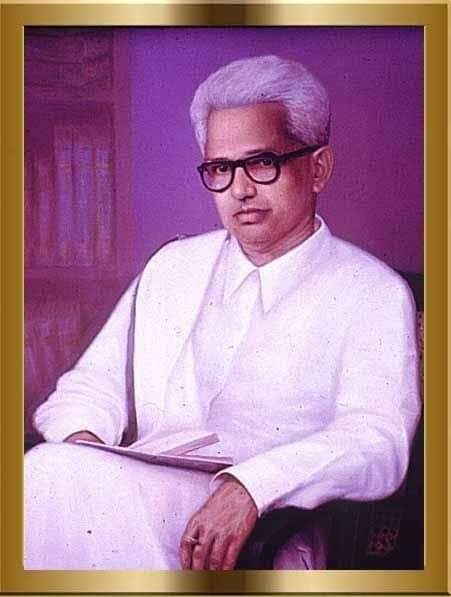
G. Sankara Kurup, often hailed as Mahakavi G, was a towering figure in Malayalam literature, renowned for his profound poetry that blended romantic idealism with a deepseated social consciousness. Born in Nayathode, Kerala, his early life was steeped in traditional learning and Sanskrit studies, which profoundly influenced his literary style. Kurup began his career as a teacher, dedicating many years to educating young minds while simultaneously nurturing his passion for poetry. His early works showcased a romantic sensibility, exploring themes of nature, love, and the human condition. However, as he matured, his poetry evolved to reflect a growing awareness of social injustices and the struggles of the common person.
Kurup's literary contributions extended beyond poetry; he was also a respected essayist and translator. His essays often delved into literary criticism and philosophical reflections, showcasing his intellectual depth. Furthermore, he played a significant role in popularizing the works of other prominent poets through his translations, making them accessible to a wider audience. Throughout his illustrious career, G. Sankara Kurup received numerous accolades and honors, solidifying his position as one of the most influential voices in Malayalam literature. His works continue to be studied and celebrated for their lyrical beauty, profound insights, and enduring relevance to the human experience. He left behind a rich legacy that continues to inspire generations of writers and readers alike.
Family and Early Years
Personal Details
- 🎂 Date of Birth
- 03 June 1901.
Early Career
- G. Sankara Kurup embarked on his creative journey fueled by a deep passion for poetry writing from a young age and quickly establishing himself as a promising voice in Malayalam literature. His early works reflected a blend of romanticism and social consciousness, capturing the nuances of human emotions and the realities of the world around him.
- ✍️ Early Literary Pursuits
- Kurup's initial years were marked by prolific writing and participation in literary circles. He honed his skills by contributing poems and articles to various magazines and publications gradually building a reputation for his lyrical style and insightful observations. These early writings laid the foundation for his later, more profound works.
- ✨ First Major Opportunity: Sahitya Kauthukam
- His first major opportunity came with the publication of Sahitya Kauthukam a collection of his early poems. This publication served as his formal introduction to the literary world, showcasing his talent and potential to a wider audience.
- 📢 Reception of Sahitya Kauthukam
- Sahitya Kauthukam was generally well-received with critics appreciating the freshness of his voice and the depth of his emotional expression. It helped him gain recognition among established writers and critics, paving the way for future opportunities.
- 🚧 Challenges in Early Career
- Despite the positive reception of his early work Kurup faced the common challenges of an aspiring artist. Gaining widespread recognition and financial stability was difficult. He also had to navigate the established literary norms while trying to maintain his unique style and voice.
A Journey of Recognition
Career Journey
- G. Sankara Kurup was a pioneering Malayalam poet deeply rooted in Indian philosophy and culture, who revolutionized Malayalam poetry with his symbolic and philosophical verse.
- ✍️ Early Career & Landmark Works:
- After establishing himself as a poet G. Sankara Kurup continued to enrich Malayalam literature with profound and thought-provoking works. His significant works during this period include " സൂര്യകാന്തി (Sooryakanthi)" (Sunflower), which further explored themes of nature, spirituality, and human existence. Other notable works cemented his position as a leading voice in Malayalam poetry, known for his use of rich imagery and philosophical depth.
- 🤝 Collaborations & Evolution:
- While primarily a poet G. Sankara Kurup engaged in collaborations that broadened his artistic scope. He contributed lyrics to Malayalam films, showcasing his versatility and reaching a wider audience. This venture into film lyrics didn't represent a radical shift in style, but rather an extension of his poetic sensibilities to a different medium.
- 🏆 Critical Acclaim & Public Reception:
- G. Sankara Kurup achieved significant critical and commercial success. He was the first Malayalam poet to win the Jnanpith Award India's highest literary honor, for his collection "Odakkuzhal" (The Bamboo Flute). His work resonated deeply with the public, who appreciated his ability to blend traditional Indian philosophy with contemporary themes. His poems were widely read, studied, and celebrated for their lyrical beauty and intellectual depth. As an established figure, his voice evolved to become even more profound and reflective, solidifying his legacy as a literary giant.
Achievements and Milestones
- Here's a list of awards received by G. Sankara Kurup:
- 🏆 Major Awards
- ● Jnanpith Award (1965) - First recipient of the Jnanpith Award.
- ● Soviet Land Nehru Award (1967)
- 📜 Literary Awards
- ● Kerala Sahitya Akademi Award (1958) - Sahitya Akademi Award for the collection of poems Viswadarshanam.
- ● Sahitya Akademi Award (1961) - Malayalam for Viswadarshanam.
- 🏅 Other Notable Distinctions
- ● Padma Bhushan (1968).
Additional Highlights
Contributions
- Known for his profound and evocative poetry that blended philosophical depth with lyrical beauty G. Sankara Kurup stands as a titan in Malayalam literature.
- ✍️ Literary Contributions
- ● Authored numerous acclaimed poems essays, and plays that explored themes of nature, humanity, and spirituality.
- ● His works often reflected a deep engagement with Indian philosophy and a sensitivity to social issues.
- ● Notable works include "Oru Valiyathu" "Nimisham," and his collection of poems, Odakkuzhal, which won the Jnanpith Award.
- 🌍 Social Advocacy
- ● Championed social reform through his writings advocating for equality and justice.
- ● His poems often served as a voice for the marginalized and oppressed raising awareness about their plight.
- 🏛️ Cultural Influence
- ● Played a significant role in shaping the modern Malayalam literary landscape.
- ● His works inspired generations of writers and artists contributing to the cultural identity of Kerala.
- 🏆 Awards and Recognition
- ● Received the Jnanpith Award India's highest literary honor, for his outstanding contributions to Malayalam literature.
- ● Honored with the Padma Bhushan by the Government of India for his distinguished service to the nation.
Disclaimer
The information provided has been gathered from various sources and may have errors or discrepancies.
If you notice any inaccuracies, please let us know at support@imeuswe.in

