
Gayatri Spivak Family Tree
Gayatri Spivak - A Lifestory
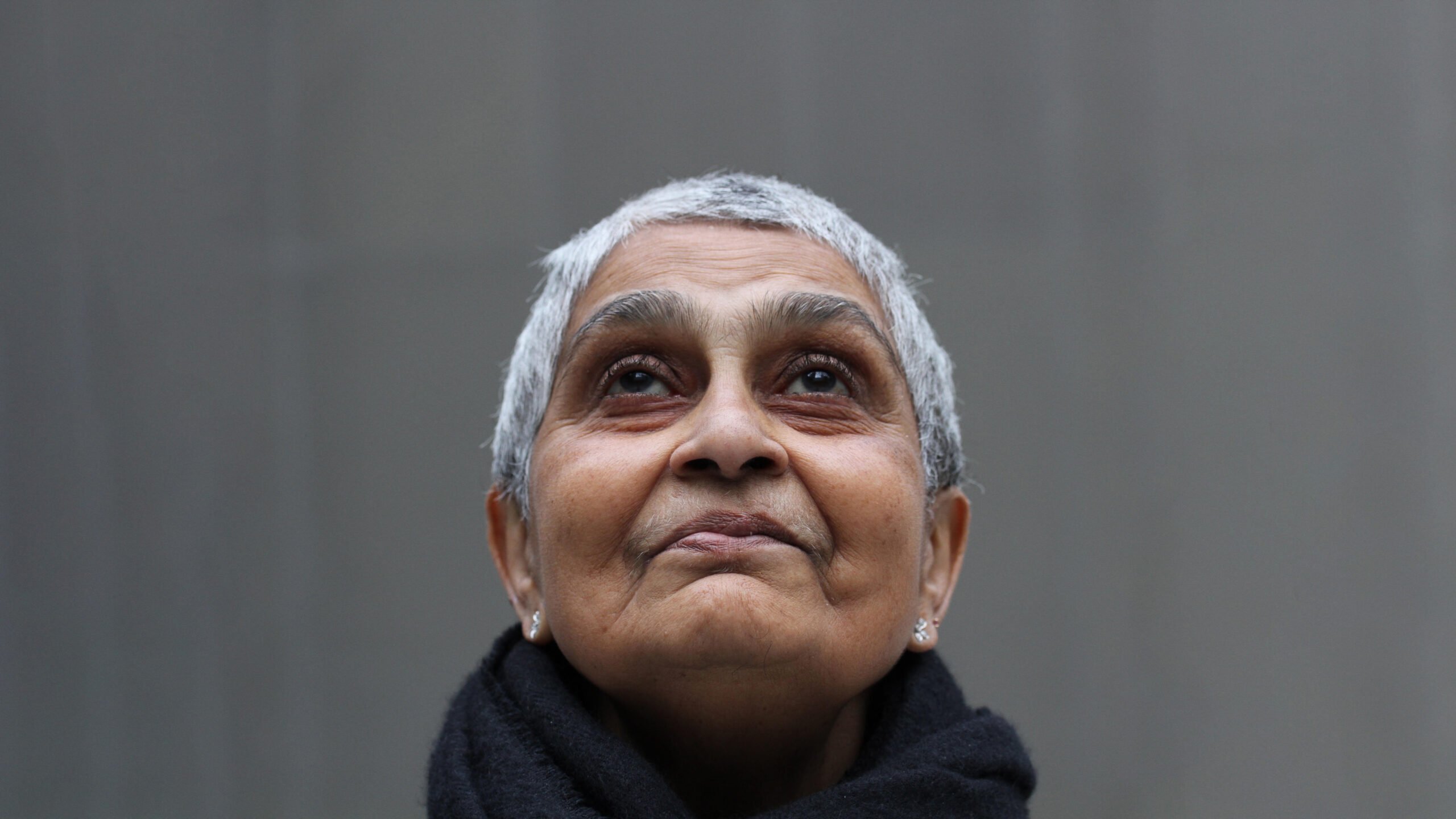
Gayatri Chakravorty Spivak is a highly influential literary theorist, philosopher, and feminist critic, renowned for her postcolonial perspectives. Born in Calcutta, India, she received her early education there before pursuing higher studies in the United States. She earned her Ph.D. in Comparative Literature from Cornell University, where she began to develop her intellectual trajectory, deeply influenced by deconstructionist thinkers like Jacques Derrida. Spivak is best known for her essay "Can the Subaltern Speak?", a seminal work that examines the silencing of marginalized groups, particularly women in postcolonial contexts, and critiques the limitations of Western intellectual discourse in representing their experiences. This essay established her as a key figure in postcolonial studies and solidified her commitment to giving voice to the voiceless.
Throughout her career, Spivak has held professorships at numerous prestigious universities, including the University of Iowa, the University of Texas at Austin, and Columbia University, where she is currently a University Professor. Her scholarly work spans a wide range of topics, including Marxism, feminism, deconstruction, and globalization. Beyond her theoretical contributions, Spivak is also actively involved in teaching and activism, particularly in rural India, where she works on projects related to education and empowerment. Her commitment to social justice and her rigorous intellectual engagement have made her a major figure in contemporary thought, challenging conventional perspectives and advocating for a more inclusive and equitable world. Her prolific writing and unwavering dedication to marginalized communities continue to inspire scholars and activists alike.
Family and Early Years
Personal Details
- 🎂 Date of Birth
- 24 February 1942
- 🏠 Place of Birth
- Calcutta India
- 👨👩👧👦 Family Details
- Parents: Paresh Chandra Chakravorty and Sivani Chakravorty
- Spouse: Ralph Willett.
Early Career
- Gayatri Chakravorty Spivak embarked on her academic journey with a strong foundation in literature quickly establishing herself as a promising scholar.
- 🎓Early Academic Pursuits
- Spivak's professional path began in academia. After completing her education she started her career as an instructor at various universities. Her association with institutions such as the University of Iowa marked an important phase in her early career.
- ✍️Groundbreaking Scholarship
- One of Spivak's first major contributions involved her work as a translator and critical theorist. Her translation of Jacques Derrida's Of Grammatology was a significant project that introduced Derrida's work to the English-speaking world. This translation accompanied by her critical introduction, played a crucial role in shaping the reception of post-structuralist thought in literary studies and beyond.
- 🚧Challenges and Obstacles
- In her early career Spivak faced the challenge of navigating the established norms of academic discourse. As a scholar engaging with complex theoretical frameworks, she encountered resistance and skepticism from some quarters. Establishing the significance and value of post-structuralist thought within the broader field of literary criticism required persistent engagement with conventional perspectives.
A Journey of Recognition
Career Journey
- Gayatri Chakravorty Spivak is a pioneering literary theorist and critical theorist whose work has significantly impacted postcolonial studies feminism, and Marxism.
- 🎓 Early Academic Career and Recognition
- After earning her Ph.D. Spivak began her academic career, quickly gaining recognition for her groundbreaking essays and translations. Her early work focused on deconstruction and Marxism, laying the foundation for her later engagement with postcolonial theory.
- 🌍 Translation and "Can the Subaltern Speak?"
- A major contribution was her translation of Jacques Derrida's Of Grammatology which introduced deconstruction to the English-speaking world. However, it was her essay "Can the Subaltern Speak?" that cemented her place as a leading figure in postcolonial studies. This essay critiqued Western intellectuals' representation of marginalized groups and questioned the possibility of the subaltern being heard within dominant power structures.
- 🏫 University Professorships and Institutional Influence
- Spivak held prestigious professorships at various universities including Columbia University, where she founded the Institute for Comparative Literature and Society. These positions allowed her to mentor generations of scholars and shape the direction of critical thought.
- 📚 Continued Scholarship and Expanding Theoretical Frameworks
- Throughout her career Spivak continued to publish influential books and essays, expanding her theoretical framework to include issues of globalization, education, and human rights. She remained committed to challenging dominant narratives and advocating for the marginalized.
- 🌱 Focus on Education and Activism
- Spivak’s work extended beyond academia. She became deeply involved in education and activism particularly in rural India, working on projects related to education and women's empowerment. This commitment to social justice is a defining aspect of her legacy.
- 🏆 Legacy and Ongoing Influence
- Spivak's work has profoundly shaped the fields of postcolonial studies feminist theory, and critical theory. Her ideas continue to be debated and applied across disciplines, making her a highly influential intellectual figure. Her emphasis on the ethical responsibility of the intellectual and her commitment to social justice have left a lasting impact on the academic world and beyond.
Achievements and Milestones
- Here's a list of awards received by Gayatri Chakravorty Spivak:
- 🏆 Academic Awards
- ● Doctorate of Letters honoris causa, University of St Andrews, 1997
- ● Doctorate of Letters honoris causa, University of London, 2003
- ● Doctorate Honoris Causa Universite Paris VIII, 2005
- ● Doctorate of Laws honoris causa, University of Toronto, 2008
- ● Doctorate Honoris Causa Universidad Nacional de San Martín, Buenos Aires, 2012
- ● Kyoto Prize in Thought and Ethics 2012
- ● Doctorate Honoris Causa Rabindra Bharati University, 2013
- ● Doctorate Honoris Causa Yale University, 2022
- 🏅 Other Awards and Recognition
- ● Distinguished Achievement Award Modern Language Association, 2023.
Additional Highlights
Contributions
- Gayatri Chakravorty Spivak is a towering figure in postcolonial studies renowned for her deconstructive readings of canonical texts and her focus on the subaltern.
- 🗣️ Postcolonial Theory and Subaltern Studies:
- ● Spivak is best known for her essay "Can the Subaltern Speak?" which critiques the representation of marginalized groups, particularly the subaltern (those without access to hegemonic structures of power), in historical and theoretical discourse.
- ● She challenges the assumption that the subaltern can be easily accessed or understood by intellectuals arguing that their voices are often mediated and obscured by colonial power structures.
- ● Her work has been instrumental in shaping the field of postcolonial studies by highlighting the complexities of representation power, and voice in the context of colonialism and its aftermath.
- 📖 Deconstruction and Literary Criticism:
- ● Spivak's scholarship is deeply influenced by deconstruction a philosophical approach developed by Jacques Derrida. She applies deconstructive methods to literary and philosophical texts to expose underlying contradictions and power dynamics.
- ● She has translated and introduced Derrida's Of Grammatology to English-speaking audiences making his work more accessible and influential in literary and cultural studies.
- ● Her deconstructive readings of canonical texts such as those by Shakespeare and the Brontës, reveal the ways in which these texts are implicated in colonial ideologies.
- 🌍 Translation and Pedagogy:
- ● Spivak is a dedicated translator bringing the works of marginalized writers, particularly those from the Third World, to a wider audience.
- ● Her translations include the works of Mahasweta Devi an Indian writer and activist, whose stories shed light on the lives of marginalized communities in India.
- ● She emphasizes the importance of translation as a form of cross-cultural understanding and solidarity.
- ● As a professor Spivak is committed to pedagogy and has taught at numerous universities around the world. She emphasizes the importance of critical thinking and ethical engagement with the world.
- 🌱 Advocacy and Activism:
- ● Spivak's work extends beyond academia into the realm of activism and social justice.
- ● She has been involved in various initiatives aimed at promoting education and empowering marginalized communities particularly in rural India.
- ● While specific details about organizations are not readily available in all sources her commitment to social justice is evident in her engagement with grassroots movements and her advocacy for the rights of the oppressed.
- ● She has worked extensively on projects related to literacy and education in rural areas.
Recent Work
- Gayatri Chakravorty Spivak remains a prominent figure in postcolonial studies and critical theory actively lecturing and publishing on issues of globalization, literature, and social justice. Her recent work continues to challenge conventional academic boundaries and advocate for marginalized voices.
- ● Recent Career Update: Spivak's recent contributions involve ongoing engagement with translation studies and her persistent critique of global capitalism's impact on subaltern populations. She consistently emphasizes the importance of ethical engagement with the "other" in both academic and activist contexts.
- ● Recent Projects or Roles:
- ● Spivak has been focused on pedagogical approaches to reading world literature particularly in postcolonial contexts.
- ● She continues to lecture extensively at universities worldwide engaging with students and scholars on topics ranging from deconstruction to feminism.
- ● Domain: Postcolonial theory literary criticism, translation studies, and global ethics.
- ● Relevance/Impact: Her work continues to shape critical discourse on globalization power dynamics, and the responsibility of intellectuals to address social injustices.
- ● Collaborations and Alliances: Spivak's influence extends through her mentorship of numerous scholars and activists. She frequently participates in collaborative projects and dialogues with other leading thinkers in the humanities and social sciences fostering interdisciplinary approaches to complex global issues.
Disclaimer
The information provided has been gathered from various sources and may have errors or discrepancies.
If you notice any inaccuracies, please let us know at admin-support@imeuswe.in


