
Gopabandhu Das Family Tree
Gopabandhu Das - A Lifestory
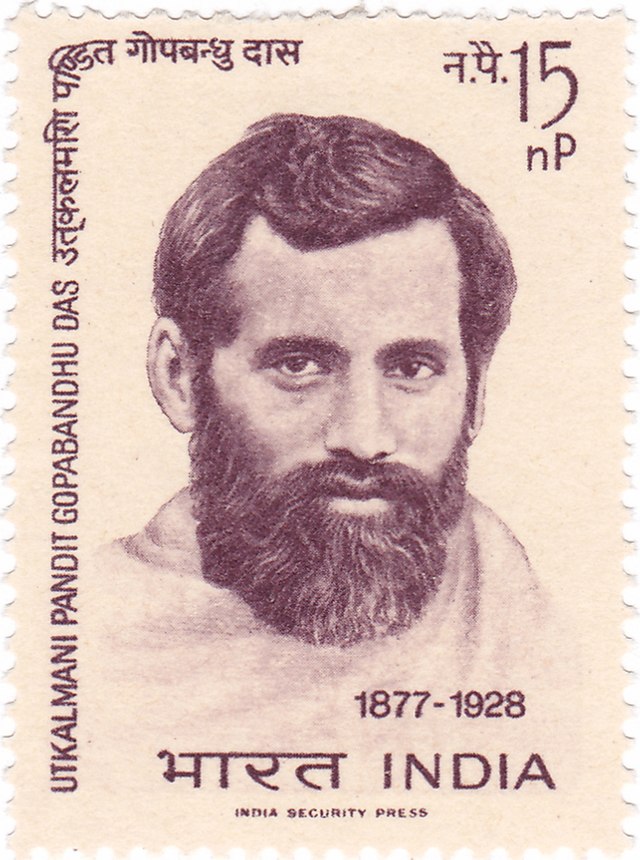
Gopabandhu Das was a prominent social worker, reformer, political activist, journalist, poet, and essayist from Odisha, India. Born on October 9, 1877, in Suando village, near Puri, he dedicated his life to serving the underprivileged and advocating for social justice. He received his early education in Puri and later pursued law, practicing briefly before immersing himself fully in public service. Deeply moved by the suffering of the people during the devastating floods of 1908, he established the Puri Seva Samiti, an organization dedicated to providing relief and rehabilitation to those affected. This experience solidified his commitment to alleviating human suffering and improving the lives of the marginalized.
His nationalist sentiments led him to join the Indian National Congress and actively participate in the Indian independence movement. He was a staunch follower of Mahatma Gandhi and embraced the principles of nonviolent resistance. He played a crucial role in promoting education, particularly among the poor and downtrodden. He founded the Satyabadi School in 1909, an openair school that emphasized character building, nationalistic ideals, and practical skills alongside formal education. This institution became a center for nationalist activities and produced many prominent freedom fighters.
Gopabandhu Das was also a prolific writer and journalist. He founded the newspaper "The Samaj" in 1919, which served as a powerful voice for social reform and political awakening in Odisha. Through his writings, he advocated for the eradication of social evils like untouchability and promoted education, sanitation, and selfreliance. His literary works, including poems and essays, reflected his deep love for his motherland and his unwavering commitment to serving humanity. He endured imprisonment several times for his participation in the freedom struggle, but his spirit remained unbroken. He passed away on June 17, 1928, leaving behind a legacy of selfless service, unwavering patriotism, and profound social reform that continues to inspire generations.
Family and Early Years
Personal Details
- 🎂 Date of Birth
- Gopabandhu Das was born on 09 September 1877.
- 📍 Place of Birth
- He was born in Suando village near Puri, Odisha.
- 👨👩👧👦 Family Details
- His father was Daitari Das and his mother was Swarnamayi Devi. He married Golap Dei, and they had two sons.
- 🎓 Educational Background
- Gopabandhu Das obtained his Bachelor of Arts degree from Ravenshaw College Cuttack, and later earned his Bachelor of Law degree.
Early Career
- Gopabandhu Das embarked on his creative journey driven by a deep commitment to social reform and a passion for using literature to awaken the masses. His initial writings focused on themes of nationalism social justice, and the plight of the downtrodden, laying the groundwork for his future influence.
- ✍️ Early Literary Pursuits
- In the early years Gopabandhu Das dedicated himself to writing poetry and essays that reflected his patriotic fervor and concern for the social ills plaguing Odisha. He used his literary skills to inspire a sense of national identity and advocate for education and social reform. His writings were published in various journals and periodicals, gradually gaining him recognition among intellectual circles.
- 📰 The Samaj: A Platform for Voice
- Gopabandhu Das's first major opportunity came with the establishment of "The Samaj" a newspaper that became a powerful voice for social and political change. He served as its editor, using its platform to articulate his vision for a transformed society.
- 📢 Significance and Reception
- "The Samaj" played a crucial role in raising awareness about social issues promoting education, and advocating for political reforms. While it faced opposition from conservative elements, it was widely read and respected for its insightful commentary and commitment to the public good. It became a significant instrument in shaping public opinion and fostering a sense of collective identity among the people of Odisha.
- 🚧 Overcoming Obstacles
- Gopabandhu Das faced numerous challenges in establishing himself and gaining recognition. Financial constraints political opposition, and the prevailing social conservatism posed significant hurdles. He had to overcome these obstacles through sheer determination, unwavering commitment to his ideals, and the support of a dedicated group of followers.
A Journey of Recognition
Career Journey
- Gopabandhu Das was a multifaceted figure whose creative identity was deeply intertwined with his nationalist fervor using literature and journalism as tools for social reform and political awakening.
- ✒️ Early Literary Contributions and Utkal Sammilani Involvement
- After establishing himself as a lawyer Gopabandhu Das dedicated himself to writing and social work. His early works, primarily poems and essays, reflected his deep concern for the plight of the poor and marginalized. His involvement with the Utkal Sammilani (Utkal Union Conference) provided a platform to voice his opinions on social and political issues, using his writing to advocate for the unification of Odia-speaking regions and the upliftment of the masses.
- ✍️ The Samaj and Nationalist Journalism
- His most significant contribution was the establishment of "The Samaj" a newspaper that became a powerful voice for nationalism and social reform in Odisha. It wasn't just news; it was a vehicle for his progressive ideas, championing education, sanitation, and self-reliance. He used it to critique British policies and inspire a sense of Odia identity. This was a major shift from purely literary pursuits into active, impactful journalism.
- 📚 Literary Works and Social Commentary
- Gopabandhu's literary works including "Bandira Atmakatha" (An Autobiography of a Prisoner) and "Dharmapada," showcased his poetic prowess and his commitment to social justice. These works, while rooted in Odia culture, resonated with a wider audience due to their universal themes of freedom, sacrifice, and human dignity. There wasn't a major shift in genre, but rather a deepening of his commitment to using his creative voice for social betterment.
- 📢 Public Reception and Legacy
- While not a "commercial" success in the modern sense "The Samaj" and his literary works were immensely popular and influential. He was revered as a "Bandhu" (friend) of the people, and his work continues to inspire generations of Odias. His voice evolved from that of a poet and essayist to a powerful voice of social and political reform. He remained steadfast in his commitment to using his talents for the service of his nation, even at personal cost.
Achievements and Milestones
- Based on the provided information it's difficult to definitively list awards received by Gopabandhu Das. Publicly available resources don't explicitly list formal "awards" bestowed upon him. His recognition primarily stems from his social work, political activism, and literary contributions.
- Therefore while he didn't receive formal awards, we can acknowledge his recognitions through:
- Recognition for Social Work & Political Activism 🏅
- ● Widely revered as a key figure in the Indian independence movement in Odisha.
- ● Known as "Utkalmani" (Gem of Odisha) for his contributions to the state.
- ● His work in establishing schools and relief efforts during famines and floods earned him immense respect and admiration.
- Literary Acclaim ✍️
- ● His literary works including poems and essays, are highly regarded in Odia literature.
- ● His writings often reflected his social and political ideals.
Additional Highlights
Contributions
- A beacon of social reform and literary prowess Gopabandhu Das wielded his pen as a sword, championing the cause of the downtrodden and igniting a cultural renaissance in Odisha.
- ✍️ Literary Contributions
- ● Authored numerous poems essays, and articles that stirred patriotic fervor and social consciousness.
- ● Founded the literary magazine "The Samaja" which became a powerful voice for social reform and national awakening.
- ● His writings often focused on themes of social justice national identity, and the importance of education.
- 🤝 Social Activism
- ● Established a school at Satyabadi known as the Satyabadi Bana Vidyalaya, which promoted a unique educational system emphasizing nationalistic ideals and character building.
- ● Played a pivotal role in relief efforts during the devastating floods in Odisha organizing volunteers and resources to aid the affected communities.
- ● Actively campaigned against social evils like untouchability and caste discrimination.
- 🇮🇳 Political Leadership
- ● Joined the Indian National Congress and actively participated in the freedom movement.
- ● Worked tirelessly to raise awareness about the need for self-governance and national unity.
- ● Served as a member of the Bihar and Orissa Legislative Council using his position to advocate for the rights of the people.
Death
- Gopabandhu Das passed away on 17 June 1928.
Disclaimer
The information provided has been gathered from various sources and may have errors or discrepancies.
If you notice any inaccuracies, please let us know at support@imeuswe.in

