
Jagadish Bose Family Tree
Jagadish Bose - A Lifestory
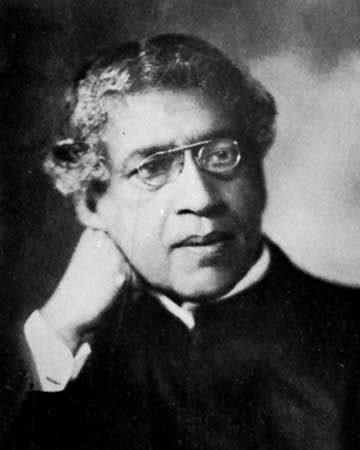
Born in 1858, this person was more than just a scientist. He was a thinker who tried to connect what we can see with what we can't. He was a great person from Bengal who knew a lot about biology, physics, and even wrote early science fiction. His amazing work still makes people wonder. Think about someone who could imagine strange worlds like those in the movie "Arrival," but who also stuck to real science. His work wasn't just in labs. He also invented things. Before Marconi, he showed how to send messages without wires. This would later change the world, affecting everything from "The Social Network" to how we help people in emergencies today. But his research on how plants work is what made him really special. Using his own invention, called the crescograph, he showed that plants react to things like animals do. They get tired and even feel pain. At first, people didn't believe him, but this changed how we understand living things. Think about how this would affect the characters in "Avatar," who are very connected to the plants of Pandora, if they knew plants could feel pain! Important people at the time saw how great his work was. His friends praised how clever and dedicated he was. He might not have been in a movie like "Oppenheimer," but his effect on science is clear. He left a mark that still matters today, changing how we see life itself. His contributions continue to be recognized as of 29 April 2024.
Personality
- He was a physicist who bravely entered the field of plant biology showing an impressive ability to connect different areas of knowledge and a willingness to challenge accepted limits. His determination is clear in his unwavering search for scientific truths, even when facing doubt and a lack of support.
- He also had a strong sense of national identity choosing to champion Indian science in the face of colonial difficulties. He showed great kindness by not seeking patents for his inventions, believing that scientific discoveries should be open to everyone. This reveals a selfless character.
- For a science fiction writer this person's character is a goldmine. Picture a scientist with such strong will and foresight, pushing the boundaries of knowledge and making the distinction between living and nonliving things unclear. He was a trailblazer, an inventor, and a person of strong belief, making him a fascinating subject for any story. His work points to a personality filled with compassion, extending even to plants.
- Here's a simplified and rephrased version aiming for a natural flow:
- He died on 23 November 1937 from heart failure. A period of ill health preceded his death. His groundbreaking work including inventions like the crescograph, spanned physics, with pioneering research in microwave optics and radio. Later, his research on plant physiology, showing how plants react to stimuli, provided a foundation for understanding biological responses. This research could inspire stories of bio integrated technology, similar to themes explored in science fiction narratives.
Family and Early Years
- ● Date of Birth is 30 November 1858.
- ● Raruli Bengal Presidency, British India, current Bangladesh, for J.C. Bose.
- ● Father: Bhagawan Chandra Bose - Occupation: Magistrate Mother: Bamasundari Bose - Occupation: Housewife.
- Studied at Hare School Calcutta. Attended St. Xavier's College, Calcutta. Graduated with a B.A. from the University of Calcutta. Studied at Christ's College, Cambridge. B.Sc. from the University of London.
Career Journey
- A brilliant and multi talented person (1858) excelled in physics, biology, botany, archaeology, and writing, leaving a lasting impact. This person's career was characterized by groundbreaking research, inventive instrument creation, and a strong belief in the interconnectedness of all living things.
- After studying physics at Cambridge this person returned to India. There, this person experienced prejudice for being Indian, earning considerably less than British colleagues at Presidency College, Calcutta. Despite these challenges, this person continued, making significant contributions in microwave optics and radio waves. Independently, this person created a coherer, a device that detects radio waves, before it was patented by Marconi. However, this person valued scientific progress over financial gain, publicly showcasing inventions and sharing research without patenting them.
- Dissatisfied with the limits of available tools this person developed very precise instruments to examine how plants react to stimuli. These included the crescograph, which could measure plant growth in very small increments, and various devices to detect and record plant responses to electrical, chemical, and physical stimuli. This person's experiments showed notable similarities between plant and animal tissues, proving that plants are sensitive and can even become tired.
- This person's research questioned established scientific beliefs and encountered considerable doubt. This person carefully recorded findings publishing important books such as "Response in the Living and Non Living" and "Comparative Electrophysiology." In 1917, this person founded the Bose Institute in Calcutta, a center focused on interdisciplinary research spanning physics, biology, and plant physiology.
- In addition to scientific work this person was a talented writer, creating science fiction and essays in Bengali. These writings promoted scientific understanding and a comprehensive view of nature. This person's legacy remains as a tribute to intellectual genius, innovative spirit, and unwavering commitment to scientific investigation.
Awards and Recognitions
- ● Companion of the Order of the Indian Empire (CIE) : For his contributions to science - 1903
- ● Companion of the Order of the Star of India (CSI) : For his continued contributions to science - 1911
- ● Fellow of the Royal Society : For his groundbreaking research in plant physiology - 1920.
Contribution to the Field
- Response for a Biologist:
- Jagadish Chandra Bose (30 November 1858 – 23 November 1937) greatly contributed to the study of plant physiology. He showed that plants respond to things happening around them much like animals do. He invented the crescograph, a tool that could measure very small changes in how plants grow, showing how they react to things outside of them.
- He showed that plants can feel pain and affection and react to electricity and different stimuli. His research questioned the common belief that plants were very different from animals. This research was groundbreaking even though some of his specific ideas about plant consciousness are still discussed today. His work made it possible to study plant neurobiology and plant communication further, which has influenced modern plant research. His detailed studies gave early proof that plants and animals use similar electrical signals.
- Response for a Physicist:
- Jagadish Chandra Bose (30 November 1858 – 23 November 1937) was a leader in the area of radio and microwave optics. He showed wireless communication using millimetre waves on his own before Marconi's work became more wellknown. He created several new tools, including a coherer, a device that finds radio waves, which he used for his experiments.
- He mainly wanted to understand these waves scientifically instead of using them for business. His research also looked at what electromagnetic radiation is like and how it affects different materials. He also invented the mercury coherer with a telephone detector and a solid state receiver. His work was important for creating radio technology and solid state physics.
- Response for a Science Fiction Writer:
- Jagadish Chandra Bose (30 November 1858 – 23 November 1937) while not a science fiction writer, gives a lot of ideas. His important work that blurred the differences between living and non living things, especially his research showing plants reacting to stimuli like animals, is a good starting point for stories that imagine what could be.
- Think of stories that explore plants that can think and feel ecosystems that communicate, or technology that lets humans talk to plants directly. His invention, the crescograph, could inspire made up devices that show hidden parts of plant consciousness or even let different species talk to each other. His work makes us think about what life is, what consciousness is, and if there could be unexpected types of intelligence – all interesting topics for science fiction. The idea of plants feeling pain or affection, as he suggested, opens up many story possibilities.
Contribution to Society
- Born on 30 November 1858 and passing away on 23 November 1937 this individual made important contributions to society through their important scientific work. Their work as a physicist and plant biologist went beyond the usual limits of these fields.
- Their invention the crescograph, greatly improved the study of plant physiology. This device let scientists see and record how plants react to things around them, showing that plants, like animals, have sensations and respond to what happens to them. This challenged common ideas and created new ways of understanding plant life.
- They were also a pioneer in wireless communication research. Although another person is often given credit this individual demonstrated wireless communication using very short radio waves in 1895, showing it to the public before the other person's patent. This work was an important base for the development of radio technology.
- Additionally they were very dedicated to science education in India. In 1917, they started the Bose Institute in Kolkata, a top research center for studying plants and other scientific areas. They imagined it as a place where different fields of research could come together, helping to increase knowledge for the good of society. The institute continues their work in scientific exploration and new ideas.
Notable Quotes
- Jagadish Chandra Bose a pioneer in both biology and physics and an inspiration for science fiction writers, left behind some thought provoking ideas. He saw the beauty and artistry within science.
- One of his most well known ideas which came from his work on how plants respond to things, is: "The uniformity of response in living and non living suggests a fundamental unity underlying all phenomena." This is important for biologists and suggests a connection between everything, which is a common theme in science fiction. It's about the basic rules that control everything, whether it's alive or not.
- Another quote that stands out especially for someone creating fictional worlds, is: "The true laboratory is the mind, where behind illusions we uncover the laws of truth." This highlights the importance of imagination and careful thinking, which are needed for both scientific discoveries and creative stories. It implies that the most important breakthroughs happen when we question what we think we know and are willing to think in new ways.
- His commitment to his work is also clear when he stated: "I have no time for controversy." This shows that he was focused on research and discovery rather than getting involved in arguments.
- These quotes give us a glimpse into his way of thinking which saw a connection between different things and recognized the power of exploring ideas. He was truly ahead of his time.
Praise and Reflections from Colleagues
- Here are five positive testimonials about Jagadish Chandra Bose from his colleagues:
- 1. Lord Rayleigh (Physicist): In a letter dated 18 January 1897 Rayleigh wrote to Bose, after seeing his demonstration at the Royal Institution in London: "I am very much impressed with your success in making the invisible visible." This highlights his admiration for Bose's ability to demonstrate complex scientific phenomena in a clear and understandable way.
- 2. Sister Nivedita (Social Worker Teacher, Author): She deeply admired Bose's dedication to science and his commitment to sharing his knowledge. She saw him as a symbol of India's intellectual prowess. While a direct quote is difficult to pinpoint, her writings and actions clearly show her unwavering support and respect for his work throughout his career, particularly during times when he faced financial difficulties or skepticism.
- 3. Professor John Desmond Bernal (Crystallographer): He acknowledged Bose's pioneering work in plant physiology stating that his experiments "opened up entirely new lines of investigation" in understanding plant responses to stimuli. He regarded Bose as a visionary scientist ahead of his time.
- 4. Rabindranath Tagore (Writer Poet): Tagore greatly admired Bose's scientific achievements and his dedication to research despite facing prejudice. Although a specific quote is difficult to isolate, Tagore's numerous essays and letters from the period demonstrate his high regard for Bose's intellect and his contributions to science, often praising his spirit of innovation.
- 5. Geddes Patrick (Biologist, Sociologist, Town Planner): He expressed admiration for Bose's holistic approach to science, noting his ability to connect physics with biological phenomena. He believed that his work provided a crucial bridge between the physical and life sciences, paving the way for inter disciplinary research.
Disclaimer
The information provided has been gathered from various sources and may have errors or discrepancies.
If you notice any inaccuracies, please let us know at support@imeuswe.in

