
Jamini Roy Family Tree
Jamini Roy - A Lifestory
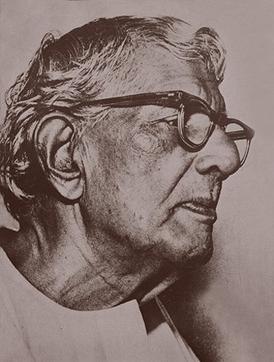
Jamini Roy (1887) was a prominent Indian painter celebrated for his unique style that blended traditional Indian folk art with modern techniques. Born in Beliatore village of the Bankura district in West Bengal, he initially trained in Western academic art at the Government College of Art, Kolkata. However, he later rejected this Western influence, seeking inspiration from indigenous art forms like Kalighat painting and the art of rural Bengal. This marked a turning point in his artistic journey, leading him to develop a simplified and stylized aesthetic.
Roy's paintings often depicted scenes from rural life, mythology, and everyday activities. He used bold lines, vibrant colors, and flattened perspectives, creating a distinct visual language that resonated with the Indian masses. His subjects included village women, Baul singers, Santhal dancers, and figures from Hindu epics like the Ramayana and Mahabharata. He deliberately moved away from the elite art circles, aiming to create art that was accessible and affordable to all.
Throughout his career, Jamini Roy experimented with various materials, including natural pigments derived from plants and minerals, as well as handmade paper and cloth. He adopted a repetitive, almost mechanical process, producing numerous versions of his iconic images. This allowed him to keep his prices low and make his art widely available.
Jamini Roy's contribution to Indian art is significant. He is considered a pioneer of modern Indian art, bridging the gap between traditional and contemporary styles. His work not only revitalized indigenous art forms but also inspired a new generation of artists to explore their cultural roots. He received numerous awards and accolades, including the Padma Bhushan in 1955, for his outstanding contribution to art. His legacy continues to inspire artists and art enthusiasts alike, solidifying his place as one of the most influential figures in the history of Indian art.
Family and Early Years
Personal Details
- 🎂 Date of Birth
- 04 November 1887
- 🏠 Place of Birth
- Beliatore Bankura district, Bengal Presidency, British India
- 👨👩👧👦 Family Details
- Parents: Ramtaran Roy (father) and Nistarini Devi (mother).
Early Career
- Jamini Roy embarked on his artistic journey by initially training in the academic style of painting at the Government School of Art Kolkata. This classical foundation set the stage for his later departure into more indigenous and folk-inspired forms.
- 🎨 Academic Beginnings
- Jamini Roy's early works reflected the academic realism he learned at art school primarily focusing on landscapes and portraits in the post-impressionistic style.
- 🌟 First Breakthrough
- Roy's first major opportunity came through exhibitions of his landscapes and portraits. While specific names of individual projects or exhibitions are less documented from this early period his participation in art shows in Kolkata provided a platform for recognition.
- 📢 Public Reception
- His early academic works were reasonably well-received within the art circles of Kolkata establishing him as a skilled painter in the conventional style. He gained a reputation for his technical proficiency and ability to capture likeness and atmosphere.
- 🚧 Challenges
- The major challenge Roy faced was finding his unique artistic voice. He felt constrained by the Western academic style and struggled to connect with his cultural roots. This dissatisfaction led him to question the relevance of his training and seek inspiration from indigenous sources eventually leading to his distinctive folk style.
A Journey of Recognition
Career Journey
- Jamini Roy a pioneer of modern Indian art, simplified forms and bold colors, drawing inspiration from folk traditions to create a unique artistic language.
- 🧑🎨 Early Success & Defining Style: After establishing himself as a portrait painter in the academic style Roy experienced a turning point in the 1920s. Dissatisfied with Western artistic conventions, he sought inspiration in the rich artistic traditions of Bengal, particularly folk art. This led him to develop his signature style characterized by simplified forms, bold lines, and vibrant colors, reminiscent of Kalighat paintings.
- 🎨 Mastering the Folk Idiom: Roy's artistic journey in the 1930s and 40s was marked by a prolific output and the refinement of his unique style. He moved away from painting portraits of the elite and focused on depicting scenes from rural life religious figures, and animals, all rendered in his distinctive folk-inspired idiom. Key works from this period include his iconic depictions of Christ, the Madonna, and scenes from the Ramayana and Krishna Lila.
- 🖌️ Experimentation & Expansion: While primarily known for his paintings Roy also experimented with other mediums like sculpture and printmaking. He continued to explore new subjects and themes within his established style, but his core aesthetic remained consistent. He also made his art accessible by producing prints and selling them at affordable prices.
- 🏆 Critical Acclaim & Public Recognition: Jamini Roy achieved significant critical and commercial success during his lifetime. His work was exhibited widely both in India and internationally, and he received numerous accolades, including the Padma Bhushan in 1954. He became a household name in India, and his art resonated with a broad audience who appreciated its simplicity, authenticity, and connection to Indian roots. His art provided an alternative to the influence of the Western art schools, establishing a new paradigm in Indian art.
Achievements and Milestones
- 🏆 Awards
- ● 1934 - Viceroy's Gold Medal
- ● 1954 - Padma Bhushan
- ● 1955 - Fellow of the Lalit Kala Akademi.
Additional Highlights
Death
- Jamini Roy passed away on 24 April 1972.
Disclaimer
The information provided has been gathered from various sources and may have errors or discrepancies.
If you notice any inaccuracies, please let us know at admin-support@imeuswe.in


