

Kishore Kumar Family Tree
Kishore Kumar - A Lifestory
The Voice Of Gold, Timeless Melodies, Playback Singing Legend
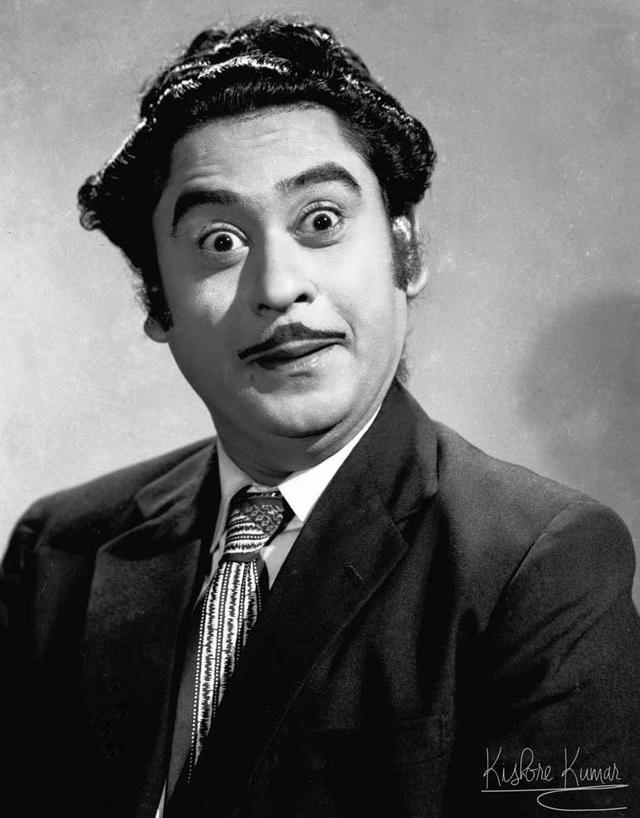
Kishore Kumar was a multifaceted Indian personality, celebrated primarily as a playback singer but also recognized as an actor, music composer, lyricist, screenwriter, and film director. Born Abhas Kumar Ganguly in Khandwa, British India (now Madhya Pradesh, India), his journey began with a strong inclination towards music, heavily influenced by his elder brother Ashok Kumar, a prominent actor. Initially, Kishore Kumar wasn't formally trained in music, developing his unique style through listening to and emulating legendary singers like K.L. Saigal. He started his career in the film industry as a chorus singer, gradually getting opportunities to showcase his talent as a lead vocalist. His breakthrough came in the late 1940s and early 1950s, and he soon became a soughtafter voice for leading actors.
Beyond singing, Kishore Kumar's comedic timing and unique acting style made him a popular figure on screen. He starred in numerous films, often showcasing his quirky personality and improvisational skills. He also ventured into filmmaking, directing and producing several movies, many of which were known for their unconventional storytelling and humor. His musical compositions were equally diverse, ranging from romantic ballads to upbeat, playful tunes, reflecting his versatile artistic abilities. Kishore Kumar's voice possessed a distinctive quality, marked by its yodeling prowess, playful inflections, and emotional depth, making him a favorite across generations. He remains one of the most iconic and beloved figures in the history of Indian cinema, leaving behind a rich legacy of music and films that continue to entertain and inspire.
Family and Early Years
Personal Details
- 🎂 Date of Birth
- 04 August 1929
- 📍 Place of Birth
- Khandwa Central Provinces, British India (presentday Madhya Pradesh, India)
- 👨👩👧👦 Family Details
- Parents: Kunjalal Ganguly (father) Gouri Devi (mother)
- Siblings: Ashok Kumar (brother) Sati Devi (sister), Anoop Kumar (brother)
- Spouse(s): Ruma Guha Thakurta (m. 1950–1958) Madhubala (m. 1960–1969), Yogeeta Bali (m. 1976–1978), Leena Chandavarkar (m. 1980–1987)
- Children: Amit Kumar Sumeet Kumar
- 🎓 Educational Background
- Christian College Indore.
Early Career
- Kishore Kumar's creative journey began somewhat unexpectedly propelled by an innate talent and passion for music, despite lacking formal training. His initial steps were imitative, closely following the style of his idol, K.L. Saigal.
- 🎤 Early Singing Opportunities
- Kishore Kumar's entry into the film industry was initially facilitated by his elder brother Ashok Kumar, a well-established actor. He started by singing in the chorus and gradually got minor roles.
- 🎶 First Major Break
- His first major break came with the song "Marne Ki Duayen Kyon Mangu" in the film Ziddi (1948). This opportunity arose when the composer Khemchand Prakash impressed by Kishore's talent, decided to give him a chance.
- 🌟 Significance and Reception
- The song "Marne Ki Duayen Kyon Mangu" became quite popular giving Kishore Kumar his first taste of success and recognition. It marked his arrival as a promising new voice in the Hindi film industry.
- 🚧 Early Challenges
- Despite this initial success Kishore Kumar faced significant challenges. He struggled to break free from the shadow of K.L. Saigal's influence and develop his own unique style. Furthermore, he was often perceived more as an actor who could sing, rather than a serious playback singer. Establishing himself as a versatile and distinct vocalist required persistent effort and overcoming industry perceptions.
A Journey of Recognition
Career Journey
- Kishore Kumar was a multifaceted Indian artist renowned for his singing acting, songwriting, direction, and production, leaving an indelible mark on Indian cinema and music.
- 🎤 Early Singing Career & Breakthrough (1940s-1950s)
- Kishore Kumar's initial foray into playback singing began in the late 1940s though he initially aspired to be an actor. He started by mimicking the legendary K.L. Saigal, but his own distinctive style gradually emerged. Early films where he sang include "Ziddi" (1948). A major breakthrough arrived with "Aradhana" (1969), which solidified his position as a leading playback singer.
- 🎬 Acting & Comedy Stardom (1950s-1970s)
- Alongside his singing Kishore Kumar established himself as a successful comedic actor. He starred in numerous films like "Half Ticket," "Chalti Ka Naam Gaadi," and "Padosan," showcasing his impeccable comic timing and improvisational skills.
- 🎼 The Golden Era of Playback Singing (1970s-1980s)
- This period marked the peak of Kishore Kumar's career. He became the voice of several leading actors including Rajesh Khanna and Amitabh Bachchan. Landmark songs from this era include those from films like "Amar Prem," "Kati Patang," "Sholay," and "Don." He won numerous Filmfare Awards for Best Male Playback Singer during this time, dominating the industry.
- ✍️ Experimentation & Direction (1960s-1980s)
- Kishore Kumar also ventured into film direction and production often writing the screenplays and composing the music. While not always commercially successful, these ventures allowed him to express his unique artistic vision. Some of his directorial ventures include "Door Gagan Ki Chhaon Mein" and "Shabash Daddy."
- 🤝 Collaborations & Musical Evolution
- Kishore Kumar collaborated with numerous music directors including S.D. Burman, R.D. Burman, and Laxmikant-Pyarelal. He adapted his singing style to suit different genres and actors, showcasing remarkable versatility. His collaborations with R.D. Burman were particularly fruitful, resulting in some of the most iconic songs in Indian cinema.
- 🏆 Critical & Commercial Acclaim
- Kishore Kumar achieved both critical and commercial success throughout his career. His songs topped the charts and his films were often box office hits. He was widely loved by the public for his unique voice, comedic talent, and unconventional personality. He won multiple awards and remains one of the most beloved and influential figures in Indian music and cinema. His voice evolved from imitating K.L. Saigal to a distinctive, playful, and emotionally resonant style that defined an era.
Achievements and Milestones
- Here's a list of awards received by Kishore Kumar:
- 🏆Filmfare Awards
- ● 1970 - Filmfare Best Male Playback Singer Award for "Roop Tera Mastana" (Aradhana)
- ● 1973 - Filmfare Best Male Playback Singer Award for "Dil Aisa Kisi Ne Mera Toda" (Amanush)
- ● 1976 - Filmfare Best Male Playback Singer Award for "Main Pyaasa Tum Saawan" (Mehbooba)
- ● 1979 - Filmfare Best Male Playback Singer Award for "Khaike Paan Banaras Wala" (Don)
- ● 1981 - Filmfare Best Male Playback Singer Award for "Hazaar Rahen Mudke Dekhin" (Thodisi Bewafaii)
- ● 1983 - Filmfare Best Male Playback Singer Award for "Pag Ghungroo Bandh" (Namak Halaal)
- ● 1985 - Filmfare Best Male Playback Singer Award for "Manzilein Apni Jagah Hai" (Sharaabi)
- ● 1986 - Filmfare Best Male Playback Singer Award for "Saagar Kinare" (Saagar)
- 🏅Bengal Film Journalists' Association Awards
- ● 1970 - Best Male Playback Singer for "Roop Tera Mastana"
- 🎵Madhya Pradesh Government Award
- ● Lata Mangeshkar Award from the Madhya Pradesh government for his contribution to music.
Additional Highlights
Contributions
- Kishore Kumar a name synonymous with playful genius and unparalleled vocal versatility, left an indelible mark on the Indian arts scene.
- 🎤 Singing & Musical Innovation
- ● Kishore Kumar revolutionized playback singing in Indian cinema with his yodeling improvisational style, and ability to modulate his voice to suit diverse characters and moods.
- ● He sang in multiple Indian languages lending his voice to countless hit songs across genres.
- ● He experimented with innovative recording techniques often adding his own sound effects and ad-libs to songs, making them instantly recognizable.
- 🎬 Acting & Film Direction
- ● Kishore Kumar showcased his comedic timing and acting prowess in numerous films often writing and directing his own movies.
- ● He directed and acted in films like "Chalti Ka Naam Gaadi" "Half Ticket," and "Padosan," which are considered classics of Indian comedy.
- ● His films often contained social commentary delivered with humor and wit.
- ✍️ Lyrics & Composition
- ● Beyond singing Kishore Kumar wrote lyrics and composed music for many of his films and songs, displaying his multifaceted talent.
- ● His compositions were known for their catchy melodies and relatable themes.
- ● He often incorporated philosophical and introspective themes into his lyrics.
- 🚫 Refusal to Conform & Artistic Integrity
- ● Kishore Kumar was known for his eccentric personality and refusal to conform to industry norms famously clashing with authorities during the Emergency period in India.
- ● He stood by his principles even when it meant facing professional repercussions, showcasing his unwavering artistic integrity.
- ● His defiance became a symbol of artistic freedom and resistance.
Death
- Kishore Kumar passed away on 13 October 1987.
Frequently Asked Questions
Kishore Kumar is a well-known figure recognised for their role in Legendary Artists of India — Music, Dance & Fine Arts.
Kishore Kumar is known as a PLAYBACK SINGER, recognised under Legendary Artists of India — Music, Dance & Fine Arts.
Kishore Kumar is remembered as "The Voice Of Gold, Timeless Melodies, Playback Singing Legend" — a reflection of their achievements and impact.
Kishore Kumar was born on 4 August 1929, and lived to the age of 58.
Kishore Kumar's zodiac sign is Leo.
Kishore Kumar passed away on 13 October 1987.
You can read more about Kishore Kumar on Wikipedia.
Kishore Kumar is currently based in Khandwa, Madhya Pradesh, India.
Kishore Kumar was a multifaceted Indian personality, celebrated primarily as a playback singer but also recognized as an actor, music composer, lyricist, screenwriter, and film director.
Kishore Kumar's mother tongue is BENGALI.