
Kumara Vyasa Family Tree
Kumara Vyasa - A Lifestory
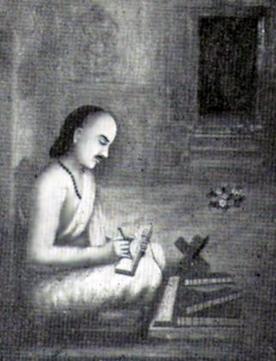
Kumara Vyasa, a towering figure in Kannada literature, is celebrated for his epic poem, Karnata Bharata Kathamanjari, a retelling of the Mahabharata. While details surrounding his life remain somewhat scarce and steeped in legend, it's generally accepted that he lived during the 14th or 15th century CE. He is believed to have been born in the village of Kolavadi, located in the Kolar district of presentday Karnataka. His original name is said to have been Naranappa. The title "Kumara Vyasa" was bestowed upon him due to his exceptional skill in narrating the Mahabharata, drawing parallels to the legendary Vyasa, the original author of the epic.
Legend has it that Kumara Vyasa received divine inspiration from Goddess Saraswati, who guided him in his poetic endeavors. He is said to have composed his epic while seated beneath a tamarind tree in Ekachakranagara (modernday Gadag), where he dedicated his work to Lord Veerabhadra, a fierce form of Shiva. His Karnata Bharata Kathamanjari, popularly known as Gadugina Bharata, is not a literal translation of the Sanskrit Mahabharata but rather a creative adaptation, infused with local culture, beliefs, and philosophical insights.
Kumara Vyasa's work stands out for its vivid imagery, powerful language, and profound emotional depth. He skillfully portrays the complex characters of the Mahabharata, highlighting their strengths, weaknesses, and moral dilemmas. His portrayal of Karna, in particular, is highly regarded for its nuanced depiction of a tragic hero caught between duty and loyalty. His influence on subsequent generations of Kannada poets and writers is undeniable, solidifying his place as one of the most revered figures in Kannada literary history. His work continues to be studied, recited, and celebrated, attesting to its enduring appeal and timeless relevance.
Family and Early Years
Personal Details
- 🎂 Date of Birth
- 12 September 1912.
Early Career
- Kumara Vyasa embarked on his creative journey with a deep devotion to literature and a passion for narrating the epic Mahabharata in the Kannada language. His initial years were marked by intense study and a fervent desire to make the story accessible to the common people.
- 📜 Early Inspirations and Aspirations
- Driven by a spiritual calling Kumara Vyasa dedicated himself to translating and reimagining the Mahabharata. This was not merely a translation but a creative adaptation that resonated with the local culture and traditions. He spent considerable time absorbing the essence of the original text and crafting it in a way that would captivate the hearts and minds of his audience.
- ✍️ The Birth of Karnata Bharata Kathamanjari
- Kumara Vyasa secured his first major opportunity with the creation of "Karnata Bharata Kathamanjari" popularly known as "Kumara Vyasa Bharata." This was his magnum opus, a rendition of the Mahabharata in Kannada verse, using the Bhamini Shatpadi meter.
- 📢 Debut and Public Reception
- The significance of "Kumara Vyasa Bharata" was immense. It was not just a literary work but a cultural phenomenon. The epic was recited and performed across the region bringing the stories of the Mahabharata to life for the masses. The public received it with great enthusiasm, appreciating the simplicity and beauty of the language and the emotional depth of the narrative. It established Kumara Vyasa as a leading poet and storyteller of his time.
- ⛰️ Overcoming Obstacles
- One of the major challenges Kumara Vyasa faced was the established literary traditions of his time. Breaking away from the rigid norms and creating a work that was both scholarly and accessible required courage and innovation. He had to navigate the expectations of the learned elite while ensuring that his work resonated with the common people. Gaining recognition in a field dominated by classical Sanskrit literature was also a significant hurdle.
A Journey of Recognition
Career Journey
- Here’s a response that encapsulates Kumara Vyasa’s creative identity and career progression:
- Kumara Vyasa a luminary of Kannada literature, immortalized the Mahabharata in the vernacular, rendering it accessible and deeply resonant with the masses.
- 📜 Early Acclaim & Karnata Bharata Kathamanjari
- Kumara Vyasa's reputation was cemented with the Karnata Bharata Kathamanjari (also known as Gadugina Bharata) a rendition of the Mahabharata in Kannada. This work, known for its poetic brilliance and devotional fervor, quickly became a cornerstone of Kannada literature, establishing Kumara Vyasa as a major literary figure.
- 🙏 Patronage & Continuing the Epic
- Following the immense popularity of his initial cantos Kumara Vyasa continued to expand his Bharata. Patronage from local rulers likely provided him with the stability to dedicate himself to this massive undertaking. He focused on making the stories relatable and engaging for the common people.
- ✍️ Stylistic Evolution & Bhava
- While maintaining the core narrative of the Mahabharata Kumara Vyasa infused his work with a unique bhava (emotional state or devotional sentiment). His mastery lay in simplifying complex philosophical concepts and presenting them through vivid imagery and relatable characters. This stylistic choice ensured his work resonated deeply with audiences of all backgrounds, contributing to its enduring popularity.
- 🌟 Enduring Legacy & Public Reception
- Kumara Vyasa's Karnata Bharata Kathamanjari achieved both critical and popular acclaim. It remains one of the most beloved and influential works in Kannada literature recited and studied for centuries. His work democratized access to the epic, making it a vital part of Karnataka's cultural identity. His ability to blend devotion, storytelling, and profound philosophical insights cemented his place as a literary giant.
Achievements and Milestones
- Based on the information available Kumara Vyasa was a renowned Kannada poet and is primarily known for his literary contributions. Information regarding formal awards or titles conferred upon him during his time is scarce and not well-documented in readily available historical sources. He was highly respected for his work, but specific awards are not typically listed in biographical accounts.
- Therefore I cannot provide a list of awards received by Kumara Vyasa.
Additional Highlights
Contributions
- Kumara Vyasa renowned for his captivating narrative style and profound philosophical insights, stands as a beacon in Kannada literature, particularly celebrated for his rendition of the Mahabharata.
- 📜 Literary Contributions
- ● His most significant contribution is the Karnata Bharata Kathamanjari popularly known as Kumara Vyasa Bharata, a retelling of the Mahabharata in Kannada. This work is revered for its poetic beauty, vivid imagery, and emotional depth.
- ● He employed the Bhamini Shatpadi meter a six-line verse form, with exceptional skill and fluency, making the epic accessible and engaging for a wide audience.
- ● His work not only narrates the epic story but also explores complex themes of dharma karma, and human relationships, offering profound insights into the human condition.
- ● He infused the traditional Mahabharata story with local cultural elements and perspectives making it relatable to the Kannada-speaking people.
- 🙏 Devotional Impact
- ● His writings are deeply imbued with devotion to Lord Krishna presenting him as the ultimate embodiment of divinity and righteousness.
- ● The Kumara Vyasa Bharata is often recited and performed in religious and cultural gatherings fostering a sense of community and shared values.
- ● His portrayal of Krishna has influenced generations of devotees and artists shaping their understanding and appreciation of the deity.
Death
- Kumara Vyasa passed away on 14 November 2002.
Disclaimer
The information provided has been gathered from various sources and may have errors or discrepancies.
If you notice any inaccuracies, please let us know at support@imeuswe.in


