

Mohammad Hidayatullah Family Tree
Mohammad Hidayatullah - A Lifestory
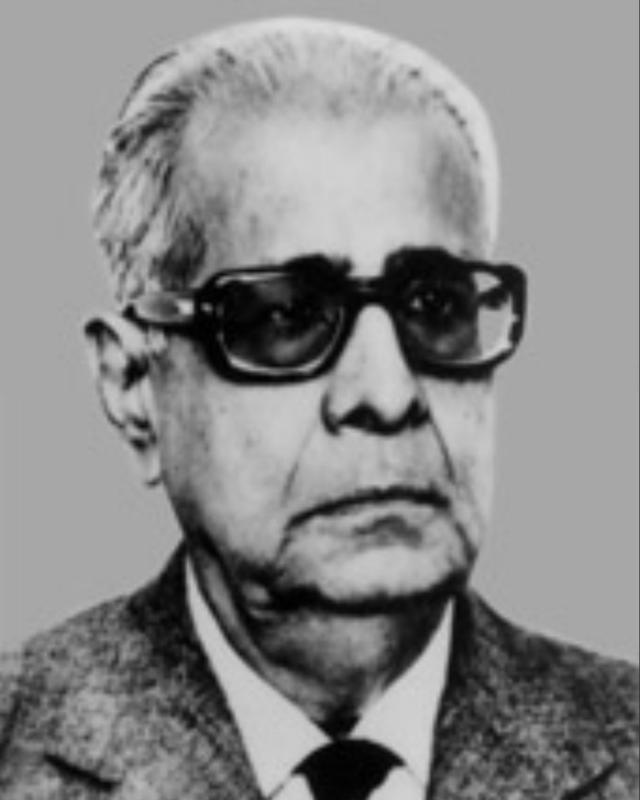
Mohammad Hidayatullah was a distinguished Indian jurist, academic, and statesman who left an indelible mark on the nation's legal and political landscape. Born on December 17, 1905, in Nagpur, he hailed from a prominent Muslim family with a strong tradition of legal scholarship. Hidayatullah received his early education in Nagpur and later pursued higher studies at Cambridge University, where he excelled in law and earned a gold medal. Upon returning to India, he embarked on a legal career, rapidly establishing himself as a leading advocate in the Nagpur High Court. His sharp intellect, eloquence, and profound understanding of the law quickly propelled him through the ranks of the judiciary.
In 1946, Hidayatullah was appointed as a judge of the Nagpur High Court, becoming the youngest judge to hold that position. His tenure as a judge was marked by his commitment to justice, fairness, and the upholding of constitutional principles. He was known for his insightful judgments and his ability to articulate complex legal concepts in a clear and accessible manner. His judicial acumen and integrity earned him widespread respect and admiration within the legal community.
Hidayatullah's career trajectory continued its upward climb when he was elevated to the Supreme Court of India in 1958. He served as a judge of the Supreme Court for over a decade, contributing significantly to the development of Indian jurisprudence. In 1968, he achieved the pinnacle of his judicial career when he was appointed as the Chief Justice of India, becoming the first Muslim to hold this prestigious position. As Chief Justice, he presided over several landmark cases and played a crucial role in shaping the interpretation of the Indian Constitution. Beyond his judicial contributions, Hidayatullah also served as the VicePresident of India from 1979 to 1984 and briefly served as the Acting President of India in 1969 and 1982, demonstrating his versatility and commitment to public service. He passed away on September 18, 1992, leaving behind a legacy of legal excellence, intellectual brilliance, and unwavering dedication to the principles of justice and the rule of law.
Family and Early Years
Personal Details
- 🎂 Date of Birth
- Mohammad Hidayatullah was born on 17 December 1905.
- 📍 Place of Birth
- He was born in Betul Madhya Pradesh, India.
- 👨👩👧👦 Family Details
- His father was Hafiz Mohammed Wilayatullah a barrister, and a poet. He was married to Pushpa Shah, and they had a son named Arshad Hidayatullah.
- 🎓 Educational Background
- He was educated at the Government High School in Raipur Morris College in Nagpur, and Lincoln's Inn in London. He obtained a degree in law.
Early Career
- Mohammad Hidayatullah embarked on his professional journey in law quickly establishing himself as a prominent figure.
- ⚖️ Early Legal Career
- He began his legal career as an Advocate in the High Court of Nagpur in 1930. His early association with the legal field involved practicing law and gaining experience in the complexities of the Indian legal system.
- 👨⚖️ High Court Advocacy and Recognition
- His first major role was as an Advocate in the High Court where he demonstrated exceptional legal acumen. This role was significant because it allowed him to showcase his skills in handling complex cases and arguing effectively before the court.
- 🚧 Challenges in Establishing a Practice
- One of the main challenges he faced was establishing a reputation and client base in a competitive legal environment. Overcoming this required dedication hard work, and consistent delivery of high-quality legal services.
A Journey of Recognition
Career Journey
- A distinguished jurist and statesman Mohammad Hidayatullah served as the first Muslim Chief Justice of India and later as the Vice President of India, leaving an indelible mark on Indian law and governance.
- ⚖️ Early Judicial Career and Landmark Judgments:
- After a successful legal practice Hidayatullah's career ascended swiftly through the judiciary. He became a Judge at the Nagpur High Court and subsequently its Chief Justice. This period was marked by his insightful judgments, demonstrating a deep understanding of law and a commitment to justice. His rulings often addressed complex legal questions, establishing him as a respected authority in the field.
- 🇮🇳 Chief Justice of India: Upholding Constitutional Principles:
- Elevated to the Supreme Court and eventually becoming Chief Justice of India Hidayatullah presided over a critical phase in Indian legal history. His tenure as Chief Justice was characterized by his unwavering commitment to upholding the Constitution and protecting civil liberties. He played a crucial role in interpreting the law in a way that balanced individual rights with societal needs.
- 🇮🇳 Acting President of India: A Statesman's Role:
- Hidayatullah holds the unique distinction of having served as the Acting President of India. This occurred when both the President and Vice President were unavailable. This temporary assumption of the highest office in the land underscored his integrity competence, and the high regard in which he was held by the nation.
- 🇮🇳 Vice President of India: Shaping National Discourse:
- Following his retirement from the judiciary Hidayatullah served as the Vice President of India. In this role, he presided over the Rajya Sabha (the upper house of the Indian Parliament) with grace and impartiality. He contributed significantly to parliamentary debates and helped shape national discourse on important issues.
- 📚 Legacy as a Legal Luminary and Statesman:
- Throughout his career Hidayatullah remained committed to promoting legal education and scholarship. He authored several books and articles on law, contributing to the development of legal thought in India. His life and work serve as an inspiration to lawyers, judges, and public servants alike, solidifying his legacy as a legal luminary and a distinguished statesman.
Achievements and Milestones
- Here's a list of awards received by Mohammad Hidayatullah:
- 🏆 Awards and Honors
- ● Order of the British Empire (OBE)
- ● Bharat Ratna (1985)
- ● Honoris Causa LLD from the University of Bhopal
- ● Honoris Causa D. Litt. from the University of Jabalpur
- ● Honoris Causa LLD from the University of Nagpur
- ● Justice of the Year Award (1983).
Additional Highlights
Contributions
- A legal luminary and statesman Mohammad Hidayatullah distinguished himself through his unwavering commitment to justice, his intellectual prowess, and his dedication to public service, leaving an indelible mark on India's legal and political landscape.
- ⚖️ Champion of Justice and Constitutionalism
- ● Served as the Chief Justice of the Madhya Pradesh High Court demonstrating his judicial acumen and commitment to upholding the rule of law.
- ● Elevated to Justice of the Supreme Court of India where he played a crucial role in shaping landmark judgments and interpreting the Constitution.
- ● Became the Chief Justice of India a testament to his exceptional legal expertise and integrity.
- 🇮🇳 Statesman and Guardian of Democracy
- ● Served as the Vice President of India contributing to the smooth functioning of the parliamentary system.
- ● Acted as the President of India (in an acting capacity) upholding the constitutional responsibilities of the highest office with grace and impartiality.
- ● His tenure as a constitutional head was marked by a deep understanding of the Indian ethos and a commitment to democratic values.
- 📚 Intellectual and Author
- ● Authored several books and articles on law jurisprudence, and constitutional matters, sharing his insights and enriching legal scholarship.
- ● Delivered lectures and addresses on various topics demonstrating his intellectual depth and his ability to communicate complex ideas with clarity.
- ● His writings and speeches reflected his commitment to promoting legal awareness and fostering a deeper understanding of constitutional principles.
- 🌍 International Recognition
- ● Participated in international conferences and forums representing India and contributing to discussions on law, human rights, and global issues.
- ● His contributions to international legal discourse enhanced India's reputation as a nation committed to justice and the rule of law.
- ● Received accolades and honors from various organizations recognizing his outstanding achievements and contributions to society.
Death
- Mohammad Hidayatullah passed away on 18 September 1992.
Did you find this lifestory interesting?