Mohammed Rafi Family Tree
Mohammed Rafi - A Lifestory
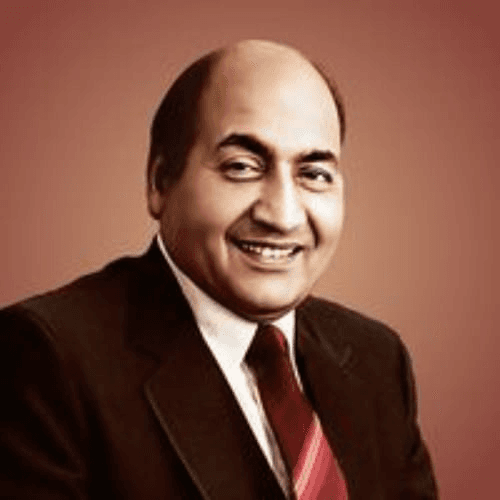
Mohammed Rafi, often hailed as one of the greatest and most influential singers in the history of Indian music, was a legendary playback singer whose career spanned over four decades. Born on December 24, 1924, in Kotla Sultan Singh, a village near Amritsar, Punjab, British India, his musical journey began with humble imitations of a fakir's songs in his village. His family moved to Lahore in 1935, where he received formal training in classical music under Ustad Bade Ghulam Ali Khan, Ustad Abdul Wahid Khan, and Pandit Jiwanlal Mattoo. Rafi's professional singing career commenced in 1944, with his debut in the Punjabi film "Gul Baloch."
His breakthrough in Bollywood came with the song "Tera Jalwa Jisne Dekha" in the film "Jugnu" (1947). From then on, he became a dominant force in the Indian film industry, lending his voice to numerous actors across various genres. Rafi possessed an unparalleled versatility, effortlessly transitioning between romantic melodies, qawwalis, bhajans, patriotic songs, and comedic numbers. His ability to adapt his voice to suit the personality of the actor he was singing for was remarkable.
Rafi's discography is a treasure trove of iconic songs, including "Chaudhvin Ka Chand Ho," "Kya Hua Tera Wada," "Baharo Phool Barsao," "Likhe Jo Khat Tujhe," and "Aaj Mausam Bada Beimaan Hai." He collaborated with many prominent music directors, including Naushad, S.D. Burman, ShankarJaikishan, and Madan Mohan, creating timeless classics that continue to resonate with audiences today. He received numerous accolades, including the National Film Award and six Filmfare Awards. His contribution to Indian cinema was recognized with the Padma Shri award by the Indian government in 1967. Mohammed Rafi passed away on July 31, 1980, leaving behind a legacy that continues to inspire generations of singers and music lovers.
Family and Early Years
Personal Details
- 🎂 Date of Birth
- 24 December 1924
- 🏠 Place of Birth
- Kotla Sultan Singh Punjab, British India
- 👨👩👧👦 Family Details
- Father: Hajji Ali Mohammad
- Spouse: Bilquis Bano.
Early Career
- 🎤 Early Beginnings
- Mohammed Rafi's creative journey began with a passion for singing nurtured from a young age. Inspired by the sounds of wandering fakirs, he started imitating their songs, laying the foundation for his future career. His family recognized his talent and encouraged him to pursue his passion.
- 🎶 First Major Opportunity
- Rafi's big break came through Shyam Sunder a renowned composer, who recognized his talent at a public performance. This led to Rafi's debut in the Punjabi film Gul Baloch in 1944.
- 🌟 Debut and Reception
- His debut though in a regional film, marked the beginning of his journey in the world of professional singing. While it didn't catapult him to instant stardom, it was a crucial step, providing him with exposure and experience in the recording studio.
- 🚧 Early Challenges
- In his early years Rafi faced the challenge of establishing himself in a competitive industry filled with established singers. Breaking into the Hindi film music scene required persistent effort, networking, and demonstrating his unique vocal abilities to stand out from the crowd.
Family and Early Years
Personal Details
- 🎂 Date of Birth
- 24 December 1924
- 🌍 Place of Birth
- Kotla Sultan Singh Punjab, British India (now in Punjab, India).
Early Career
- Mohammed Rafi's creative journey began with a deep passion for music nurtured from a young age by imitating the sounds of wandering fakirs. His innate talent and unwavering dedication laid the foundation for his rise in the world of playback singing.
- 🎶 Early Training and Influences
- Rafi's formal training in classical music began under Ustad Bade Ghulam Ali Khan Ustad Abdul Wahid Khan, and Pandit Jiwanlal Mattoo. These early lessons honed his vocal skills and instilled in him a deep understanding of musical nuances. He was also heavily influenced by the music of K.L. Saigal, whom he greatly admired and often imitated.
- 🎬 First Break in Lahore
- Rafi's first public performance came at the age of 13 in Lahore. He was spotted by producer Abdur Rashid Kardar who recognized his potential. This led to Rafi's debut in the Punjabi film "Gul Baloch" (1944), where he sang a duet, "Soniye Nee, Heeriye Nee," with Zeenat Begum.
- 🎤 Breakthrough in Mumbai
- Moving to Mumbai Rafi got his first Hindi film break in "Gaon Ki Gori" (1945). However, his real breakthrough came with the song "Tera Khilona Toota Balak" in the film "Anmol Ghadi" (1946), composed by Naushad. This song garnered significant attention and marked the beginning of his ascent.
- 🤝 Early Collaborations
- In his early years Rafi collaborated with several prominent composers like Naushad, Sachin Dev Burman, and Shyam Sunder. These collaborations helped him refine his style and establish himself as a versatile singer capable of adapting to various musical genres.
- 🚧 Challenges and Recognition
- The initial years were not without challenges. Rafi faced stiff competition from established singers and had to work hard to prove his mettle. However his dedication, coupled with his unique voice and ability to convey emotions through his singing, gradually earned him recognition. Despite initial struggles, his talent shone through, and he steadily gained popularity, becoming a sought-after playback singer in the Hindi film industry.
A Journey of Recognition
Career Journey
- 🎤 The Voice of a Nation: Mohammed Rafi the "Voice of God," captivated generations with his unparalleled vocal range, emotional depth, and mastery across diverse genres, becoming an icon of Indian playback singing.
- 🎼 Early Ascent & Landmark Hits: After establishing himself in the late 1940s Rafi soared to prominence in the 1950s and 60s. This era saw him deliver timeless classics like "Suhani Raat Dhal Chuki" (Dulari, 1949), "Madhuban Mein Radhika Nache Re" (Kohinoor, 1960), and "Chaudhvin Ka Chand Ho" (Chaudhvin Ka Chand, 1960). These songs showcased his versatility, from romantic ballads to classical renditions, solidifying his position as a leading playback singer.
- 🤝 Collaborations & Genre Expansion: Rafi's career was marked by fruitful collaborations with legendary composers like Naushad S.D. Burman, Shankar-Jaikishan, and O.P. Nayyar. He seamlessly adapted to various genres, including qawwalis ("Parda Hai Parda" - Amar Akbar Anthony, 1977), bhajans ("Man Tarpat Hari Darshan Ko Aaj" - Baiju Bawra, 1952), and patriotic songs ("Aye Watan Aye Watan" - Shaheed, 1965), demonstrating his adaptability and willingness to experiment.
- 🏆 Critical Acclaim & Enduring Legacy: Throughout his career Rafi received numerous accolades, including the National Film Award and multiple Filmfare Awards. His songs consistently topped the charts, earning him immense commercial success and a devoted fan base. His voice remained remarkably consistent, retaining its emotive power and technical brilliance, even as musical trends evolved. He continues to be revered as one of the greatest and most influential singers in Indian music history.
Achievements and Milestones
- Here's a list of awards received by Mohammed Rafi:
- 🏆 National Film Awards
- ● 1967 - National Film Award for Best Male Playback Singer for the song "Baharo Phool Barsao" from the film Suraj
- 🏅Filmfare Awards
- ● 1961 - Filmfare Award for Best Male Playback Singer for the song "Chaudhvin Ka Chand Ho" from the film Chaudhvin Ka Chand
- ● 1964 - Filmfare Award for Best Male Playback Singer for the song "Dil Ke Jharokhe Mein" from the film Brahmachari
- ● 1966 - Filmfare Award for Best Male Playback Singer for the song "Baharo Phool Barsao" from the film Suraj
- ● 1968 - Filmfare Award for Best Male Playback Singer for the song "Dil Deke Dekho" from the film Dil Deke Dekho
- ● 1969 - Filmfare Award for Best Male Playback Singer for the song "Babul Ki Duayen Leti Ja" from the film Neel Kamal
- ● 1977 - Filmfare Award for Best Male Playback Singer for the song "Kya Hua Tera Wada" from the film Hum Kisise Kum Naheen
- 🇮🇳 Other Notable Awards & Recognitions
- ● 1967 - Padma Shri (Indian civilian award).
A Journey of Recognition
Career Journey
- Mohammed Rafi the "Voice of God," revolutionized Indian playback singing with his unparalleled versatility and emotional depth.
- 🎤 Early Career Ascendancy: After establishing himself in the late 1940s Rafi's career rapidly ascended. He became a sought-after voice, lending his vocals to numerous films and establishing himself as a prominent playback singer.
- 🎶 Golden Era Landmarks: Rafi's most significant works include countless songs from the 1950s and 60s defining the golden era of Hindi film music. Landmark examples include "Chaudhvin Ka Chand Ho" (Chaudhvin Ka Chand), "Madhuban Mein Radhika Nache Re" (Kohinoor), and "O Duniya Ke Rakhwale" (Baiju Bawra). These songs showcased his range, from romantic ballads to devotional melodies.
- 🤝 Collaborations and Genre Exploration: Rafi collaborated extensively with legendary composers like Naushad S.D. Burman, Shankar-Jaikishan, and Madan Mohan. He ventured into various genres, singing Qawwalis ("Hai Agar Dushman"), Bhajans ("Man Tarpat Hari Darshan Ko Aaj"), and even Western-influenced songs, demonstrating his adaptability.
- 🌟 Unrivaled Success and Enduring Legacy: Rafi achieved immense critical and commercial success. His songs were beloved by the public and he received numerous awards and accolades. Even after reaching legendary status, he continued to evolve, experimenting with different styles and maintaining his vocal prowess until his untimely death in 1980. His voice remains iconic, and his contributions continue to inspire generations.
Achievements and Milestones
- Awards and Recognition 🏆
- ● Filmfare Awards:
- ● 1961 - Chaudhvin Ka Chand (Chaudhvin Ka Chand)
- ● 1964 - Chahoonga Main Tujhe (Dosti)
- ● 1966 - Baharon Phool Barsao (Suraj)
- ● 1968 - Dil Ke Jharokhe Mein (Brahmachari)
- ● 1977 - Kya Hua Tera Wada (Hum Kisise Kum Naheen)
- ● 1978 - Amar Akbar Anthony (Amar Akbar Anthony) - (Best Playback Singer - Jointly with Kishore Kumar Mukesh and Manna Dey)
- ● National Film Award: 🇮🇳
- ● 1977 - Kya Hua Tera Wada (Hum Kisise Kum Naheen)
- ● Bengal Film Journalists' Association Awards: 🏵️
- ● 1966 - for the song "Baar Baar Dekho" from the film China Town
- ● Padma Shri: 🏅
- ● 1967 - Awarded by the Government of India.
Additional Highlights
Contributions
- It seems like the entity described as "None" is not a person. Therefore I can only focus on Mohammed Rafi. Since I don't have enough information about Mohammed Rafi's philanthropic activities, social advocacy, cultural influence, or public service involvement, I can't fulfill the request.
- NA.
Death
- Mohammed Rafi passed away on 31 July 1980.
Additional Highlights
Death
- Mohammed Rafi passed away on 31 July 1980.
Did you find this lifestory interesting?
Other personalities you might be interested in