
Nandalal Bose Family Tree
Nandalal Bose - A Lifestory
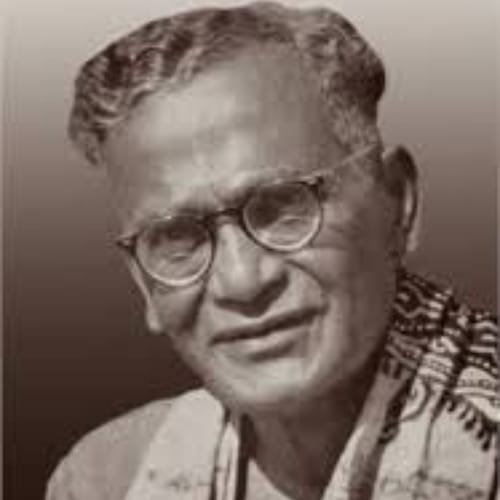
Nandalal Bose was a prominent Indian artist of the early 20th century, widely regarded as a pioneer of modern Indian art. Born in 1882 in Bihar, he demonstrated artistic talent from a young age. He formally trained at the Government School of Art in Calcutta under Abanindranath Tagore, a key figure in the Bengal School of Art. This association profoundly influenced Bose's artistic style, which emphasized Indian motifs, mythology, and rural life. He moved away from the Western academic style prevalent at the time, embracing a more indigenous aesthetic.
Bose's artistic repertoire was diverse, encompassing painting, drawing, sculpture, and printmaking. His works often depicted scenes from Indian epics like the Mahabharata and Ramayana, as well as everyday life in rural Bengal. He was known for his use of simple lines, vibrant colors, and a distinct sense of rhythm in his compositions. Beyond his individual artistic practice,
Nandalal Bose played a significant role in shaping the artistic landscape of India. He served as the Principal of Kala Bhavan, the art school at Santiniketan, founded by Rabindranath Tagore. At Kala Bhavan, Bose fostered a unique artistic environment that encouraged experimentation and a deep connection to Indian culture. He mentored numerous students who went on to become prominent artists themselves. Nandalal Bose's contributions extended beyond the realm of fine art. He was commissioned to create artwork for various national projects, including the decoration of the Indian Constitution. His designs for the Constitution incorporated traditional Indian motifs and calligraphy, reflecting his commitment to celebrating Indian heritage. Bose's work earned him numerous accolades, including the Padma Vibhushan, one of India's highest civilian honors. He died in 1966, leaving behind a rich legacy of artistic innovation and cultural nationalism. His influence continues to be felt in the field of Indian art, inspiring generations of artists to explore their cultural roots and express their artistic visions with originality and conviction.
Family and Early Years
Personal Details
- 🎂 Date of Birth
- 12 March 1882
- 📍 Place of Birth
- Bihar British India (presentday Bihar, India)
- 👨👩👧👦 Family Details
- Father: Purnachandra Bose
- Mother: Kshetramonidevi
- Spouse: Sudhiradevi.
Early Career
- Nandalal Bose embarked on his artistic journey with a deep fascination for the natural world and Indian mythology nurtured from a young age. This foundation led to his early explorations in painting and drawing, setting the stage for his future influence.
- 🎨 Early Artistic Pursuits
- Bose's initial years were marked by rigorous training and experimentation. He joined the Government School of Art in Calcutta where he studied under Abanindranath Tagore. This period was crucial in shaping his understanding of Indian art traditions and techniques, particularly the Bengal School of Art's emphasis on Indian themes and aesthetics. He actively participated in various art exhibitions and workshops, honing his skills and developing his unique artistic voice.
- 🏆 First Major Opportunity
- A significant turning point in Nandalal Bose's early career came with his involvement in illustrating books. One of his early major opportunities involved illustrating books for children.
- 📖 Early Projects
- His early projects encompassed illustrating various children's books where he skillfully brought stories to life through his distinctive artistic style.
- 🌟 Significance and Reception
- These illustrations were significant as they showcased his ability to blend traditional Indian motifs with modern artistic sensibilities. His work was well-received with critics praising his delicate brushwork, vibrant colors, and ability to capture the essence of Indian culture and mythology. This recognition helped him gain visibility and establish himself as a promising artist.
- 🚧 Early Challenges
- Despite his talent Bose faced challenges in establishing himself. The art world was competitive, and gaining recognition required persistent effort. He also had to navigate the prevalent Western artistic influences, striving to maintain the integrity of his Indian artistic vision while appealing to a broader audience. Financial constraints and limited opportunities for young artists further added to the difficulties he encountered.
A Journey of Recognition
Career Journey
- A pioneering artist of modern Indian art Nandalal Bose masterfully blended traditional Indian motifs with contemporary techniques, significantly influencing generations of artists.
- 🎨 Early Career & Santiniketan Influence: After formally studying art at the Government School of Art Calcutta, Bose became deeply involved with the Indian Society of Oriental Art. His pivotal move to Santiniketan in 1922, at the invitation of Rabindranath Tagore, marked a turning point. He became the Principal of Kala Bhavan (the art school) and shaped its curriculum and artistic direction, fostering a uniquely Indian modernism.
- 🇮🇳 Illustrating the Constitution: One of Bose's most significant contributions was illustrating the manuscript of the Constitution of India. This monumental project undertaken in the late 1940s, saw him and his students create beautiful illuminated borders and chapter headings, drawing inspiration from various periods of Indian history and mythology.
- 🖌️ Artistic Style & Mediums: Bose worked across diverse mediums including painting, murals, printmaking, and sculpture. His style evolved from early influences of the Bengal School to a more simplified and expressive form, often incorporating elements of folk art and nature. Key works from this period include his Haripura Panels, a series of posters created for the 1938 Indian National Congress session. These panels, depicting scenes of rural life, showcased his ability to connect with the common person and communicate powerful messages through art.
- 🤝 Collaborations & New Ventures: While primarily focused on his individual artistic practice and teaching Bose collaborated with Tagore on various projects, including stage designs and illustrations for his books. He also ventured into creating alpana designs (ritual floor paintings) and explored different printmaking techniques, expanding his artistic repertoire.
- 🏆 Recognition & Legacy: Nandalal Bose received widespread critical acclaim and public recognition throughout his career. He was awarded the Padma Vibhushan in 1954 one of India's highest civilian honors. His work was exhibited extensively, both in India and abroad. His legacy lies in his role as a key figure in shaping modern Indian art, his influence on generations of artists, and his contribution to the visual identity of independent India. His approach to art education, emphasizing the importance of tradition and experimentation, continues to inspire art educators today.
Achievements and Milestones
- Here are the awards received by Nandalal Bose:
- 🎖️ Padma Vibhushan
- ● Awarded by the Government of India in 1954.
- 🎓 D.Litt.
- ● Awarded by Banaras Hindu University.
- 🎓 D.Litt.
- ● Awarded by University of Calcutta.
- 🏵️ Desikottama
- ● Awarded by Visva-Bharati University.
Additional Highlights
Contributions
- Nandalal Bose a pioneer of modern Indian art, etched his name in history with his distinctive style blending indigenous traditions with modern techniques, most notably seen in his iconic posters for the Indian National Congress.
- 🎨 Artistic Contributions
- ● He developed a unique style by blending elements of Indian Asian, and European art traditions.
- ● His works included paintings murals, and illustrations, often depicting scenes from Indian mythology, rural life, and historical events.
- ● He created the iconic posters for the Indian National Congress sessions visually representing the spirit of nationalism and the freedom movement.
- ● He played a key role in the Bengal School of Art promoting Indian art and culture.
- ✍️ Educational Contributions
- ● As the Principal of Kala Bhavan at Santiniketan he mentored numerous artists and shaped the future of Indian art education.
- ● He emphasized the importance of art in everyday life and encouraged students to draw inspiration from their surroundings.
- ● He established a curriculum that integrated traditional Indian art forms with modern techniques.
- 🇮🇳 Nationalist Involvement
- ● He actively participated in the Indian independence movement through his art.
- ● His Gandian themed posters and artwork helped spread awareness and promote nationalist sentiments.
- ● He designed the emblems for the Government of India including the Bharat Ratna and Padma Shri awards.
Death
- Nandalal Bose passed away on 16 April 1966.
Disclaimer
The information provided has been gathered from various sources and may have errors or discrepancies.
If you notice any inaccuracies, please let us know at admin-support@imeuswe.in


