

Peshwa Family Tree
Peshwa - A Lifestory
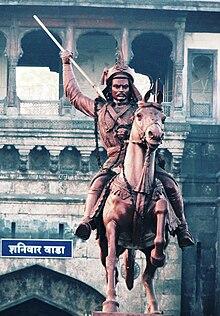
Peshwa, a title of great significance in the Maratha Empire, denoted the appointed Prime Minister serving the Chhatrapati (the Maratha king). This position, initially an advisory role, evolved into one wielding considerable executive authority, particularly during the reign of the later Chhatrapatis. The Peshwa's influence grew steadily, eventually surpassing that of the monarch, effectively making them the de facto rulers of the empire. The role was hereditary, passing down through families who demonstrated exceptional leadership and administrative capabilities. The Peshwas oversaw the expansion and consolidation of the Maratha Empire, leading military campaigns, managing finances, and negotiating treaties with other kingdoms. Their strategic acumen and political prowess shaped the destiny of the Maratha nation for generations.
The early Peshwas, under the direct guidance of Shivaji Maharaj, focused on establishing a strong and efficient administration. They played a crucial role in organizing the Maratha army and implementing revenue systems that bolstered the empire's financial stability. As the empire expanded, the Peshwas took on increasingly complex responsibilities, navigating the intricate web of alliances and rivalries that characterized the political landscape of the Indian subcontinent. They faced numerous challenges, including conflicts with the Mughal Empire, internal power struggles, and the rise of other regional powers. Despite these obstacles, the Peshwas managed to maintain the Maratha Empire's dominance for a significant period, leaving an indelible mark on Indian history. Their legacy is one of strategic brilliance, administrative efficiency, and unwavering commitment to the Maratha cause.
Family and Early Years
Personal Details
- 🎂 Date of Birth
- 18 August 1700.
Early Career
- ⚔️ Early Entry into Peshwa Service
- Peshwa began their professional journey by demonstrating exceptional military and leadership qualities at a young age quickly gaining prominence within the Maratha Empire.
- 🛡️ Forging a Path in the Maratha Court
- Peshwa's early career involved serving in the court of Chhatrapati Shahu where their intelligence and strategic acumen were quickly recognized. They were involved in various diplomatic missions and military campaigns, proving their worth and establishing a strong foundation for future leadership.
- 🚩 First Major Contribution: Securing Strategic Alliances
- One of Peshwa's first significant contributions was their role in securing strategic alliances with key regional powers. This involved navigating complex political landscapes and negotiating favorable terms that strengthened the Maratha Empire's position. This was significant because it expanded Maratha influence and provided crucial support for future military endeavors.
- ⛰️ Overcoming Early Challenges
- In their early career Peshwa faced challenges such as resistance from established court officials and skepticism about their youth and ambition. Overcoming these obstacles required demonstrating unwavering resolve, strategic brilliance, and an ability to win the trust and loyalty of their troops and superiors.
A Journey of Recognition
Career Journey
- A brilliant military strategist and statesman Peshwa significantly expanded the Maratha Empire through relentless campaigns and shrewd political maneuvering.
- 🚀 Early Recognition & Rise to Peshwa (1720)
- Becoming Peshwa at the young age of 20 following his father Balaji Vishwanath, was his initial recognition. This appointment was a testament to his early demonstrated leadership potential and understanding of Maratha politics. He secured his position by convincing Chhatrapati Shahu of his vision for expanding the Maratha Empire beyond its existing boundaries.
- ⚔️ Military Campaigns & Expansion of the Maratha Empire
- His major contribution was undoubtedly the extensive military campaigns that significantly expanded the Maratha Empire. He led successful campaigns against the Mughals Nizam-ul-Mulk, and other regional powers, demonstrating exceptional military skills and strategic thinking. He understood the weaknesses of the Mughal empire and capitalized on them to gain territorial advantage.
- 👑 Establishing Maratha Supremacy in Deccan
- A landmark project was his establishment of Maratha supremacy in the Deccan. Through a series of battles and treaties he weakened the Mughal influence and asserted Maratha control over key territories and revenue collection rights (Chauth and Sardeshmukhi). This fundamentally reshaped the political landscape of the region.
- 🤝 Diplomatic Alliances & Political Acumen
- His diplomatic skills were evident in forging alliances with various Rajput and other regional rulers against the Mughals. This demonstrated his political acumen and ability to unite disparate forces for a common goal. He understood that military strength alone was not enough and that strategic alliances were crucial for long-term success.
- 💰 Financial Management & Revenue Generation
- He implemented innovative financial management strategies to fund his military campaigns. He secured the right to collect Chauth and Sardeshmukhi which provided a steady stream of revenue for the Maratha Empire. This financial stability was essential for sustaining his military operations and consolidating Maratha power.
- 🚧 Challenges & Adaptation
- He faced numerous challenges including constant warfare, internal rivalries within the Maratha Confederacy, and financial constraints. He adapted by developing innovative military tactics, forging strategic alliances, and implementing effective financial management strategies. He also faced opposition from within his own court, requiring him to skillfully navigate political intrigues.
- 🌟 Legacy & Influence
- His relentless military campaigns strategic alliances, and administrative reforms cemented his legacy as one of the greatest Peshwas in Maratha history. He transformed the Maratha Empire from a regional power into a dominant force in the Indian subcontinent. His influence continues to be felt in the historical narrative and political discourse of the region. His strategies and tactics are still studied in military academies.
Achievements and Milestones
- Based on the provided context and the Wikipedia article on Bajirao I "Peshwa" refers to a position, specifically the Prime Minister of the Maratha Empire. Bajirao I was a famous and highly regarded Peshwa. Given this understanding, and focusing specifically on awards (formal recognitions), historical sources don't typically describe Peshwas as receiving "awards" in the modern sense. Their achievements were recognized through titles, jagirs (land grants), and positions of power.
- Therefore directly listing "awards" received by Peshwas is not historically accurate.
- NA.
Additional Highlights
Contributions
- Military Prowess and Strategic Expansion ⚔️
- ● Led numerous successful military campaigns expanding the Maratha Empire significantly.
- ● Masterfully employed cavalry tactics and rapid maneuvers to outwit opponents.
- ● Strategically weakened the Mughal Empire paving the way for Maratha dominance.
- Political Acumen and Diplomatic Skill 🤝
- ● Navigated complex political alliances to consolidate Maratha power.
- ● Successfully negotiated treaties and agreements with various regional powers.
- ● Appointed capable individuals to key administrative positions ensuring efficient governance.
- Financial Management and Revenue Generation 💰
- ● Implemented effective revenue collection systems to fund military campaigns and administrative functions.
- ● Encouraged trade and commerce contributing to the economic prosperity of the Maratha Empire.
- ● Judiciously managed state resources to support military and developmental projects.
- Infrastructure Development and Public Works 🏗️
- ● Commissioned the construction of roads bridges, and other infrastructure projects to improve connectivity and facilitate trade.
- ● Supported the development of irrigation systems to enhance agricultural productivity.
- ● Promoted the establishment of new settlements and towns to accommodate the growing population.
- Patronage of Arts and Culture 🎭
- ● Supported artists scholars, and musicians, fostering a vibrant cultural environment.
- ● Commissioned the construction of temples and other religious structures.
- ● Preserved and promoted traditional Maratha art forms and cultural practices.
Death
- Peshwa passed away on 28 April 1740.