

Radhanath Ray Family Tree
Radhanath Ray - A Lifestory
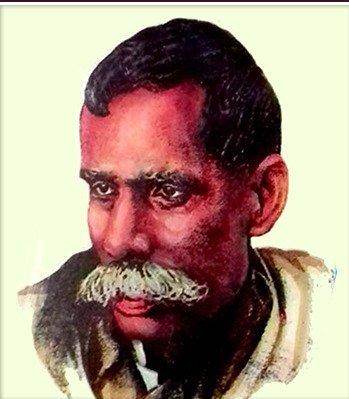
Radhanath Ray, a prominent figure in Odia literature, was born on September 28, 1848, in Kedarpur village, Balasore district, Odisha. He is widely regarded as the father of modern Odia poetry. His early education began in a village school, and he later attended Balasore Zilla School. Displaying exceptional academic abilities, he secured a scholarship to study at Cuttack High School. He further pursued higher education at Ravenshaw College, Cuttack, where he excelled in his studies. However, due to familial circumstances, he couldn't complete his degree.
Ray's career began as a teacher in Balasore Zilla School. He subsequently served as a school inspector in various districts of Odisha, contributing significantly to the development of education in the region. His administrative roles provided him with ample opportunities to observe the sociocultural landscape of Odisha, which deeply influenced his literary creations.
Radhanath Ray's literary contributions are vast and varied. He is best known for his Mahakavyas (epic poems) such as Mahayatra, Chandrabhaga, Nandikeshwari, and Usha. These poems, steeped in classical Indian mythology and history, showcase Ray's mastery of language and his ability to weave intricate narratives. He also penned several Kavyas (shorter poems) like Chilika, Kedar Gouri, and Parvati, which are celebrated for their vivid descriptions of nature and their exploration of human emotions. Ray's works often reflected a blend of traditional and modern sensibilities, marking a significant departure from earlier Odia literary styles. His influence on subsequent generations of Odia poets is undeniable, and he remains a revered figure in the history of Odia literature. He passed away on April 17, 1908, leaving behind a rich legacy that continues to inspire and resonate with readers today.
Family and Early Years
Personal Details
- 🎂 Date of Birth
- Radhanath Ray was born on 28 September 1848.
- 📍 Place of Birth
- He was born in Kedarpur village Balasore district, Odisha.
- 👨👩👧👦 Family Details
- His father was Sundar Narayan Ray. He was married to Bhagyalata Devi.
- 🎓 Educational Background
- Radhanath Ray received his early education in a village school. He later studied at Balasore Zilla School and Cuttack High School.
Early Career
- Radhanath Ray embarked on his creative journey driven by a deep love for his native language and a desire to contribute to its literary landscape. His early works were characterized by a blend of traditional poetic forms and emerging modern sensibilities setting the foundation for his future influence.
- ✍️ Early Literary Pursuits
- In the initial years Radhanath Ray dedicated himself to mastering the craft of poetry, experimenting with various styles and themes. He actively participated in literary circles, engaging with contemporary writers and intellectuals, which helped him refine his skills and broaden his perspective.
- 📖 First Major Opportunity: KabitaBali
- Radhanath Ray secured his first major opportunity with the publication of "KabitaBali". This collection of poems showcased his lyrical prowess and his ability to capture the essence of human emotions and experiences.
- 🌟 Significance and Reception
- "KabitaBali" was well-received by both the public and the literary critics of the time. It established Radhanath Ray as a promising voice in Odia literature earning him recognition for his innovative use of language and his insightful observations on society.
- 🚧 Challenges in Establishing Recognition
- Despite the initial success Radhanath Ray faced significant challenges in establishing himself. The literary scene was dominated by established figures, and breaking through required persistence and resilience. He also encountered criticism for his departure from traditional poetic norms, which some viewed as a challenge to the established order. Overcoming these obstacles required unwavering dedication to his craft and a firm belief in his artistic vision.
A Journey of Recognition
Career Journey
- A pioneer of modern Odia literature Radhanath Ray revitalized the language through poetry and narrative, blending classical Indian themes with Western literary influences.
- 📚 Early Career & Landmark Publications: Ray after establishing himself as a school inspector, significantly contributed to Odia literature with his Kabita Kalpalata (1866). This initial work showcased his emerging poetic style. His subsequent works, including Chandrabhaga (1873), Nandikeshwari (1880), Usha (1881), Mahajatra (1882), Parbati (1892), and Darbar (1897), marked him as a major literary figure. These poems, often based on classical and mythological themes, were instrumental in shaping modern Odia poetry.
- 🎨 Aesthetic Shifts & Narrative Innovations: Ray's work showed a clear shift from traditional forms to incorporating Western literary styles and themes. He introduced blank verse into Odia poetry a significant innovation. His narrative poems, like Chilika (1892), celebrated the natural beauty of Odisha and reflected a growing nationalistic sentiment.
- 🤝 Literary Collaborations & Influence: While not directly collaborating in the modern sense Ray significantly influenced a generation of Odia writers. His students and followers, often referred to as the "Radhanath School," carried forward his literary style and contributed to the growth of modern Odia literature.
- 🌟 Critical Acclaim & Public Reception: Radhanath Ray received critical acclaim for his innovative style his ability to blend tradition with modernity, and his powerful descriptions of nature and society. He was widely regarded as the father of modern Odia poetry and his works were immensely popular among the reading public. His influence on subsequent generations of Odia writers is undeniable, solidifying his place as a central figure in the development of the language's literary landscape.
Achievements and Milestones
- 🏆 Titles and Honors
- ● Rai Bahadur (by the British Government)
- ● Kabi Sabaraya (by Utkal Sahitya Samaj).
Additional Highlights
Death
- Radhanath Ray passed away on 17 April 1908.