

Sardar Patel Family Tree
Sardar Patel - A Lifestory
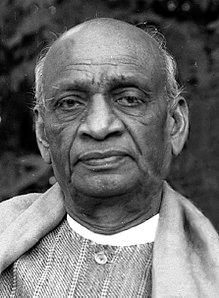
Sardar Vallabhbhai Patel, a pivotal figure in India's struggle for independence and its subsequent integration, was born on October 31, 1875, in Nadiad, Gujarat. He initially pursued a career in law, studying in England and becoming a successful barrister. However, inspired by Mahatma Gandhi's call for nonviolent resistance, Patel abandoned his lucrative practice to dedicate himself to the Indian independence movement. He played a crucial role in organizing peasants in Gujarat against unjust taxes and oppressive British policies, most notably in the Kheda and Bardoli Satyagrahas. These campaigns showcased his exceptional organizational skills and earned him the title "Sardar," meaning leader.
Following India's independence in 1947, Patel served as the country's first Deputy Prime Minister and Minister of Home Affairs. He is best remembered for his instrumental role in integrating the princely states into the Indian Union. Through a combination of diplomacy, persuasion, and, where necessary, decisive action, he convinced over 560 autonomous princely states to accede to India, preventing the fragmentation of the newly independent nation. This monumental achievement earned him the moniker "Iron Man of India."
Patel was a pragmatist and a realist, known for his strong leadership and unwavering commitment to national unity. He believed in a strong central government and played a key role in shaping the Indian Constitution. His contributions extended beyond political integration; he also focused on establishing a sound administrative structure and addressing the challenges of postpartition India. Sardar Vallabhbhai Patel passed away on December 15, 1950, leaving behind a legacy of national integration, strong governance, and selfless service to the nation. His contributions continue to inspire generations of Indians and solidify his place as one of the founding fathers of modern India.
Family and Early Years
Personal Details
- 🎂 Date of Birth
- 31 October 1875
- 🏠 Place of Birth
- Nadiad Gujarat, India
- 👨👩👧👦 Family Details
- Father: Jhaverbhai Patel
- Mother: Ladbai
- Spouse: Jhaverba Patel (deceased 1909)
- Children: Maniben Patel Dahyabhai Patel
- 🎓 Educational Background
- He studied law and went to England to become a barrister.
Early Career
- 🇮🇳 Early Legal Career
- Sardar Patel embarked on his professional journey as a lawyer initially practicing in Godhra, and later in Borsad. He quickly gained recognition for his sharp intellect, skillful advocacy, and unwavering commitment to his clients.
- ⚖️ Entry into Law
- Patel began his legal career after passing the bar examination. He did not attend college. He built a successful practice through diligent work and a reputation for honesty. The courts in Godhra and Borsad served as the initial arenas for honing his legal skills.
- 💪 First Major Success
- One of Patel's early significant successes was his handling of a case in Borsad which demonstrated his legal acumen and courage. He successfully defended his client.
- 🚧 Challenges Faced
- In his early years Patel faced the challenge of establishing himself in a profession dominated by established figures. He had to build his reputation through hard work and dedication, often taking on challenging cases to prove his abilities. Financial constraints and the need to support his family also posed significant obstacles.
A Journey of Recognition
Career Journey
- Sardar Patel the "Iron Man of India," forged a unified nation through strategic political integration.
- 🔥 Early Political Forays: After initial legal practice Patel plunged into the Indian independence movement, organizing peasants against British policies and gaining recognition within the Congress party.
- 💪 Leading the Indian National Congress: Assuming leadership roles Patel strategically guided the Congress party, playing a crucial role in planning and executing campaigns like the Non-Cooperation Movement and the Quit India Movement.
- 🇮🇳 Integrating Princely States: As India's first Home Minister Patel masterfully negotiated the integration of over 560 princely states into the newly independent nation, a monumental task that required diplomacy, firmness, and political acumen, shaping the map of modern India.
- 🏛️ Drafting the Constitution: Patel played a vital role in the Constituent Assembly contributing significantly to the drafting of India's constitution and ensuring its foundational principles were in line with the nation's aspirations.
- 🛤️ Nation Building & Legacy: Facing challenges of post-partition turmoil and nascent nationhood Patel focused on consolidating India's administrative structure and promoting national unity, leaving behind a legacy of strong leadership and unwavering commitment to the integrity of the nation.
Achievements and Milestones
- Here's a list of awards and recognition received by Sardar Vallabhbhai Patel:
- 🇮🇳 Bharat Ratna (1991)
- ● India's highest civilian honor awarded posthumously for his exceptional service to the nation.
- It is important to note that while Sardar Patel is revered and remembered through various statues institutions, and commemorative events, there's no record of him receiving any other formal "awards" during his lifetime or posthumously, besides the Bharat Ratna. The numerous memorials and institutions named after him are a form of recognition, but not formal awards.
Additional Highlights
Contributions
- A towering figure in India's struggle for independence and its subsequent integration Sardar Patel was known for his pragmatic approach and unwavering resolve.
- 🇮🇳 Integration of Princely States
- ● Played a pivotal role in integrating over 560 princely states into the Indian Union after independence. He used a combination of persuasion negotiation, and, where necessary, decisive action to achieve this monumental task.
- ● Successfully integrated states like Junagadh Hyderabad, and Kashmir, overcoming significant resistance and diplomatic challenges.
- ● His efforts ensured a unified and consolidated India preventing fragmentation and potential conflicts.
- 📜 Drafting of the Constitution
- ● Actively participated in the drafting of the Indian Constitution as a member of the Constituent Assembly.
- ● Contributed significantly to the provisions related to fundamental rights minority rights, and the structure of the Indian state.
- ● Advocated for a strong central government to maintain unity and stability.
- 🏛️ Public Service and Administration
- ● Served as the first Deputy Prime Minister and Home Minister of India.
- ● Effectively managed law and order during the turbulent period following independence and partition.
- ● Worked to rehabilitate refugees and address the challenges of resettlement.
- 🌱 Social Advocacy
- ● Championed the cause of farmers and agricultural laborers.
- ● Led the Bardoli Satyagraha in 1928 a successful non-violent protest against unjust taxation. This movement significantly boosted his reputation and earned him the title "Sardar."
- ● Advocated for social equality and the upliftment of marginalized communities.
Death
- Sardar Patel passed away on 15 December 1950.
Did you find this lifestory interesting?