History:
The surname Chamarti belongs to the wide and varied family of Telugu surnames that have grown out of South India over many centuries. Like most Telugu surnames, Chamarti did not appear overnight. It grew slowly out of older naming customs that were based on place names, family occupations, personal traits, or words tied to local geography. Surnames of this kind were not fixed at birth in the way we think of surnames today. Instead, they often began as descriptive tags attached to a person or a family, and over generations these tags settled into permanent family names that were passed down. Chamarti, in this sense, fits a pattern seen across many Telugu-speaking households, where a word rooted in daily life or in the land slowly turned into a marker of family identity. Variants such as Chamarthi, Chamarathi, and Chamurty appear alongside Chamarti in old records and in present day usage, and this kind of spelling variation is very common in Indian surnames because of how sounds were written down differently by different scribes, officials, and regions over time.
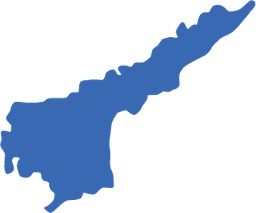
The historical roots of Chamarti lie in the older naming traditions of the Telugu-speaking lands, which today cover the states of Andhra Pradesh and Telangana. Before the modern system of fixed surnames became common, families were often known by the village they came from, the land they farmed, or some notable feature connected to their home or ancestors. Over the span of many generations, such identifying words became fixed surnames that were carried forward by sons and daughters alike. Chamarti most likely followed this same path, starting as a local or descriptive term that, through repeated use within a family line, hardened into a surname. This is a very natural process in Telugu naming history, where a huge number of surnames in use today can be traced back to similar origins rooted in geography, farming life, or village identity rather than any single dramatic event.
Ancient references to surnames in the Telugu region are difficult to pin down with exact dates, since written records from those early centuries are scarce and often focused on kings, temples, and land grants rather than ordinary family names. However, inscriptions on temple walls, copper plates, and old land deeds from the Telugu kingdoms do show that surnames and family identifiers were already in use among landowning and priestly families well over a thousand years ago. Names connected to villages, rivers, hills, or local trades were commonly recorded in these old documents as a way of telling apart families that might otherwise share the same first name. It is within this broader tradition of early Telugu record keeping that a surname like Chamarti would have taken shape, even though no single inscription can be pointed to as its first appearance. The surname should be understood as part of this long, slow unfolding of Telugu family naming rather than as something that sprang from one particular ancient record.
Migration and settlement patterns played a big part in how the Chamarti surname spread beyond its original home area. Telugu-speaking families have moved across the Deccan plateau for centuries, following opportunities in farming, trade, learning, and service to local rulers. As families carrying the Chamarti name moved from their original villages into new towns and districts, they carried their surname with them, planting it in new soil wherever they settled. This kind of movement was often driven by practical reasons such as the search for better farmland, invitations from local chiefs to settle and cultivate new areas, or simply the natural spread of family branches as sons set up new households away from the ancestral village. Over time, this meant that the Chamarti surname came to be found not just in one small pocket of the Telugu region but scattered across several districts, each with its own small community of families sharing the name.
As Telugu-speaking people moved further afield in more recent generations, for education, government service, business, and work opportunities, the Chamarti surname travelled with them into other parts of India and eventually overseas. Families carrying the Chamarti name can today be found well beyond the borders of Andhra Pradesh and Telangana, settled in cities across India and in countries around the world. This spread mirrors the wider story of Telugu surnames generally, many of which started as small, local family markers in a single village and have, over the course of a few generations, become truly spread out across the country and the globe. Even with this spread, the surname has kept its Telugu character, and it continues to be recognised as a name with clear South Indian roots.
Looking at the linguistic and etymological background of Chamarti, the name shows the typical sound patterns of Telugu surnames, with its soft consonants and rhythmic ending. Many Telugu surnames were shaped by local dialect, by the way village names were shortened or altered in daily speech, and by the natural drift of pronunciation across different areas. The slight differences seen between Chamarti, Chamarthi, and Chamarathi likely reflect exactly this kind of regional speech pattern, where the same family name was written down slightly differently depending on who was recording it and which part of the Telugu region they came from. This is a normal and well recognised feature of Telugu naming history, and it does not take away from the fact that these variants point back to the same family root. The surname Chamarti, in all its spellings, stands as a small but clear thread connecting present day families to the villages, farms, and early record keepers of the old Telugu lands.
Description:
The surname Chamarti traces its roots to the Telugu speaking communities of South India, where it continues to be found today among Hindu families. Telugu, the mother tongue connected with this surname, is one of the oldest and most widely spoken languages in India, written in its own rounded and flowing script that has been shaped over many centuries. Surnames such as Chamarti often grew out of village names, occupations, or family identities, and they served as a way for communities to keep track of lineage and belonging as populations spread out across the Deccan region. Families carrying the Chamarti surname would have passed it down through generations, keeping a sense of shared identity even as individual branches of the family moved to different towns, cities, or even countries in search of work, education, or new opportunities.
Within the Chamarti family tree, several gotras are recognised, including Angiras, Dadich, Harita, Macherla, and Rachamadugula. A gotra is a kind of lineage marker that traces back to a common ancestor, often a sage or rishi from ancient times. This system has been part of Hindu tradition for thousands of years and plays an important role in matters such as marriage, where families traditionally check that both sides come from different gotras. The presence of multiple gotras within the Chamarti surname shows that the name was likely adopted independently by more than one family group, each with its own distinct ancestral line, rather than all tracing back to a single origin point. This is quite common with Telugu surnames, where a shared name can represent several separate family histories rather than one single family tree.
Alongside gotra, many Telugu Hindu families also honour a kuldevta, or family deity, who is worshipped during important occasions such as weddings, housewarmings, and festivals. For the Chamarti surname, the kuldevta traditions include Bhavani, Khandoba, and Tulja Bhavani. Bhavani and Tulja Bhavani are both forms of the Mother Goddess, widely worshipped across Maharashtra and parts of Andhra Pradesh and Telangana, often associated with strength, protection, and the wellbeing of the family. Khandoba, meanwhile, is a much loved deity in the Deccan region, seen as a guardian figure and often linked with warrior traditions and rural communities. Families who hold these deities close to their hearts usually visit specific temples during certain times of the year, carry forward stories and songs about the deity, and pass on these customs to their children as a way of keeping the family's spiritual identity alive. For the Chamarti family, these deities form an important thread connecting different generations, even when family members are spread far apart.
Telugu culture, which forms the backdrop for the Chamarti surname, is known for its warmth, its love of good food, and its colourful festivals. Traditional meals often include pappu, which is a simple lentil dish, along with pulihora, a tangy tamarind rice that is especially popular during festivals and temple visits. Gongura, a leafy green with a sharp tangy taste, is another favourite, often turned into a pickle or chutney that many Telugu households consider a comfort food. Sweets such as pootharekulu, a delicate paper thin sweet, and bobbatlu, a stuffed sweet flatbread, are commonly prepared during festive occasions and family celebrations. Festivals hold great importance too, with Ugadi marking the Telugu new year and bringing families together to prepare special dishes that mix sweet, sour, and bitter flavours as a reminder that life itself holds a mix of experiences. Sankranti, celebrated with great joy across Telugu speaking regions, involves decorating homes with colourful kolams, flying kites, and preparing dishes made from sesame and jaggery. Dasara and Diwali are also celebrated with warmth, involving family gatherings, prayers, and the lighting of lamps. For a family carrying the Chamarti surname, these festivals would likely form cherished yearly traditions, bringing relatives together regardless of where they have settled.
Like many Indian surnames, Chamarti may appear with slightly different spellings depending on region, personal preference, or how it has been transliterated from Telugu into English over the years. Variations might include Chamarthi, Chamarti, or Chamerti, with the sound of the name staying largely the same even though the spelling shifts slightly. This kind of variation is extremely common with Indian surnames, especially those that originate in regional languages and are later written down in English for official documents, passports, or school records. Such small differences in spelling do not change the family's identity or heritage, but they do show how surnames can take slightly different forms as families move across different states or even abroad, where local clerks, teachers, or officials may spell the name as it sounds to them. Despite these small variations, the heart of the Chamarti surname and the traditions, deities, and gotras connected with it remain a steady thread linking families who share this name across generations.