History:
The surname Dhanuhar carries within it the sound of an older world, one where a person's name often grew directly from the work they did with their hands. The word itself points back to the ancient term for a bow, known across many parts of northern India as 'dhanush' or 'dhanu'. From this root came the idea of the bow maker and the bow user, the person skilled in crafting or handling the weapon that fed families and defended villages long before written records became common. When you break the name down gently, you find 'dhanu' meaning bow and a trailing sound that suggests the doer or the maker, and so Dhanuhar can be understood as one connected to the bow, whether through making it, using it, or belonging to a group known for that craft. This kind of naming was very common across the Indian subcontinent, where surnames often told you at a glance what a family once did for a living.
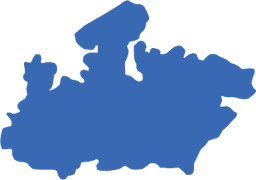
To understand where the surname Dhanuhar comes from, it helps to look at the land where such names took shape. The central and eastern belts of India, taking in areas that today fall within Chhattisgarh, Jharkhand, Bihar, Odisha, and parts of Madhya Pradesh, were for a very long time covered in thick forest and open scrubland. Life in these regions leaned heavily on hunting, gathering, and small scale farming, and the bow was a tool of daily importance rather than a thing of ceremony alone. Families who became known for shaping bows from local wood and bamboo, or for their skill in the hunt, would in time carry a name that reflected that reputation. The name Dhanuhar sits comfortably within this setting, and its close cousins such as Dhanukar, Dhanuar, and Dhanwar appear in nearby districts, showing how a single root could soften and shift as it passed from one spoken dialect to another. The spelling Dhanuhaar also turns up now and then, keeping the long vowel sound that many local tongues favoured.
The historical roots of a name like Dhanuhar reach back to a time when the bow held a place of real honour in Indian life. In the old epics and in the memory of countless rural communities, the archer stood as a figure of skill and steadiness, and the making of a good bow was treated as serious and respected work. A well made bow needed the right wood, seasoned with care, along with a good eye and patient hands, and the person who could produce such a thing held a useful and valued position within the village. It is easy to see how a family trade of this sort would, over the generations, harden into a family name. This pattern was not unusual, for many Indian surnames grew from crafts and callings in just this way, the potter, the weaver, the ironworker, and the bow maker each leaving their trade stamped upon their descendants long after the work itself had changed or faded. The name Dhanuhar therefore acts as a small window into a working past, telling us that somewhere back along the line, this family was tied to the bow.
Migration and settlement played their own part in carrying the surname across the map of India. The forested heart of the country was never a sealed place, and people moved for many reasons, following better land, fresh grazing, new work, or simply the pull of a growing town. As families spread out from the central regions, they took their names with them, and so Dhanuhar and its related forms travelled along the old paths that linked village to village and market to market. Rivers such as the Mahanadi and the Son, along with the trading routes that threaded through the central plateau, helped shape where communities put down roots. When a family settled in a new district, the local way of speaking would sometimes nudge the name into a slightly altered shape, which is why one finds Dhanuar in one area and Dhanwar in another, each a branch of the same older stem. Over long stretches of time these small changes added up, yet the shared thread of the bow ran through them all, quietly linking scattered families to a common beginning.
The linguistic background of Dhanuhar deserves a closer look, because the name sits within a wider family of words drawn from the older speech of northern India. The Sanskrit word 'dhanus', meaning bow, gave rise to many forms across the regional tongues, softening and reshaping as it moved from formal writing into everyday speech. In the spoken languages of the central and eastern regions, hard sounds often relaxed and vowels stretched out, so that a term rooted in 'dhanu' could become Dhanuhar in one mouth and Dhanukar in another without losing its core meaning. This gentle drift explains the neat little group of related spellings that sit alongside one another, Dhanuhar, Dhanukar, Dhanuar, Dhanwar, and Dhanuhaar, each carrying the same idea of the bow while wearing a slightly different coat. Names of this kind remind us how closely language and daily life were bound together, for the tools people used shaped the words they spoke, and those words in turn became the names they passed down. In the surname Dhanuhar we can still hear that long connection, a plain and honest word that began as a description of skill and grew, across many generations and many miles, into a family name carried with quiet pride through the varied regions of India.
Description:
The surname Dhanuhar carries a sense of old work and skill within it. The name comes from the word 'dhanu', which means a bow, and points to families who were once linked with archery and the making of bows and arrows. In many parts of India, surnames grew out of the trade or craft that a family followed, and Dhanuhar sits neatly in this group. A family known for shaping bows, stringing them, and passing on the craft of archery from father to son would in time carry a name that held the memory of that work. Over the years, the meaning of the name stayed alive even when the craft itself changed, and today the surname Dhanuhar still keeps a quiet link to those early makers and users of the bow.
Families who carry the Dhanuhar name follow the Hindu faith, and their lives move to the steady rhythm of Hindu belief, worship, and festival. Within the Hindu way, the idea of the gotra is important, as it marks the line of descent from an ancient sage or teacher. The Dhanuhar name is tied to several gotras, and these are Angiras, Dhanoli, Harith, Mudgal, and Raghu. Each of these gotras carries its own long history. The Angiras gotra traces back to the sage Angiras, one of the great seers spoken of in the old texts. The Harith and Mudgal gotras also reach back to respected sages of the past, while the Raghu gotra links to a line long honoured in Hindu tradition, the same line remembered in the story of Lord Rama. The Dhanoli gotra adds its own thread to this pattern. For a family, knowing the gotra matters at the time of marriage and at moments of worship, as it guides who may marry whom and keeps the family aware of its roots. So a person with the Dhanuhar surname holds not just a name but also a place within one of these older family lines.
Worship of the family deity, or kuldevta, sits close to the heart of family life for those who carry the Dhanuhar name. The family deities linked with this surname are Bhavani, Khandoba, and Venkateshwara. Bhavani is a much loved form of the Mother Goddess, worshipped with great warmth across western India and beyond, and seen as a giver of strength and a guardian of the household. Khandoba is a folk deity greatly honoured in the Deccan and in Maharashtra, often shown as a warrior god riding a horse, and families who keep him as their kuldevta look to him for protection and good fortune. Venkateshwara, a form of Lord Vishnu, is worshipped at the famous hill shrine of Tirupati and draws devotion from millions across the south of India. Having these three deities linked with the Dhanuhar name shows a spread of devotion that reaches across regions, from the western lands where Bhavani and Khandoba are dear, to the southern hills where Venkateshwara is loved. On days of family worship, prayers offered to the kuldevta are meant to keep the household safe, to bless new beginnings, and to bind the family together across the generations.
The mother tongue linked with the Dhanuhar surname is Tamil, one of the oldest living languages in the world, written in the flowing Tamil script. Tamil is spoken across the state of Tamil Nadu in the south of India, and it carries a body of poetry and writing that stretches back more than two thousand years. The Tamil script is rounded and graceful, shaped over long centuries and once written on palm leaves before paper came into use. A family whose mother tongue is Tamil grows up with the sounds of old songs, temple verses, and everyday speech that has changed little at its core across the ages. The food of the Tamil land is simple, fresh, and full of flavour. Rice is the heart of most meals, served with sambar, a warm lentil stew flavoured with tamarind and vegetables, and with rasam, a thin and tangy pepper soup that is taken to aid digestion and comfort the body. Crisp dosa and soft idli, both made from ground rice and lentils, are eaten at breakfast and beyond, often with coconut chutney at their side. Sweet treats such as payasam, a milk and rice pudding, mark days of joy and celebration. The festivals of the Tamil people follow the seasons and the harvest. Pongal is the best loved of these, a harvest festival that gives thanks for the sun, the rain, the cattle, and the crops, when families cook fresh rice with milk and jaggery in a pot until it boils over as a sign of plenty. Other festivals such as Tamil New Year, known as Puthandu, mark the turning of the year with new clothes, family visits, and sweets, while the lamps of Deepavali bring light and gladness to every home. Through all these festivals, the Tamil tongue and the Tamil script keep their place at the centre of family and community life.
Taken together, the surname Dhanuhar holds within it a story of craft, faith, family lines, and regional belonging. The link to the bow speaks of an old skill in archery and in the making of weapons, a trade that once shaped the identity of whole families. The gotras of Angiras, Dhanoli, Harith, Mudgal, and Raghu tie the name to ancient sages and to lines of descent that Hindu families still honour today. The worship of Bhavani, Khandoba, and Venkateshwara shows a family devotion that spans regions and forms of the divine, from the Mother Goddess to the warrior god of the Deccan to the great lord of the southern hills. The Tamil mother tongue and its script root the family in the culture of the south, with its old language, its warm and simple food, and its bright harvest festivals. In the way it sounds, the name Dhanuhar may also be written or spoken with small changes, such as Dhanuar, Dhanuhaar, or Dhanuwar, as spellings often shift when a name passes from one region or one tongue to another. Yet through all these small changes, the name keeps its core meaning and its link to the past. To carry the surname Dhanuhar today is to hold a small piece of that longer story, a name that joins the memory of the bow with the living faith, language, and traditions of the families who bear it.