History:
The surname Galipothu belongs to the wider family of surnames found among Telugu speaking people, and its roots lie deep in the language and culture of the Andhra and Telangana regions of South India. Like many Telugu surnames, Galipothu most likely grew out of a descriptive word or a local term tied to a place, an occupation, or a family trait that was passed down through generations. Over time, this word settled into daily use as a family name, and the people who carried it came to be known simply as the Galipothu family. Surnames of this kind were rarely invented overnight. They grew slowly, often starting as a nickname for one person or household, before becoming fixed as a proper surname that children and grandchildren continued to use. In the case of Galipothu, this same pattern seems to apply, with the name likely beginning as a local identifier before turning into a lasting family name across several generations.
The linguistic background of Galipothu is worth looking at closely, since Telugu surnames often carry small clues about their origin within their sound and structure. Many Telugu family names were built from everyday words describing nature, farming life, village landmarks, or personal qualities, and then shaped slightly over time as they passed from one generation to the next through spoken language. Spelling changes were extremely common in this process, especially before written records became widespread, since names were passed down mainly through speech rather than paper. This is why we find the surname written in several ways, including Galipotu, Galipothy, Galipotty, and Galipoth. These are not different surnames at all, but simply the same family name shaped by local pronunciation, regional dialect, and the personal choices of different branches of the family when writing it down. Such variation is very typical in Telugu naming traditions, where sound often guided spelling more than fixed rules did.
Ancient Indian naming customs give us useful background for understanding how a surname like Galipothu could have formed. In early India, most people were known only by a personal name, and family or clan names developed much later as society grew more settled and organised into villages, towns, and administrative units. As communities expanded, it became useful to have an extra name to show which family or place a person belonged to, especially when trade, travel, and record keeping increased. Over centuries, these added names turned into proper surnames that were handed down within families. Telugu surnames, in particular, often reflect this slow and natural development, shaped by farming life, local geography, and the close ties between a family and its native village. Galipothu fits well within this broader pattern of Telugu surname formation, where practical, everyday language eventually hardened into a family identity carried proudly across time.
Migration and settlement patterns across South India help explain how a surname such as Galipothu would have taken root in certain areas and then slowly spread outward. Telugu speaking families have long histories of movement within the Andhra and Telangana regions, often shifting from smaller villages to larger towns in search of farmland, trade opportunities, or better living conditions. As families moved, they carried their surname with them, and this is how a name tied originally to one small village or region could appear later in several different districts. Marriages between families from different villages also played an important part in spreading surnames further, since a name could travel with a bride or groom into a completely new household and area. Over several generations, repeated movement of this kind allowed the Galipothu surname to put down roots in more than one place, even though its earliest origin would have been in a single, smaller community.
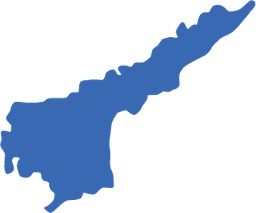
As Telugu society grew and changed, families carrying the Galipothu surname likely spread further across Andhra Pradesh and Telangana, following the same broader currents of migration seen in many other Telugu surnames. Changes in farming, the growth of towns, and shifts in land ownership over the centuries all encouraged families to move away from their original villages, often settling in new districts while keeping their old surname intact as a link to their background. This is a common feature of Telugu surname history, where a name stays fixed even as the family's address changes many times over. Through this steady process of movement, work, and marriage, the surname Galipothu would have continued to spread across different corners of the Telugu speaking world, carried forward quietly by each new generation that kept the name alive.
Description:
The surname Galipothu belongs to a Hindu family of Telugu speakers, and it carries the warmth and identity of the Telugu speaking lands of South India, which today cover Andhra Pradesh and Telangana. Families bearing the Galipothu surname have grown up speaking Telugu as their mother tongue, and they write it in the beautiful rounded Telugu script, one of the oldest and most widely used scripts in southern India. Telugu is known for its smooth, flowing sound, and many people have called it the Italian of the East because of how musical it sounds when spoken. Surnames among Telugu speaking Hindu families often grew out of village names, occupations, personal traits, or family stories passed down over generations, and Galipothu fits into this wider pattern of surnames that carry a sense of place and lineage within Telugu culture. Even though the exact origin story of the name is not widely documented, it continues to be carried proudly by the families who hold it, linking them to a long history of Telugu speaking communities and their traditions.
Within Hindu tradition, families often trace their lineage through a gotra, which is a way of marking ancestry back to a common sage or rishi from ancient times. The Galipothu surname is linked to several gotras, namely Angiras, Galav, Kashyap, Mavanulla, and Racherla. Each of these gotras carries its own deep history. Angiras and Kashyap are among the oldest and most respected sage lineages mentioned in Hindu scriptures, and many families across India trace their roots back to these two names. Galav is another well known sage lineage, often mentioned in old Hindu texts and stories. Racherla and Mavanulla are gotras that are more closely tied to specific regional and community histories within the Telugu speaking areas, showing how the Galipothu surname carries both ancient pan Indian roots and more local, community specific threads. Having several gotras connected to one surname is common in many Indian communities, as different branches or sub groups of a family may have settled in different areas over time, picked up slightly different customs, and ended up being recorded under different gotra names while still sharing the same surname.
Alongside gotra, many Hindu families also honour a kuldevta, or family deity, who is seen as the protector and guiding spirit of the household. For the Galipothu surname, the kuldevta includes Bhavani, Khandoba, and Venkateshwara. Bhavani is a form of the Mother Goddess, worshipped widely across South India and parts of Maharashtra, known for her strength and her role as a protector of her devotees. Khandoba is a much loved deity in the Deccan region, especially in Maharashtra and parts of Karnataka and Andhra Pradesh, often seen as a warrior god and a guardian of families and villages. Venkateshwara, also known as Balaji, is one of the most worshipped forms of Lord Vishnu, with his most famous temple standing at Tirumala in Andhra Pradesh, drawing millions of devotees every year. The fact that the Galipothu family honours these three deities shows a blend of goddess worship, regional guardian deity worship, and devotion to Vishnu, which reflects the layered and varied nature of Hindu worship across the Telugu speaking region. Family deities like these are often worshipped during house functions, weddings, and yearly visits to the family temple, keeping the tradition alive across generations.
Telugu culture, which forms the backdrop of the Galipothu surname, is rich with food and festival traditions that bring families together throughout the year. Festivals such as Ugadi, the Telugu new year, mark fresh beginnings and are celebrated with a special dish called ugadi pachadi, which mixes sweet, sour, bitter, and spicy flavours together to represent all the different experiences life brings. Sankranti, celebrated in the middle of January, is another major festival for Telugu families, marked by colourful kolam designs on the floor, kite flying, and dishes made from the new harvest of rice and sesame. Dasara and Diwali are also celebrated with great joy, filled with lights, sweets, and family gatherings. Telugu cooking is known for its bold use of spice, tamarind, and chilli, and dishes like pulihora, a tangy tamarind rice, along with pesarattu, gongura pachadi, and a wide variety of pickles and chutneys are common across Telugu households, including likely in Galipothu family kitchens during festive occasions. Food during festivals is not just about taste but about bringing the whole family together, cooking traditional recipes passed down from grandmothers and mothers, and sharing meals that connect each generation to the one before it.
When it comes to notable people, there is currently no widely confirmed public figure carrying the Galipothu surname that can be verified through reliable sources. This does not take away from the surname's value or history, since many surnames across India, including Galipothu, are held by hard working families in everyday professions such as farming, teaching, business, and public service, who may not appear in public records but still carry their family name with pride. As with many Telugu surnames, Galipothu may also appear with small spelling changes depending on how it is written in English, such as Galipotu, Galipothu, or Galipothy, since the sounds of Telugu do not always have a single fixed way of being written in the Roman alphabet. These small spelling differences are common across Telugu surnames and do not change the family history or identity behind the name. Whether written as Galipothu or with a slightly different spelling, the name continues to carry forward the gotra lines of Angiras, Galav, Kashyap, Mavanulla, and Racherla, the devotion to Bhavani, Khandoba, and Venkateshwara, and the wider Telugu Hindu heritage that shapes the identity of every family who proudly carries the Galipothu surname today.