History:
The surname Kamparaju belongs to the wider family of Raju surnames found largely in the Telugu speaking regions of India, particularly Andhra Pradesh and Telangana. The word Raju itself comes from the Sanskrit term Raja, meaning king or ruler, and this root tells us a great deal about how surnames like Kamparaju came into being. In the old days, surnames in this part of India were often built by combining a personal name, a place name, or a descriptive word with the title Raju to show status, lineage, or connection to ruling families. Kamparaju follows this exact pattern, with Kampa joined to Raju. Over centuries, as families grew and spread, the name took on slightly different spellings and forms, including Kampa Raju, Kamparaaju, Kamparajoo, and Komparaju.
The historical roots of Kamparaju can be traced back to the broader tradition of Kshatriya and Raju surnames that spread across the Telugu lands over many centuries. The Telugu region has a long history of small kingdoms, feudal estates, and local chieftains, many of whom carried the Raju title as part of their name to mark their rank in society. Families bearing names like Kamparaju were often connected, directly or indirectly, to this network of landholding and ruling families who managed villages, estates, and farmland across the region. As these families expanded through marriage and settlement, the surname moved along with them, carried from one village to the next and from one generation to another. This is a very common pattern in Indian surname history, where a name tied to rank or title becomes fixed as a family surname long after the original ruling connection has faded into memory, leaving behind only the name itself as a marker of where the family once stood in local society.
Ancient references to names built on the Raju title go back to a time when the Telugu speaking areas were divided into many small kingdoms and local domains, each ruled by chieftains or landholders who used such titles to show their standing. While we cannot point to one single ancient record naming Kamparaju specifically, the pattern of forming surnames this way is well documented in the wider history of Andhra and Telangana. Place names, personal names, and family nicknames were regularly joined with Raju to create a lasting family identity, and Kamparaju almost certainly grew out of this same tradition. It is likely that the first part of the name, Kampa, was originally linked to a place, a personal trait, or an ancestor's name, which then became permanently joined with Raju to form the surname we know today. This method of surname formation was especially strong in rural and semi rural parts of the Telugu region, where land, family name, and local standing were closely tied together for many generations.
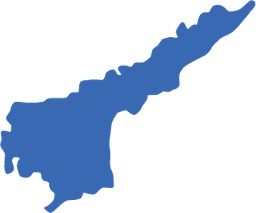
Migration and settlement patterns played a large part in how the Kamparaju surname spread across different parts of India. Like many Telugu surnames, it would have started in a fairly small area, most likely within present day Andhra Pradesh or Telangana, before spreading outward as families moved in search of land, work, trade, or marriage alliances. Over time, members of Kamparaju families settled in different districts and towns across the Telugu speaking belt, carrying the name with them wherever they went. Some families later moved further afield, into neighbouring states or even further across India, as trade routes opened up and people travelled more freely for business, education, and government service. In more recent times, like many Indian surnames, Kamparaju has also travelled beyond India itself, with families settling abroad for work and study, yet still keeping the name as a strong link back to their Telugu roots and family history.
The spread of the surname across different regions of India also reflects the broader movement of Telugu speaking communities over the centuries. As the Telugu region grew and changed through different ruling periods, many families moved between what is now coastal Andhra, the Rayalaseema area, and the Telangana plateau, often resettling near rivers, fertile plains, or trading towns where farming and local commerce could support a growing family. Kamparaju families would have followed similar paths, settling where land and opportunity allowed, while still holding on to their surname as a mark of identity and family pride. Looking at the name from a purely linguistic point of view, the joining of a descriptive or place based word with Raju is a textbook example of how Telugu surnames were built up over time, turning what may once have been a nickname or local title into a lasting family name. In this way, the story of Kamparaju is really the story of a wider pattern of surname building across the Telugu speaking world, shaped by language, land, and generations of family movement across the Indian landscape.
Description:
The surname Kamparaju comes from the Telugu speaking communities of Andhra Pradesh and Telangana, and it carries a strong sense of pride and identity for the families who use it. People with the surname Kamparaju generally follow the Hindu religion and trace their roots to the Raju, Kamma, Rathore, Kshatriya, and Rajput communities. These communities have long histories in the coastal and central regions of Andhra Pradesh, where farming, trade, and land ownership shaped much of their social life over the centuries. The Raju community in particular has historically been linked with land owning families and local leadership roles in villages, while the Kamma community has strong ties to agriculture and business across the Krishna and Godavari river deltas. The Rathore and Rajput links point to a wider Kshatriya warrior background, suggesting that ancestors carrying the Kamparaju surname may have had connections to ruling families, military service, or estate management in earlier centuries. Over generations, as families moved and settled in different parts of the Telugu speaking belt, the surname Kamparaju became a way of holding on to this shared heritage and passing it down to children and grandchildren.
Within Hindu tradition, gotra plays an important part in marriage customs and family identity, and families with the surname Kamparaju may belong to one of several gotras, including Dhanunjaya, Aatreya, Dadich, Kashyapa, Mahadeva, and Raghukula. Each gotra is believed to trace back to a particular sage or ancestral line from ancient times, and knowing one's gotra helps families understand who they are connected to through blood and tradition. This is especially important during weddings, where families check that the bride and groom do not share the same gotra, since marriage within the same gotra is traditionally avoided. The presence of six different gotras among Kamparaju families shows just how spread out and varied this surname group has become over time, with different branches of the family settling in different areas and keeping their own version of the family history alive. This also reflects a common pattern among Telugu Kshatriya and Raju families, where one surname can hold several gotra lines depending on which ancestral branch a family descends from.
Alongside gotra, many Hindu families also hold a kuldevta, or family deity, who is worshipped during important occasions such as weddings, housewarmings, and festivals. For families carrying the Kamparaju surname, the kuldevta may be Bhavani, Khandoba, or Venkateshwara. Bhavani is a form of the Mother Goddess and is deeply respected across many parts of India, especially among warrior and land owning communities who look to her for strength and protection. Khandoba is a deity closely tied to Maharashtra and parts of Karnataka and Andhra Pradesh, often worshipped by pastoral and warrior communities, and he is seen as a protector who watches over families and their land. Venkateshwara, the deity of the famous Tirumala temple, is one of the most widely worshipped forms of Lord Vishnu in South India, and many Telugu families, including those with the Kamparaju surname, hold deep devotion towards him. The fact that families may follow any of these three deities shows how the Kamparaju surname spans different regional and devotional traditions within the wider Hindu and Kshatriya community.
The mother tongue of families with the Kamparaju surname is Telugu, one of the oldest and most widely spoken languages in South India, written in its own beautiful curved script. Telugu is known for its soft, flowing sound, which is why it has sometimes been called the Italian of the East. Families who carry the surname Kamparaju would have grown up speaking Telugu at home, reading it in their local newspapers, and using it in daily life, school, and religious ceremonies. Telugu culture brings with it a wonderful range of festivals and food traditions that are shared by communities such as Raju, Kamma, Rathore, Kshatriya, and Rajput across Andhra Pradesh and Telangana. Festivals like Ugadi, which marks the Telugu new year, Sankranti, the harvest festival celebrated with great joy in villages, and Dasara, celebrated with devotion to goddess forms like Bhavani, are all important dates in the calendar for Telugu Hindu families. Traditional foods connected to this region include pesarattu, a green gram dosa often eaten for breakfast, gongura pachadi, a tangy chutney made from sorrel leaves that is a favourite in Andhra households, and pulihora, a tangy tamarind rice often prepared during festivals and temple visits. These dishes are loved not just for their taste but for the memories and gatherings they bring with them, often prepared during family functions where the Kamparaju name itself would be spoken with warmth as relatives greet one another.
Like many Indian surnames, Kamparaju may appear in slightly different spellings depending on region, dialect, or how it has been written down over time in official documents. Variations can include Kampa Raju or Kamparaju written as two words instead of one, and such small changes are common across Telugu surnames when they are translated into English on certificates, voter lists, or school records. These spelling differences do not change the meaning or heritage behind the name, and families often recognise relatives even when the surname has been recorded slightly differently in various documents. The surname Kamparaju, in whichever way it is spelled, continues to carry forward a sense of belonging for the families who hold it, linking them to their gotra, their chosen kuldevta, their Telugu roots, and the wider circle of Raju, Kamma, Rathore, Kshatriya, and Rajput communities that have shaped their shared story across generations.