History:
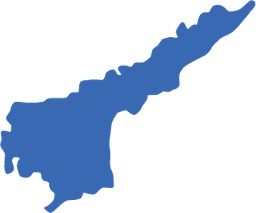
The surname Kunaparaju belongs to the Telugu speaking regions of South India, and its roots lie firmly in the soil of Andhra Pradesh. Like many Telugu surnames, Kunaparaju was not simply a label picked at random. It grew out of the land, the local speech, and the way families were known within their villages. The name carries two parts that are common in Telugu naming patterns. The first part, "Kuna", is believed to connect to a place name, a natural feature, or a descriptive word used in older Telugu, while the second part, "raju", is a title that was widely used across Andhra and Telangana to mark a family of some standing in their community. When these two parts were joined together over generations, they formed the surname we now know as Kunaparaju, and it became the identity marker passed down within the family line.
The word "raju" itself has a long history in Telugu speaking society. It comes from the older Sanskrit and Telugu root word for king or ruler, and over time it was used not only by ruling families but also by many landowning and respected families who wished to show their social standing. This is why so many Telugu surnames end with "raju", such as Appa Raju, Bhupathi Raju, and of course Kunaparaju. The addition of "raju" to a family name was a way of showing pride, respect, and a connection to leadership within the village or region, even if the family did not rule in the way a king would. Over centuries, this practice became so common that "raju" turned into a surname ending rather than a royal title, and families like the Kunaparaju family carried it forward as part of their everyday identity.
Tracing the surname further back, we find that Telugu surnames in general grew out of a mix of occupation, land ownership, place of origin, and family title. In the case of Kunaparaju, it is likely that the family was once connected to a specific village, field, or local landmark that carried the word "Kuna" in its name, and the "raju" was added later as the family gained respect and standing in that area. This pattern of surname formation was extremely common in Andhra Pradesh, where many families took the name of their land or village and combined it with a title to create a lasting family name. Over time, as families moved and settled in new areas, they carried this name with them, and it became fixed as a proper surname rather than just a local description.
Migration played a big part in how the surname Kunaparaju spread across different parts of India. Like most Telugu families, the early bearers of this surname lived in small villages, working the land and building close knit communities. As trade routes grew, as new farming lands opened up, and as families looked for better opportunities, many moved from their original villages to nearby towns and then further afield. This kind of slow, steady migration was typical across the Andhra region for centuries, with families moving along the river valleys of the Godavari and Krishna, which were rich farming areas and natural paths for settlement. It is very likely that the Kunaparaju family followed a similar path, moving from one fertile region to another as generations passed, carrying their surname with them wherever they settled.
In more recent history, as education and job opportunities expanded beyond the village setting, families carrying the surname Kunaparaju moved into towns and cities within Andhra Pradesh and Telangana, and eventually some moved to other states and even abroad. This spread of the surname beyond its original home region is a common pattern seen with many Telugu names. What started as a name tied to one village or one small area slowly became known in cities like Hyderabad, Vijayawada, and Visakhapatnam, and then spread further as people took up jobs, studies, and business opportunities outside their home state. Even today, the surname Kunaparaju, along with close variations such as Kunapareddy, Kunapraju, Kunaparajoo, and Konaparaju, can be found in records and communities across different regions, showing how one family name can travel far from its roots while still holding on to its original meaning and sound.
This is a common feature of Indian surnames in general, where regional pronunciation, local dialects, and even clerical handwriting led to small spelling changes over time. Despite these small differences, the core sound and meaning of Kunaparaju has stayed consistent, and the name continues to be recognised as a Telugu surname with deep roots in Andhra Pradesh, carrying within it the old story of land, title, and family pride that shaped so many surnames in that part of India.
Description:
The surname Kunaparaju is a Telugu surname carried by families belonging to the Hindu faith, with roots that run deep in the Telugu speaking lands of Andhra Pradesh and Telangana. Like many Telugu surnames, Kunaparaju likely grew out of a mix of family occupation, village identity, or a title once held by an ancestor, a very common pattern in South Indian naming history. Telugu surnames often carried a sense of pride and local standing, and over generations they became permanent family names passed down to children. The Kunaparaju surname fits this larger story of Telugu naming customs, where a name was never just a word but a marker of where a family came from and what they stood for in their village or region.
Families with the Kunaparaju surname follow a few gotras, the ancient system used by Hindu families to trace descent from a common sage or ancestor. Among the gotras linked with Kunaparaju families are Dhanunjaya, Danoli, Kashyapa, Mavanulla, and Rachamadugula. The gotra system is one of the oldest ways Hindu communities have kept track of family lines, and it still matters today, especially during weddings, where families check gotras to avoid marrying within the same ancestral line. For Kunaparaju families, knowing their gotra is a way of staying connected to a long chain of ancestors stretching back many generations, even if the exact origin story has faded from memory over time.
Alongside gotra, many Kunaparaju families also hold a kuldevta, or family deity, who is worshipped during important occasions such as weddings, housewarmings, and festivals. The kuldevtas associated with Kunaparaju families include Bhavani, Khandoba, and Venkateshwara. Bhavani is a form of the Mother Goddess widely worshipped across the Deccan region, known for her strength and protective nature. Khandoba is a much loved warrior god of Maharashtra and parts of Karnataka and Andhra Pradesh, often linked with farming communities and seen as a guardian figure. Venkateshwara, the presiding deity of the famous Tirumala temple in Andhra Pradesh, is one of the most worshipped gods in South India, drawing millions of devotees every year. For Kunaparaju families, praying to these deities is not just a religious habit but a way of keeping a bond alive with the family's roots, asking for blessings and protection the way their ancestors once did.
The mother tongue of the Kunaparaju community is Telugu, a language with a long and proud history, written in its own beautiful script that curves and flows in a way that is often called one of the sweetest sounding languages in India. Telugu is spoken by tens of millions of people, mainly in Andhra Pradesh and Telangana, and it carries centuries of poetry, song, and storytelling within it. Families with the Kunaparaju surname would have grown up speaking Telugu at home, passing on not just the language but also the sayings, lullabies, and everyday expressions that make Telugu culture so warm and full of life. The Telugu script itself is seen as a mark of pride, often described as having a musical quality when written and spoken, and it remains central to the identity of families like the Kunaparajus.
Telugu culture, which forms the backdrop for the Kunaparaju surname, is rich with festivals and food traditions that bring families together throughout the year. Ugadi, the Telugu New Year, is celebrated with great joy, where families prepare a special dish called ugadi pachadi, a mix of tastes including sweet, sour, bitter, and spicy, meant to remind everyone that life brings a mix of experiences. Sankranti is another major festival, marked with colourful kolam patterns drawn outside homes, kite flying, and feasts featuring dishes like pongal and sesame sweets. Dasara and Diwali are also celebrated with devotion and festivity, with homes lit up with lamps and families gathering for prayers and sweets. On the food side, Telugu households are famous for their love of spice and tang, with dishes such as gongura pachadi, made from sour sorrel leaves, pappu or dal cooked with vegetables, and pulihora, a tangy tamarind rice often made during festivals and temple visits. Families carrying the Kunaparaju surname would have grown up enjoying these same dishes and celebrating these same festivals, as they form the shared culture of the wider Telugu community rather than anything unique to just one surname.
Over time, surnames like Kunaparaju can appear in slightly different spellings depending on how they were written down in official records, school documents, or during travel abroad. Variations such as Kunapparaju, Kunaparaju, and Kunapraju may be seen in various records, often arising simply from differences in transliteration from Telugu script into English. These small spelling shifts do not change the family history or identity behind the name, they are simply a reflection of how sounds from one language are carried into another. Despite these minor differences in spelling, the surname Kunaparaju continues to carry forward the same sense of heritage, the same gotra lines, and the same devotion to family deities that have shaped the identity of these Telugu families for generations.